Wednesday, June 20, 2012

THEME & PLOT, THEME & CHARACTER (as represented in Chinatown)


It's hard to breathe with a corrupted nose.

Some movies have themes that bash you over the head. Some have themes so subtle they are missed entirely. However, the worst are themes that are dead-on obvious from the very start. Everybody always talking about how great love is. Characters constantly going on about responsibility. Every little duck lined up in a row to give a lesson on freedom and justice. These aren't so much stories as they are sermons, and no church on earth gives a sermon that lasts longer than twenty minutes. Why? Because the audience will get pretty tired of the message pretty darn soon.

Communicating theme is all in the execution. At its best, theme is invisible, a shadow that resides behind the story's events and characters. The best themes give their messages in the same manner as a good plot: through conflict.

THEME & PLOT

Both theme and plot achieve their ends in the same manner. A plot advances through a conflict between two opposing sides, a conflict whose outcome remains unknown until the story's end. The plot is a physical battle.

Theme is also a battle, but in a more abstract sense. Behind every event of the physical plot is a secondory struggle at play between the story's intended theme and its opposite, known as the ANTI-THEME. Love vs. Hate. Order vs. Chaos. Responsibility vs. Irresponsibility. Intimacy vs. Isolation.

A battle cannot exist with only one side. Story elements should not all be aligned to support only one side of the argument. To create an equally-weighted thematic conflict, material should exist to support the storyteller's theme, along with an equal amount which seems to support its opposite. For example, a story that gives a message on the importance of family can and should contain incidents where characters reject their family. A story about perseverance should contain moments where the protagonist feels tempted to give up.

Chinatown

Chinatown presents a thematic battle of CORRUPTION vs. INTEGRITY. Jake Gittes' world is filled with corruption. The deeper he looks, the more corruption he finds. Jake himself is not immune from corruption, either. He gets most of his money from the sleazy business of investigating cheating spouses (corrupted marriages). When a woman claiming to be Mrs. Mulwray wishes to hire him for the same purpose, Jake does not want to take the case until he learns she has deep pockets to exploit.

Every event that occurs from that point onward has the subliminal battle of integrity against corruption hidden under its surface. Jake is first led to a city planner's meeting where an ill-planned dam on corruptible land is opposed by Hollis Mulwray's sense of personal responsibility, despite public outcry. When Hollis is accused by a sheep farmer of being corrupt himself, this leads Hollis, a man of high integrity, to investigate the claims. When Jake's photographs ruin Hollis' reputation, Jake nearly comes to blows with a man in a barbershop when the integrity of the act is questioned.

Then, Jake learns he has been used as a pawn. Jake may not be the most ethical person, or the most likable, but what he does have is a strong personal belief in the integrity of his own work. He will not stand to have his reputation tainted. This is what drives Jake for the rest of the story. His integrity vs. those who seek to corrupt it. Throughout the narrative, Jake meets several opportunities to avoid any more trouble by walking away; when Mrs. Mulwray drops her lawsuit, when he is it roughed up by thugs, when Noah Cross offers to hire him for more money; but this would mean compromising his integrity, and Jake refuses each time.

This theme permeates the story down to the smallest details: Jake's face is corrupted by Cross's goons. Mrs. Mulwray admits to repeatedly cheating on her husband. The moment that leads to Jake and Mrs. Mulwray's first kiss starts with Jake noticing the black spot corrupting Mrs. Mulwray's green eyes. Noah Cross even corrupts the integrity of Jake's name, constantly called him “Mr. Gits.”

Like the main story conflict, the thematic battle is not resolved until the story's climax. The climax decides the winner. In Chinatown, Jake has done all he can to fight against corruption. As the third act moves to its close, it even seems likely that Jake's sense of integrity will win out. Only then, everything goes wrong. Jake is detained by Lt. Escobar. Mrs. Mulwray is shot trying to escape. Noah Cross gets away scott-free, taking Mrs. Mulwray's daughter/sister with him. Jake can do nothing but walk away defeat. Corruption has won.

Here we see that the manner in which the story conflict is resolved at the climax is absolutely essential to the message the audience ultimately takes away from the film. Change the ending, and it may change the story's entire meaning, even though everything else remains the same. Chinatown originally had an alternate ending where Mrs. Mulwray kills Noah Cross and saves her daughter, vindicating Jake in the process.

(You can find a discussion of this alternate ending HERE.)

Though still dark, this differing climax would have drastically altered Chinatown's message. The mere fact that the evil, corrupt Cross got what he deserved in the end would reverse the story into a win for integrity. Instead of a film which communicates that corruption is so pervasive in society that it cannot be overcome by one man, this “up-ending” would tell audiences that personal integrity always leads to victory.

THEME & CHARACTER

Theme expresses itself not only through the events of the plot, but also through that story's cast of characters. In a good story, all characters exist on one side of the thematic battle or the other, aligned against each other like pieces in a game of chess. There is often a white knight character - a character who embodies the positive qualities of the theme. There will also be a blackhat character -a character who embodies the negative side. Noah Cross is the blackhat. He is corruption personified. His polar opposite is Hollis Mulwray, a white knight trying to fight corruption who gets murdered in the effort.

While some characters are a clear black or white, most of the cast exist as various shades of gray. Every character resides on one side of the argument or the other, but in varying degrees of intensity. Chinatown's characters all exist somewhere between absolute integrity and absolute corruption. On the side of integrity are Lt. Escobar (a police detective who plays everything by the book), Kahn the butler, (completely dedicated to his duty to Mrs. Mulwray, though he is often blunt and unfair in that duty), and Mrs. Mulwray herself (she has a sense of integrity, but is willing to lie like crazy to protect it). The dark side of the spectrum runs from Ida Sessions, aka the fake Mrs. Mulwray (willing to ruin a man's reputation for money, but comes clean when it results in murder), to Deputy Chief of Water & Power Russ Yelburton, (a complicit member of the conspiracy, undertaken to advance his career), to Mulvihill (a rival private eye who is little more than Cross's hired thug).

Chinatown's thematic character spectrum.
A wide cast of characters gives a storyteller the opportunity to explore both sides of the theme, not only by showing the theme and anti-theme in all its shades of intensity, but by showing all the various ways the theme and anti-theme can manifest itself in various types of people. Themes can be socially complex issues. Having a diverse cast explores a theme with the depth and breadth it deserves. Noah Cross, Ida Sessions, Russ Yelburton, and Mulvihill are all corrupt, but we see very different types of corruption in each character. Even the snotty clerk in the hall of records represents his side of the theme as a man corrupted by the most minuscule amount of authority.

Only in the most melodramatic of stories is the protagonist the white knight. Instead, the protagonist usually begins the story torn somewhere in the middle. Jake Gittes starts as a neutral gray. He has a sense of professional integrity, but acts only in self-interest. He then, like most protagonists, goes through the story being constantly pulled from one side of the thematic argument to the other by characters on each side. This continues until Jake chooses a side. Which side the protagonist ultimately aligns with will have a major impact upon the story and its final message. Jake chooses the side of integrity rather early, but it is not uncommon for protagonists to wait until the end of the 2nd Act or even later to decide which path to follow.

DECIDING FACTORS

Considering these concepts, two major factors decide the message the audience will take away from a film. The first is which side of the thematic battle the protagonist decides to align with. The second is whether or not the alignment with that side eventually helps the protagonist overcome the story conflict and find success at the story's end. This creates a matrix of four possible story endings that work to solidify the story's theme. Here they are, given with Chinatown in mind:

  1. The protagonist embraces the positive value (integrity), and succeeds. (The alternate ending)
    Jake helps Mrs. Mulwray. Cross is killed in the end. Justice is served. This type of ending celebrates the importance of a positive social value by demonstrating how its acceptance will ultimately lead to happiness and success. It supports social norms with the idea that doing good will bring about good.
  2. The protagonist embraces a positive value, but still fails.  (The actual ending)
    Jake has done all he can for the sake of integrity, but Mrs. Mulwray still dies and Cross gets away free. This type of ending is the stuff of tragedy. It communicates the importance of a positive value, while at the same time implying that society is fundamentally flawed in relation to that value. Social criticism is the result.
  3. The protagonist embraces the negative value (corruption), and fails. (Hypothetical alternative ending #2)
    Let's say Jake accepts Cross's offer to work for him for more money. Jake betrays Mrs. Mulwray and her daughter. However, abandoning his integrity ends up ruining Jake in the end. Mrs. Mulwray gets away from Cross, and Jake is arrested for his dirty dealings. This type of ending uses story as a morality play. It promotes a positive social value by showing the negative consequences of embracing its opposite.
  4. The protagonist embraces a negative value, and succeeds. (Hypothetical alternate ending #3)
    Here, Jake would decide to betray Mrs. Mulwray to Cross, succeeds, and is rewarded handsomely. Jake learns in the end that corruption pays. This type of ending provides the most bitter and cynical world view. It suggests that the social system has become broken and society's supposed values have grown illusionary. The result is the suggestion that social values be reevaluated, strengthened, or abandoned.

Monday, May 28, 2012

UNUSUAL ANTAGONISTS

(Update: I don't know why this article seems to get way more views than any of my others. It's probably the worst one I wrote all year. Try some of the links in the box on the lower right hand side. Those articles are much, much better. And more useful. -MWS 12/30)

When most hear the word “antagonist,” they automatically think “bad guy” or “villain.” They assume the antagonist has to be evil, or criminal, or at least a colossally self-absorbed jerkoff. However, an educated writer will know that none of these are requirements of a capable antagonist. The whole “bad guy” thing is merely part of a formula used to simplify narrative (i.e. dumb it down) to all but guarantee that audience identification goes in the right direction.
The only real requirement for an antagonist is that the character directly oppose the protagonist's goal. The protagonist wants to accomplish something, but the antagonist stands in the way from the beginning of the narrative to its end. If the protagonist is going to succeed, he or she most overcome the antagonist's opposing force.
However, this opposing force need not be malevolent in nature. The antagonist character may act with the best, most virtuous intentions. It is not even a necessity for the antagonist to recognize his or her opposition to the protagonist. (For example, Mozart in Amadeus has no idea that the protagonist Salieri is trying to ruin him. Mozart still provides conflict as he naturally tries to fight back against these ruinous attempts, even though he does not know their source.) Antagonism is really little more than simple physics. It is an irresistible force met with an immovable object. What one wants is the opposite of the other. In the end, someone has to give.
To demonstrate how the protagonist/antagonist relationship goes beyond the typical good guy/bad guy dynamic, here are four categories of abnormal antagonists who generate story conflict in nontraditional ways.

The Friendly Antagonist

In these stories, the protagonist and antagonist are friends. They bear each other no ill will. Despite this, the friendly antagonist's wants, needs, actions, and desires still stand in direct opposition to the protagonist and his or her goal. The protagonist cannot reach this goal until the other character's opposition is removed.

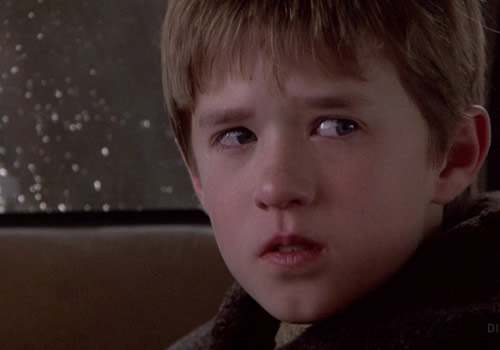
Cole in The Sixth Sense
Cole is sweet, innocent boy. He is the last character one would identify as a bad guy. He and the protagonist Dr. Malcolm Crowe (Bruce Willis) spend a lot of time together, and their interaction is, for the most part, friendly and supportive. Regardless of this relationship, Malcolm's story goal is directly opposed by Cole's. Cole appears to be a mentally disturbed boy. Malcolm, a child psychologist, wants to help Cole. However, Cole does not want Malcolm's help and resists his attempts. Even when Cole starts to give in, Malcolm refuses to believe Cole's secret, continuing their conflict. The story cannot be resolved until both sides accept each other and abandon their mutual resistance.

Russell Hammond in Almost Famous
Almost Famous is the story of teenage newbie rock journalist Will Miller. Will's story goal is to complete an article for Rolling Stone on the band Stillwater. The only problem is that he cannot reach this goal without getting an interview from the band's star guitarist Russell, something Russell refuses to do. Though Will looks up to Russell, and the two even grow to become close friends, Russell is Will's antagonist. Russell's refusal to give the interview keeps Will on the road indefinitely, creating trouble for him from Rolling Stone and his mother. This conflict continues unresolved until the story's end. Russell is also the force of antagonism in Will's subplot. Will is in love with groupie Penny Lane, but Penny is in a sexual relationship with Russell. Will will never get his dream girl as long as Russell is in the way.

The Mentor Antagonist

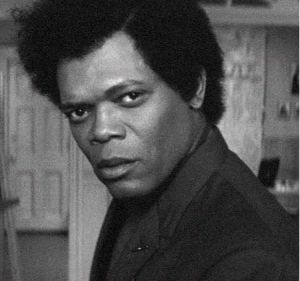
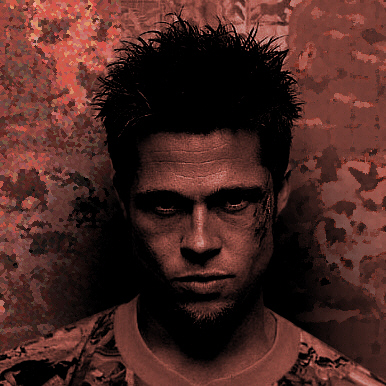
Elijah Price in Unbreakable, Tyler Durden in Fight Club, Henri Ducard/Ra's Al Ghul in Batman Begins

These antagonists start the story as what seems to be anything but antagonistic. They are the protagonist's ally, teacher, father or mother figure. They put the protagonist on the path to who he or she eventually becomes. Only then, at a certain point, the protagonist realizes that this mentor is no longer a person he or she wishes to associate with. The protagonist breaks off the formerly positive relationship, putting the two sides at odds. This is psychologically similar to the process we all go through in high school when we must break away from the control of our parents to become independent persons. The mentor antagonist rarely bears any real ill will towards the protagonist. After all, the mentor helped create the protagonist. He or she simply resents the fact that the protagonist now opposes him or her. If given the choice, the mentor antagonist would prefer the protagonist to rejoin his or her side so they might achieve the antagonist's goal as a team. The protagonist refuses the offer, putting the two sides into a unity of opposites where one side must be defeated.


The Virtuous Antagonist

Some stories flip the good guy/bad guy dynamic on its head. In these films, the protagonist is the criminal, the villain, or the all-around bad dude. The protagonist's actions then incite a lawful, virtuous, and well-intentioned antagonist to stop him or her.

Bruce Wayne/Batman in Batman (1989 version)
The surprising thing about Tim Burton's first Batman film is that it is completely misnamed. It should be called “Joker,” since the villain is in fact the story's real protagonist. If one makes the typical assumption that Batman, the good guy, is the protagonist, the film appears to be a structural mess. Bruce Wayne does not appear until 20 minutes into the film. Not only this, but the Story Spine would not be firmly established until the story's midpoint. Until then, Bruce/Batman remains passive and reactive, with no legitimate reason to take action. But, when one realizes the Joker is the real lead, the structure falls into perfect place. Batman is instead a Vengeance Narrative about a lunatic trying to get revenge on those who have wronged him. He is then opposed, and eventually defeated, by the Caped Crusader. This makes Batman the film's antagonist.

Chief Marge Gunderson in Fargo
In the same way, most people assume that Chief Marge Gunderson (Frances McDormand) is Fargo's protagonist because she is the story's force of good. But then, one would have to explain why she does not appear in the story until the beginning of the 2nd Act. The film's 1st Act is led solely by the actions of the morally-bankrupt Jerry Lundergaard (William H. Macy). This simple fact makes it simple to conclude that it is Jerry who is the film's protagonist, and Marge the antagonistic force that emerges to stands in his way. (A similar argument can be made for Michael Mann's Heat (1995), where Robert De Niro's master criminal character is opposed by Al Pacino's police detective. However, since both characters are so equally-weighted throughout the narrative, this creates a sort of chicken-or-the-egg debate that could go either way.)

The Shadow Antagonist

A shadow antagonist is an antagonistic force that is not really “there” in the story – at least not at all times. Rather than harass the protagonist from beginning to end, the shadow antagonist lurks behind the scenes like a ghost, almost as a non-participant while the protagonist struggles with other problems, only to pop up at the most inopportune moments to ruin everything. The key quality of the shadow antagonist is that he or she is not directly related to the protagonist's main goal. The shadow is instead a trickster and a ruiner who does harm to the protagonist, not because he or she opposes the protagonist's goal, but because he or she opposes the protagonist's very existence, health, and happiness. The shadow wants to trip up the protagonist just for the sake of tripping.

Mal in Inception
It took me nearly three whole viewings of Inception to finally put my finger on the identity of the antagonist. At first it seems to be Saito (Ken Watanabe). But Saito turns from antagonistic to friendly after the inciting incident. Then, it seems the antagonist might be Robert Fischer (Cillian Murphy), the man whose head Cobb is trying to hack into. But this assumption again dashes on the rocks when Fischer joins Cobb to help him achieve his goal. The only real, credible threat to Cobb's victory, from beginning to end, is Mal - a dead woman, who technically does not even exist outside of Cobb's memory. It is Mal who ruins Cobb's extraction attempt in the opening sequence. It is Mal who kills Fischer moments before an assured victory. It is Mal whom Cobb must overcome in the story's climax, and it is the constant threat of Mal that makes the team nervous throughout their entire mission. Though Mal only appears a handful of times, though she is completely secondary to the mission itself, and even though she technically does not even exist, she is Cobb's antagonist. Cobb must destroy her to claim his story goal.

Friday, April 27, 2012

THIS, is a FOOTBALL! : Rewriting from Scratch

April 2012 marks the 4th Anniversary of scribbler blog-o-zine! And we're going to celebrate it with.....

another article!

------------------------------------------------------------------


There was once a coach of a high school football team. To say that his team played poorly would be a gross understatement. Not only could his team not win, but they couldn't rush, they couldn't pass, they couldn't play defense. Every game was an embarrassment. Finally, after yet another Friday night humiliation, the coach gathered his team together. “Gentlemen,” he said, “something is seriously wrong with this team. And no amount of practice is going to fix that problem. The only way we are going to start winning is by unlearning all your bad habits. So, we are starting over. Forget everything you think you know, because we are going back to square one.” Then, the coach held up a pigskin, presenting it as if no one had seen one before. “Gentlemen,” he said, “THIS, is a FOOTBALL...”

When the coach said square one, he meant it. Sometimes, when things do not work, you have to hit the reset button and start over.

Sometimes, a writer has a great idea for a screenplay, but when he or she tries to put it on paper, the story simply does not work. No matter how many times the script is rewritten, no matter how hard the writer works to fix its flaws, the things simply refuses to function the way a cinematic story should. There is something fundamentally broke with it. Tweaking some plot here and polishing there will not make that script function. At this point, making superficial changes is like spending money to pimp out a car with no engine and a broken transmission. Junk is junk. The only way to fix it is to strip it down to its core.

“THIS, is a cinematic story.” - Note that I said cinematic story, not screenplay. A screenplay is nothing more than 90-120 pieces of paper bound together with words on them. It is the cinematic story told on those pages that gives it any worth. If your script does not work, it is the flawed principles behind its story which are at fault.

Here now is the SCRIPTMONK advice to overhauling a broken cinematic story.

The first rule: Don't cling to what you have written! Doing so just keeps you holding onto the side of a sinking ship. If need be, you must be willing to take everything you have worked so hard on and throw it in the trash. If it does not work, it does not work. Holding on to what you have, whether it be out of fear, insecurity, or sentimentality, amounts to literary hoarding. Hoarding is a mental illness where people are unable to throw things away, regardless of how useless those things may be. If you really want your story to work, you have to be willing to clean house.

Start by returning to the very ideas that seeded the beginning of your screenplay. The earlier flaws originate in the creative process, the more fatal the effect on the finished product. Your early ideas are called seeds for a reason. They grow and expand as the work progresses. If your original ideas are flawed, they will grow into a weed the size of Jack's beanstock, choking everything connected to it. At this point, simply fixing superficial problems without considering the sources beneath is like placing a band-aid on a mortal wound. Real improvement starts at the foundation.

First, review the idea that inspired the story. Does it have what it takes to create a story? A REAL story? A story is defined as a series of events about a) a character, b) dealing with a problem, c) told in a structured order, d) unified by a premise. Does your idea meet all four qualifications? If not, the idea is no more capable of creating a functional cinematic story than a page out of the phone book.

Next, look at your story's protagonist. Are you sure this is your story's protagonist? Sometimes a writer will think one character as the hero, when it is in fact a completely different character who drives the narrative. Are you sure this is the best choice for protagonist? Sometimes stories fail simply because the storyteller has chosen the wrong person to tell the story through. Is it clear to the audience that this is in fact the protagonist? Sometimes the protagonist gets lost within all the supporting characters, and it becomes difficult for the reader to figure out which one they are supposed to get behind.

How is the protagonist portrayed? Does he or she have a clear internal need? Does the protagonist have a fatal flaw that creates a difficulty he or she must overcome? Is the action is the story designed so that it forces the character on an adventure where he or she must change and grow to achieve the internal need? Remember that story comes from character, not the other way around.

Since the storyteller creates the events of the plot solely for the sake of the protagonist's journey, the choice of protagonist has a dramatic effect on the course of the plot. The choice of protagonist decides what events are possible, and how the plot moves forward as the protagonist reacts to those events. Plot and protagonist are intimately connected. If you have created a plot that does not fit the protagonist, or vice versa, the story will not work. This is a fatal mismatch. One must be changed to accommodate the other.

Likewise, a storyteller cannot create a plot in a vacuum. Did you come up with the main character first, and then the action of the story based on that particular character? Or did you come up with the actions of the plot first, and then as an afterthought pulled some generic persons out of the air to carry out that plot? A plot-first approach creates a hollow and lifeless experience. The protagonist will not be an authentic human being upon whom the audience can attach their thoughts and emotions, but a hollow shell who exists simply to connect the plot's dots. The audience will then feel little emotional connection to the plot's events because there is no humanity behind them with which the audience can connect.

What is your story's premise? Does the script stick to this premise from beginning to end? Or does it suddenly abandon its established premise halfway through and veer off into an unrelated area? Abandoning a premise means essentially abandoning the entire story and trying to invent a new one halfway through the film. Audiences become confused and upset as everything they have been paying close attention to thus far has been thrown in the garbage. Now, they are being asked to pay attention to a new story. Most audiences do not have this kind of patience.

Next, look at the script's Story Spine. Identify the forces that propel the protagonist to act. What is the protagonist's main Story Problem? What Story Goal does he or she set to overcome that problem? What actions does the protagonist pursue on his or her Path of Action to reach that goal? What is the Main Conflict that stands in the way? What are the Stakes that keep pushing the protagonist onward despite the resistance created by the Conflict? Does the Spine have all five elements? Are they strong enough to provide enough dramatic impulse for the entire length of the story? Does your script have a Story Spine at all? (A missing or incomplete Story Spine is the most common cause of failed scripts.)

How does the action of the Story Spine unfold? Does the plot develop in clear, structured story sequences? Does the protagonist advance the story by willfully pursuing immediate goals that have the purpose of furthering his or her overall cause?

Look at the script's genre. Are you SURE this is the right genre for the particular story? Do you understand the inherent rules of the genre? Does your story conform to these rules? Genre creates guidelines that help the audience understand what to expect from a story. Genre confusion creates audience confusion. A script that does not know how to handle its genre will create a muddled mish-mash to which the audience will not know how to react.

Any problem you find during this process is a major flaw at your story's foundation. It is an enormous crack in the bedrock that radiates out into dozens of problems on the surface. Like a building with a damaged foundation, sometimes the only way to fix the problem is to bulldoze the structure, lay a new foundation, and then start construction all over again.

(BTW, I do know that the phrase "Gentlemen, this is a football" is famously associated with legendary Packers coach Vince Lombardi. However, his use of the phrase communicated something different than the story of the high school coach- a story I heard of first. Lombardi's use referred to a dedication to the fundamentals, not a stripping down to start over.)

Friday, March 16, 2012

HOW TO SAVE $19.99 (by not buying Save the Cat!)


I admit that this month's article is far more mean spirited than usual. It is just that every time I visit Amazon.com, or a book store of any kind, I am constantly confounded that young and developing screenwriters continue to, as they have for seven years, make a certain book on screenwriting the #1 seller. A book that has no right or reason to occupy that spot. Those of you who frequent this blog know how critical I am of most books on the market for being ineffective, inaccurate, or outmoded. However, there is only one book that I tell writers to avoid at all costs. The book I speak of is Save the Cat! by Blake Synder, a book so full of obvious inaccuracies, half-assed approaches, and pure unfiltered bullshit that following its advice will damage your development as a screenwriter. I have personally witnessed the negative effects of this book on hundreds to amateur screenplays. Blake Synder has unwittingly ruined an entire generation of would-be screenwriters.

You may wonder what is the harm of one little book. In any other field, there would be little problem at all. However, when beginning screenwriters make their first attempts to learn the craft, they often make the mistaken assumption that just because something has been published in a book, it is absolutely true and should be followed like holy scripture. Most screenwriting books are based off little more than the personal opinions of their authors, authors quite often of questionable expertise. As I have found in my own studies time and again, many times an author's bold statements turn out to be bullshit. However, once false information has been ingested into a writer's mind and accepted as fact, it will take years to undo the damage.

As far as I can see, the only cause for Save the Cat's commercial success comes from a single chapter, Chapter 6, the “Immutable Laws of Screenplay Physics.” This chapter contains a hodgepodge of eight unrelated commandments, each given a cutsie-poo nickname to keep them memorable, one of which provides the book's bizarre title. (I love how at the beginning of the chapter, Synder admits that this chapter is the only reason he wrote the book, implying that the rest is little more than filler.) Though this makes the book unique to its competitors, these commandments are hardly groundbreaking, and far from original.

For those of you who have not read this book, and are still tempted to buy it, I am going to do you a favor. I am going to save you $19.99 by giving you Synder's eight cutsie-poo commandments right here in this article, communicated far clearer and more direct than Synder was capable. And I am not going to waste 22 pages to do it.

  1. “Save the Cat” - disregard entirely. Read THIS instead.
  2. Pope in the Pool” - When giving dry and potentially boring exposition, distract and/or entertain the audience by pairing the information with an interesting visual or action. This is an old trick, and a quite obvious one. (If we are going to name this, I prefer “Two Elephants Screwing,” a reference to a comment made by Humphrey Bogart on the set of the film Sahara. When asked to do a scene containing over a page of dull expository dialogue, Bogart wryly suggested the director put two elephants screwing behind him, because that was the only way the scene would be interesting.)
  3. Double Mumbo-jumbo” - One story should be built on one premise, and one premise alone. Don't make your story about civil rights and environmentalism. Don't have a zombie outbreak occur in the middle of a story about killer robots. Unalike premises mix like oil and water. Keep things focused.
  4. “Laying Pipe” - Don't wait too long to introduce the story's inciting incident. Until the inciting incident occurs, the conflict has not engaged and story action has yet to begun. This means little conflict and little story movement until the conflict is finally sparked.
  5. “Black Vet” - Not only should there be one premise per story, but also one gimmick per character. Don't make your protagonist and ex-cop AND an ex-priest, AND a former Olympic speed skater. That's just dumb. Pick one. Simplicity creates clarity. Clarity allows opportunity for stronger development.
  6. “Watch out for that Glacier!” - Conflict is only conflict when it is occurring here and now. Dramatic tension exists only when there is an immediate threat. Something that may happen down the road is not very threatening. Until that happens, characters are just standing around waiting for the conflict to arrive.
  7. “The Covenant of the Arc” - Characters undergo personal change in the course of the story. This is Screenwriting 101, people. I don't know why Snyder tries to put a special label on something so fundamental that it has been axiomatic to screencraft since its beginning. It is impossible for any human being to go through the extreme situations found in any movie and not come out the other end a changed person.
  8. Keep the Press Out!” - You don't need Steven Spielberg to tell you this. The broader you make your story world, the less intimate it becomes. The less intimate it becomes, the harder it is for the audience to forge strong emotional bonds to characters. This also harms plot when it comes to films with a fantasy or sci-fi element. The more you expand the story into the wide real world, the harder it is for the audience to suspend their disbelief. Take a look at two movies about hostile aliens, Alien and Independence Day. One has a small, intimate setting with few characters. The other follows dozens of characters diffused all over a worldwide stage. Because of its intimacy, Alien is able to remain believable with few facts, and creates strong, genuine feelings of fear, dread, and compassion towards its characters. With Independence Day, the audience does not feel connected to any of its multiple protagonists, and its story logic often lapses into moments so difficult to believe they become silly. (This is actually way beyond the rather insignificant point Synder tries to make in this section. I did you the favor of smarting it up.)

That's it. That's the entire book right there. As for Synder's plot formula with its “15-point Beat Sheet,” forget about it. The approach is half-baked, simplistic beyond practical application, and built on logic riddled with more holes than a rural Utah stop sign. Plus, a lot of it is just bullshit. You'd be better off writing a screenplay from the Betty Crocker Cookbook.

As for the rest of the book, most is not even about writing a movie. It is about pitching a sellable idea for a movie. This may be useful for a producer or agent, but if you're a screenwriter, you will just learn to talk the talk, not walk the walk. This may help you get a script deal, but only once. Once it becomes clear that you can't back up your salesmanship with competent writing, you will be labeled a fraud and a charlatan. Try selling another idea after that.

Wednesday, February 22, 2012

I'VE CREATED A MONSTER! (The Workings of Acts 2A & 2B)


(Related article: Reconsidering the 3-Act Label)

This one falls under the "sh*t so plain to see its amazing no one else has mentioned it" category.

The second act has always seemed quite a mystery to developing writers. The purpose of the first act is clear. It is the “Setup.” It orientates the audience to the elements of the story world and creates the events that launch the story into motion. The third act seems equally simple. It is the “Resolution.” It contains the events that resolve the main conflict and bring the story to an end. (These are the broad terms coined by old guard “script gurus.” There's quite a bit more to the structure of the first and third acts than this implies, but for the purposes of this article, we will keep things simple.)

The second act is not so clear. It has been labeled the “Rising Action.” What the heck does this actually mean? Whatever the plot is supposed to physically do in this hour-long stretch of time in order to connect the beginning to the end is unclear. Okay, the action rises. That doesn't provide much help to the writers who need to physically put events on the page. This lack of instruction is yet another reason why the second act is the weakest in most spec scripts, the place where the story starts to wander, tension sags, and the reader loses interest.

In my previous article, I demonstrated that the second act is not really one long act, but rather two acts of equal length: Act 2A & Act 2B, separated by the Mid-2nd Act Turning Point. It did not take me long after that article to discover that Acts 2A & 2B both work to carry out very simple and fundamental dramatic functions, seen the same over in every successful film. Functions as simple and straightforward as the Setup and Resolution:

In Act 2A, the protagonist unwittingly creates a monster.
In Act 2B, the protagonist must fight the monster he or she has created.

Now bear with me as this may sound strange at first. To start, let's look at a simple version of the legend of Dr. Frankenstein. In the first half of Frankenstein's story, the Doctor wishes to create life from the dead. Frankenstein does this without any malevolent intentions. In his mind, he is doing good by advancing the capabilities of science and the realms of human achievement. He succeeds, only to later find that his creature is an abomination. He has unintentionally released a monster upon the world. In the second half of the story, Frankenstein must try to reverse his mistakes by destroying the monster.

The pattern seen in the Frankenstein legend repeats itself in the second acts of every successful feature film. In Act 2A, the protagonist takes a series of actions that he or she honestly believes will ameliorate the story's situation and overcome the conflict. However, the protagonist does not know that these actions always inadvertently end up MAKING THE SITUATION MUCH WORSE. The protagonist's well-meaning actions have only wound up digging him or her into a deep hole and/or inciting the force of antagonism's wrath to a dangerous level. The protagonist has unwittingly (though not always unwillingly) created a monstrous situation for him or herself. However, it is not until the Mid-2nd Act Turning Point that the protagonist becomes fully aware of this.

Of the many examples:

Raiders of the Lost Ark
Act 2A: Indiana Jones eludes Nazis to uncover the location of the Ark of the Covenant.
Turning Point: Indy finds the Ark, but the Nazis appear and take it from him.
Monstrous Outcome: Indy has inadvertently put the Ark right into the Nazi's hands.

Die Hard
Act 2A: John McClane does all he can to get the attention of the police.
Turning Point: McClane succeeds by throwing a body onto a policeman's car.
Monstrous Outcome: McClane soon learns the police are incompetent and will only make the situation worse.

Braveheart
Act 2A: William Wallace leads a small-scale rebellion against the English in Scotland.
Turning Point: Face-to-face with English forces on the battlefield, rather than negotiate as the Scottish Lords wish, Wallace leads the Scots to rout the enemy.
Monstrous Outcome: Wallace has provoked a full-scale war with the mighty English army.

The Godfather
Act 2A: Michael Corleone, the civilian of his crime family, agrees to assassinate Virgil Sollozzo.
Turning Point: Michael kills both Sollozzo and his policeman bodyguard.
Monstrous Outcome: Michael is now a wanted killer, fair game for either the police to arrest or rival mafias to kill.

Jerry Macquire
Act 2A: Jerry attempts to bounce back as a high-power sports agent after experiencing a crisis of conscience.
Midpoint: Jerry's inability to perform as he used to ends up losing him his last all-star client the day before a big deal.
Monstrous Outcome: Jerry is left with nothing except a single B-level client.

Citizen Kane
Act 2A: Kane has an extramarital affair while while making his run for political office.
Midpoint: Kane's opponent exposes the affair.
Monstrous Outcome: Kane's personal life and political future are both ruined.

The Wizard of Oz
Act 2A: Dorothy and her friends travel to meet the Wizard in the hope that he can send her home.
Midpoint: The Wizard refuses to help until she brings him the broom of the Wicked Witch.
Monstrous Outcome: Dorothy must go into dangerous territory to meet the witch face to face.

The purpose of the Mid-2nd Act Turning Point is to end Act 2A and launch Act 2B by providing the key transitional event between the actions that have created the monstrous situation and the moment where the protagonist realizes this situation must be fought against. Keep in mind that this “monster” does not always have to be something dangerous or life-threatening. Sometimes it is simply a situation where the protagonist's struggle against the main conflict becomes far more complicated. 

Depending on the type of story, the Mid-2nd Act Turning Point twists the plot in a new direction in one of three ways.

a. The Mid-2nd TP is a dramatically-significant physical action that either creates the monstrous situation, or provides the tipping point which sets a monstrous situation into motion.

Batman Begins
Act 2A: Bruce Wayne transforms himself into a symbol that will combat crime and corruption.
Midpoint: Bruce takes his first actions as Batman, capturing crime boss Carmine Falconi.
Monstrous Outcome: Bruce has put a target on his back. Not only do criminals now want him dead, but the police want him arrested.

Star Wars
Act 2A: Luke and Obi-Wan get off Tatooine on a journey to Alderaan so they may deliver secret information to the Revel commanders.
Midpoint: They are surprised when their actions lead them right to the Death Star. Their ship is captured.
Monstrous Outcome: Luke and Obi-Wan are now in the belly of the beast, surrounded by enemies.

Forgetting Sarah Marshall
Act 2A: Peter tries to get over his break-up, even though he is staying at the same resort as his ex.
Midpoint: Peter and a new love interest Rachel kiss for the first time.
Monstrous Outcome: Peter is now torn between an opportunity with a new love and his desire to reunite with his ex-girlfriend.

b. The Mid-2nd TP is a moment of revelation where the protagonist realizes his or her cumulative actions throughout Act 2A have created a monstrous situation.

Back to the Future
Act 2A: Lost in the year 1955, Marty accidentally alters the past.
Midpoint: Marty sees his family photo start to disappear. He realizes his actions have created a life-threatening time paradox.
Monstrous Outcome: Marty must reverse his mistakes or be wiped out of existence.

Alien (my favorite example, because it is the most literal)
Act 2A: Ripley's crew brings an alien parasite aboard the ship, choosing to study it rather than destroy it.
Midpoint: A newborn alien monster bursts from a crew member's chest.
Monstrous Outcome: The crew's mistakes have wound up releasing a murderous monster aboard their ship.

A Beautiful Mind
Act 2A: The brilliant John Nash engages in a dangerous and bizarre top-secret mission for the US government.
Midpoint: Nash is diagnosed with schizophrenia. The mission is revealed to be pure fantasy.
Monstrous Outcome: Nash is stuck in a living nightmare where he cannot tell what is real and what is not.

c. In some stories, the protagonist is already aware of his or her dire situation by the end of Act 2A. In these stories, the Mid-2nd TP is an event that provides potential salvation.

Rocky
Act 2A: Rocky agrees to fight Apollo Creed, but soon realizes there will be no outcome except his total humiliation.
Midpoint: Rocky accepts Mick as his trainer. Rocky now has a fighting chance.

Lord of the Rings: Fellowship of the Ring
Act 2A: Frodo continues his dangerous mission without Gandalf, pursued by more evil than a mere Hobbit could possibly handle.
Midpoint: A band of stalwart heroes gather to assist and protect Frodo.

Cast Away
Act 2A: Chuck Noland, trying to survive on a desert island, slowly devolves into a wretched madman.
Midpoint: Chuck discovers something washed up on shore that will allow him to escape the island.

The Mid-2nd TP, or a moment that immediately follow the "monster moment," often becomes the “hero moment” of the story. After finding that their previous actions have buried them in a deep, dark hole, the Mid-2nd TP forces the protagonist to change from behaving relatively passive or reactive towards the story's conflict (doing all he or she can to avoid direct encounters with the source of the conflict) to becoming an active participant in that conflict (the protagonist becomes willing to face the source of conflict head-on.) In Act 2A, Indiana Jones tries to avoid the Nazis and find the Ark in secret. In Die Hard, John McClane prefers to run away from the terrorists and contact the police so they can handle the situation. In Star Wars, the heroes do all they can to avoid direct contact with Imperial forces. The Mid-2nd TP then puts the heroes into a situation which forces them to give up on such passive efforts. They must become willing to rise up and do what it takes to battle the conflict head-on.

Once the Mid-2nd TP has occurred, the necessary course of action for Act 2B becomes clear. The protagonist must now take direct effort to fight and eventually subdue the monstrous situation so he or she might be able to continue onward to the Main Story Goal. These new, more aggressive actions inevitably lead the protagonist to the battle that ends the 2nd Act, and the End of 2nd Act Turning Point.

Thursday, February 2, 2012

Reconsidering the (completely misnamed) 3-Act Label


(Related article: "I'VE CREATED A MONSTER!")
 
It has become considered pretty much axiomatic that cinematic stories are structured in three acts. It is treated as extreme ignorance to think otherwise. Of course, there is plenty of evidence to support this. The dramatic rule of threes has been around since the time of Aristotle.

A story told in three acts seems elementary. Since childhood we are taught stories have a beginning, middle, and end. Or, as the “script gurus” unhelpfully put it, “setup, rising action, and resolution.” Even I have staunchly insisted that cinematic stories always have three acts, no more, no less. Yet still, whenever I looked at a visual representation of the three-act model, it always seemed like something was, well – a little jacked up.
Why are things so unbalanced? What is with this oblong stretched-out middle? What sense does it make that there must be one short act, then one very long act, and then another short act? It is no wonder why second acts put developing screenwriters into a cold sweat. Their story has a beginning. The story has an ending. But how the hell are they going to fill this vast wasteland in between? How are they going to keep the story going, keeps things developing and escalating, and at the same time keep the audience's attention for nearly an hour's length of time? There is good reason why most spec screenplays stumble, sag, or run out of energy during their second acts. It is like trying to drive across 100 miles of desert with only 50 miles worth of gas.

Second act sagginess apparently comes from the lack of a major dramatic turning point for over an hour of screen time. According to the sequence method, a properly-structured story requires a turning point every ten to fifteen minutes to provide development, escalation, and maintain story momentum. However, the 3-Act model relies on certain MAJOR turning points occurring at specific dramatic moments. These moments create such significant situation-altering events that they effectively break the story into separate blocks. The 3-Act model has had so much success because these major dramatic turning points reignite audience interest with a forceful shove at right about the times when their attentions start to wane.

Most books on screencraft teach that proper narrative structure contains only three major dramatic turning points, one located at the end of each act:
Unfortunately, there is a problem when it comes to the second act. Major dramatic turning points provide only so much “push,” or dramatic momentum. After less than thirty minutes, the momentum wears off and the audience's attentions once again start to wane. This is fine and dandy for the short first and third acts, since the audience does not have to wait long before its next shot in the arm. But then we have that long unwieldy second act. And not surprisingly, smack dab in the middle of the second act is where most beginner scripts start... to slow... down....

But wait a second. If this is a constant problems, why are the films we see in theaters so successful with their second acts? How do they manage to maintain attention and excitement from beginning to end with no lag through their middles? What do they do right that most spec script get wrong?

The reality is that most “script gurus” overlook an absolutely fundamental piece of their beloved 3-Act structure. Analyze any handful of well-written, well-structured feature films and you will quickly discover an overlooked FOURTH major dramatic turning point occurring smack-dab in the middle of the second act.

Alien – the monster alien explodes from Kane's chest, turning the story from a mystery to a fight for survival.
Good Will Hunting – Will finally opens up to his therapist, permanently changing the story's central character relationship and how Will approaches the story conflict.
Rocky – Rocky allows Mick to become his manager, changing the relationship between the hero and his mentor and giving Rocky his first legitimate chance of success.
Iron Man – Tony Stark makes his first successful appearance as Iron Man, forever turning the protagonist from selfish playboy to global hero.
Schindler's List – Oskar Schindler commits his first truly unselfish act by using his watch to save an old couple, beginning his transformation from profiteer to hero.
Die Hard – John McClane finally gets the attention of the police, permanently changing (and greatly complicating) the landscape of the story conflict.
Star Wars – The heroes are pulled onto the Death Star, trapping them in the belly of the beast and forcing them to face the force of antagonism head-on.
The Shining – The characters have their first meaningful physical contact with the evil that resides in the hotel, changing the conflict from abstract to tangible.

Now, many books mention something about a “Midpoint scene.” But like much of the material in these books, the information on what this midpoint does and how it should be used tends to be vague and unhelpful. The “midpoint” is actually quite a simple concept. This events provides a major dramatic turning point which creates a “hinge point” in the narrative -- essentially splitting the story in two: the story situation as it existed before the mid-second act turning point, and the drastically altered situation existing after the turning point, as pointed out by the examples above. The mid-second act turning point not only creates a major moment of development and escalation, but provides a powerful boost to reignites audience interest and launch the narrative forcefully into the second half of the second act.

The Midpoint event sounds just like and end-of-act turning point, doesn't it? That's because it is one!  Here is where all the confusion over 3-Act structure originates. THE 3-ACT STRUCTURE IS COMPLETELY MISNAMED. The traditional 3-Act structure tells stories in four parts, not three. Rather than one short act, one very long act, and then another short act, successful feature-length narratives are comprised of FOUR ACTS OF EQUAL LENGTH.

Successful cinematic structure become elegantly simple as soon as one realizes that cinematic stories are composed of four equal units of action:

Alien
Act 1 – Heroes investigate a distress signal. (TP: A creature attaches itself to Kane and is brought onboard the ship.
Act 2A – Heroes try to figure out this creature attached to Kane. (TP: Monster bursts from Kane's and is now loose on the ship)
Act 2B – Heroes try to capture or kill the monster. (TP: Heroes realize monster is unkillable and must destroy the ship.)
Act 3 – Destroying the ship and escaping the monster for good.

Rocky
Act 1 – Hero struggles with life as a worthless bum. (TP: Rocky is offered a fight with the world champion.)
Act 2A – Hero hopelessly tries to prepare for the fight on his own. (TP: Rocky reconciles with his mentor and agrees to let him become his manager.)
Act 2B – Hero develops from bum to contender with the help of his mentor. (TP: Rocky realizes he still has no chance, but sets a new goal for himself to “go the distance” with the champion.)
Act 3 – Rocky succeeds at his new goal, proving his self-worth.

Star Wars
Act 1 – Hero finds a message that will help defeat the evil empire, but is unwilling to get directly involved. (TP: Hero's home is destroyed by members of the evil empire, giving him no choice but to leave home to join the Rebel cause.)
Act 2A – Leaving Tatooine with the secret message. (TP: Hero becomes trapped aboard the Death Star, the heart of the evil empire.)
Act 2B – Escape from the Death Star. (TP: Hero succeeds, allowing him to deliver the message.)
Act 3 – Hero joins the battle to defeat the empire using the message's information.

Here now is a new visual model for the 3-Act structure:
Isn't this simpler? Isn't this easier to manage? Doesn't this make more sense? With the simple recognition of an additional end-of-act turning point, the classic 3-Act model goes from wonky and difficult, to balanced, simple, and easy for any beginner to manage. Second acts need no longer strike fear in the hearts of developing writers. Or any act for that matter.
(Note that to avoid confusion, I have not relabeled the acts as Acts 1, 2, 3, & 4. To remain in line with established terminology, “3rd Act” shall always refer to a story's final act. The two halves of the former second act are now labelled "Act 2A" and "Act 2B." We minimize misunderstandings if everyone keeps speaking the same language.)

scribble on.