Tuesday, April 28, 2020

Scriptmonk's Plot Pattern Extravaganza -- ALL Y'ALL FAVORITES!! (Part 1)

In the five or six years I have spent investigating the 34 common cinematic plot patterns, I have broken down and analyzed the structures of literally hundreds of popular films. I have since used the best, most prototypical examples I could find to illustrate each particular pattern on this blog and my book Screenwriting & The Unified Theory of Narrative, Part II. However, this pool of study films has always had one shortcoming: it was limited to movies I personally own or have access for close study. While my personal movie collection is quite large, it is far from an exhaustive library of every excellent film made over the last fifty years. As such, there have been many popular films conspicuously absent from my writings. In my free time over the past month, I have sought to remedy this issue. As you shall see from the list below, I have identified for the first time the plot patterns contained in over two dozen popular favorites.

Also included on this list are films I viewed very early in my investigation, back when I had only a vague conception of the shape of the various patterns and before I began mapping out each film plot point by plot point. As such, there were films whose pattern I could not yet identify or initially miscategorized. As I now realize (and as you shall read below) the patterns of these films were difficult to identify because many take advantage of the alternative options found in each pattern or contained acceptable deviations from the prototypical norm. As a result, analyzing these deviant examples reveals the flexibility of cinematic plot patterns. Plot patterns are not rigid formulae, but have the capacity to bend and stretch to accommodate individual story premises and artist intentions while still producing effective, well-received narratives.

The bottom line is that the following overlooked films continue to confirm my theory of the 34 Common Plot Patterns of American Cinema. Some have just proven more difficult to analyze due to their use of alternatives, deviations, combo patterns, hybrid patterns, or their use of dual or triple protagonists.

(Warning: Lots of SPOILERS ahead.)

The Cider House Rules (1999)


Let’s start with a simple one. The Cider House Rules is a Type 5a: The Escapist, one of the most commonly-seen Hollywood plot patterns. The pattern offers a wealth of prototypical examples in all shapes and sizes, from Lawrence of Arabia to Office Space, Coming to America to American Beauty, Dances With Wolves to The Nightmare Before Christmas, Tootsie to Trainspotting. To summarize, the Escapist begins with a protagonist who has grown dissatisfied with his or her life or environment, roles or responsibilities. At the end of Act 1, the protagonist abandons this current reality to escape into what he or she sees as a more pleasing alternative. Things first go well in this new way of life. However, it proves to be a fool’s paradise. Unwelcome doses of reality begin to invade the protagonist’s happy refuge in late Act 2A, bringing the carefree paradise to a potential end at the Midpoint. Yet rather than return to reality or face its problems, the protagonist formulates a second alternative: an Option C. Act 2B follows the pursuit and ultimate demise of Option C, resulting in an end-of-act crisis event. Here the protagonist must make a difficult choice: either return to the former reality to face its problems directly (and/or take responsibility for past mistakes), or continue to deny the reality of the situation by attempting to escape even further—a foolish path which leads to a sad or ignoble end.

We can see this pattern quite clearly in The Cider House Rules. The protagonist Homer Wells (Tobey Maguire) has lived his entire life at St. Cloud orphanage. During that time, Homer has become the skilled assistant of Dr. Wilber Larch (Michael Caine), the man who not only runs the orphanage, but performs abortions and births the babies of unwed mothers. Homer is expected to become Larch’s successor. But Homer is young and restless, never having stepped foot off the orphanage grounds. In addition, he secretly questions the moral necessity of Larch’s work. At the end of Act 1, Homer seizes an opportunity to escape. In Act 2A, Homer enjoys the rustic life of an orchard worker and begins to fall in love with Candy (Charlize Theron). Meanwhile, trouble is brewing at St. Cloud’s. Dr. Larch may lose control of the orphanage unless Homer returns as Larch’s official successor.

However, when apple-picking season ends at the film’s Midpoint, Homer ignores Larch’s letters urging his return, opting to stay on his own to begin a love affair with Candy while her boyfriend Wally (Paul Rudd) is away at war (Homer’s Option C). While this again goes well for the first half of Act 2B, the new path begins to fall apart when Wally is wounded in battle and set to return. Homer’s destiny also rears its head when he must perform an abortion on fellow worker Rose (Eryka Badu) after she is impregnated by her own father. A double tragedy then permanently ends Homer’s escape at the end of Act 2B: Rose kills her father and runs away; Dr. Larch dies of an accidental overdose. With this, Homer chooses to return to the reality from which he originally sought escape, and saves St. Cloud orphanage by accepting his destiny as its new caretaker.

Home Alone (1990)


Home Alone is also an Escapist narrative, but demonstrates an interesting alternative to the pattern’s central premise. Rather than a protagonist escaping his/her unhappy reality, everything undesirable about that reality escapes the protagonist. Eight year-old Kevin (Macaulay Culkin) hates being the youngest child in a house packed full of obnoxious family members. He hates it so much that he wishes out loud that his whole family would disappear. By a twist of fate, Kevin is accidentally left behind when his family leaves for vacation, fooling Kevin into believing he has gotten his wish. Kevin has escaped his family.

Just like the Act 2A of any Escapist narrative, Kevin first finds his new family-free world to be a child’s paradise. But Kevin soon realizes that life alone can be difficult and frightening, especially when burglars Harry and Marv (Joe Peschi & Daniel Stern) start snooping around the house. At the Midpoint we find another necessary deviation from the standard pattern. While most Escapist protagonists (like Homer Wells) consciously avoid a return to their former reality in favor of an Option C, the story circumstances of Home Alone preclude the possibility of return at the moment. Furthermore, Kevin does not even realize return is an option, as he believes he has permanently wished his family away. Therefore, in response to the Midpoint event, Kevin must transition from simply enjoying his private paradise to a quest to hide his secret solitude in order to protect himself and his home. However, this Option C falls apart when Harry and Marv discover Kevin’s secret at the end of Act 2B.

Kevin now prays aloud for his family’s return. He has had enough of his escape and wants to return to his previous reality. While Home Alone’s Act 3 is comprised mostly of the comic hijinx of Harry and Marv’s botched home invasion, it ends with Kevin welcoming his family back with open arms. Kevin has learned that, while escape was fun, a stable family life with people who care and watch over him is far more preferable.

Big (1988)


Let’s move on to the next plot pattern, Type 5b: The Ejected. I am happy to find three new examples of the Ejected since, as one of the more rarely-seen plot patterns, I have previously had only a shallow pool of cases for study. As for prototypes, the best I could find for Unified Theory of Narrative were Jerry Maguire (1996), Darren Aronofsky’s The Wrestler (2008), and the Paul Newman poolhall classic The Hustler (1961). The pattern’s name issues from its first act, where the protagonist initially pursues a flawed, ill-advised, or naive ambition. (Jerry Maguire’s manifesto to his sports agency calling for systemic change; Randy “the Ram” chases his fading glory as a professional wrestler; Fast Eddie challenges Minnesota Fats before he is ready.) The protagonist’s errors in judgment have the consequence of forcibly EJECTING the protagonist from his/her world at the end of Act 1. (Jerry is fired from his agency; Randy has a heart attack and can no longer perform; Fast Eddie loses in spectacular fashion and is left broke and destitute.) Act 2A then sees the protagonist exiled, wandering in the wilderness, seeking out allies and new paths to hopefully get his/her life back together and hopefully find a way to return to the original ambition.

This pattern is found quite clearly in the first half of Big. Thirteen year-old Josh Baskin feels the frustrations of being stuck between childhood and adolescence, wishing he could simply skip over this awkward stage of his life. In a fateful moment, Josh expresses this ambition to a magical “Zoltar” machine and awakes the next morning transformed into a 30 year-old man. The consequences of Josh’s wish completely eject him from his 13 year-old world. He cannot even remain at home, as his mother is terrified of this stranger calling himself her son. Josh and his best friend Billy decide that Josh’s only option is to enter the wilds of New York City and try to survive as an adult until they can find a way to reverse Josh’s wish. While first scared and confused, Josh manages to get a job, find some allies, even score a major promotion. Yet Josh remains an outcast; a 13 year-old trapped in a 30 year-old’s world.

The Ejected pattern is further distinguished by a “Great Compromise” at the story’s Midpoint. Here, the protagonist chooses to compromise his/her original ambitions, long-term objectives, ethics, or integrity in favor of some immediate gain. In some cases, this is a potentially positive path which is then sabotaged by the protagonist’s personal flaws (as seen in The Wrestler). More often, this is an ill-conceived path motivated by the protagonist’s Flaw which leads the character further away from his/her required personal change. (In Jerry Maguire, the emotionally-needy Jerry begins a romantic relationship with, and eventually marries, his assistant Dorothy even though he does not love her. In The Hustler, Fast Eddie makes a deal with seedy manager Burt to earn the money to play Fats again.) In Big, Josh makes this compromise by choosing to blow off his best friend Billy to start an adult relationship with his coworker Susan. Over the rest of Act 2B, Josh forgets his desire to return to his 13 year-old life (much to Billy’s disgust) in favor of the life of a mature adult. Yet by the end of the act, Josh comes to realize this is the wrong path. He recognizes all he will miss by remaining an adult.

Thus, in typical Ejected fashion, the protagonist’s moment of Crucial Decision occurs at the start of Act 3 (not at the Midpoint, as in most patterns). Josh runs out on his big business meeting, abandoning everything he has achieved as an adult, to find the Zoltar machine that will change him back into a kid. As in most Ejecteds with Celebratory “up-endings,” the film ends with the protagonist successfully returning to the original world.

The Shawshank Redemption (1994)
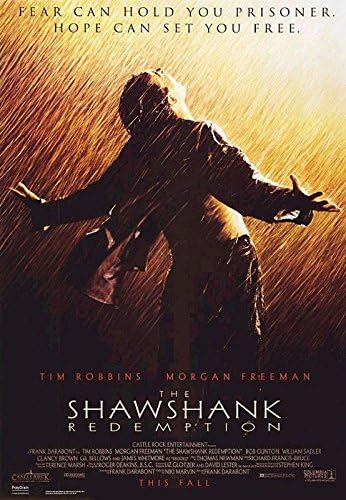

I do own a copy of The Shawshank Redemption and have used it for study many times. However, until now, the film had perplexed me in terms of its plot pattern. Shawshank has never been an easy film to analyze from a structural standpoint. It lacks the clear Problem > Goal > Path of Actions spine found in most Hollywood films. Nor is there an overtly-defined protagonist-antagonist conflict. Instead, Shawshank contains a long, episodic yarn covering over thirty years of story time in which the forces opposing the protagonist often shift or fade. As such, it is difficult to put a finger on various structural elements in the way one might for a more traditional, action-oriented movie. For instance, I originally mused that Shawshank might be a highly abstract take on the Destructive Beast plot pattern (a pattern which contains, among many others The Terminator) where the “Beast” is the despair determined to consume protagonist Andy Dufresne (Tim Robbins). But that was just silly.

No, it is now clearly obvious that The Shawshank Redemption follows the Ejected pattern. The reason it took me so long to realize this comes from a significant deviation in Shawshank’s opening act. The easiest way to recognize an Ejected is by the End of Act 1 Turning Point whereby the protagonist is forcibly expelled from his/her former environment. However, in Shawshank, this event is used as the inciting incident (Andy is convicted of murder and sentenced to life in Shawshank prison). In fact, Shawshank compresses the entire Act 1 of a regular Ejected into its first six and a half minutes. The second sequence of Shawshank’s Act 1 then picks up where an Ejected’s Act 2A usually begins; with the protagonist lost in the new wilderness. For its own End of Act 1 Turning Point, Shawshank instead uses the plot point where the protagonist takes the first step toward establishing a place in his new world: the moment when he befriends Red (Morgan Freeman). (This is comparable to the moment in Big when Josh gets a job in New York.)

The rest of Shawshank, however, follows the Ejected pattern quite closely. This is made most obvious by the clear Great Compromise found at the story’s Midpoint. Warden Norton takes advantage of Andy’s intellectual pride (Andy’s Fatal Flaw) by making him the prison’s unofficial accountant, a role which tangles Andy in Norton’s crooked schemes, essentially making Andy a criminal accomplice. This turns out to be a foolish path which leads to Andy’s ruin at the end of Act 2B. Andy, given a chance to prove his innocence, is crushed under Warden Norton’s power out of the fear that Andy will reveal the prison’s secrets upon his release.

Shawshank again deviates somewhat from the norm in Act 3 by the simple fact that the protagonist disappears into thin air at the first turning point. Yet as the remaining act fills in the narrative gaps behind Andy’s disappearance, we see that Andy’s Act 3 course of actions follows the same path as Josh's in Big: Through self-reflection and personal evaluation, Andy makes his Crucial Decision at the start of Act 3. Finally purged of his flaws, Andy chooses to take the actions necessary to return to world from which he was originally ejected.

Rushmore (1998)


Well, this is embarrassing. In the past, I have used Wes Anderson’s Rushmore as a prototypical example of Type 3a: Crisis of Character, both in this past article and in my book Screenwriting & The Unified Theory of Narrative. However, one thing about Rushmore never completely meshed with the Crisis of Character pattern – its Act 2B. I have now come to realize that Rushmore is NOT a Crisis of Character, but yet another Ejected.

It is an easy mistake to make. The Crisis of Character and the Ejected are very similar in terms of their first two acts. As already covered, the Ejected begins with a flawed protagonist who, through an ill-conceived ambition, ends up ejected from his/her former world at the end of Act 1. Act 2A then finds the banished protagonist seeking a new path, hopefully to make an eventual return. In comparison, the Crisis of Character begins with a deeply-flawed protagonist who lives a self-satisfying life in a private, socially-isolated niche. (Think of Shrek [2001] or As Good as it Gets [1997].) Unexpected events cause Act 1 to end with the loss of this precious niche. Act 2A then starts with the protagonist taking actions intended to regain the niche. The line between “ejection” and the “loss of a niche” is fairly thin. The main difference is that the former suggests a more forcible expulsion which is in some way the protagonist’s own fault. In the latter, the loss more often comes through a twist of fate or stroke of bad luck. (In Shrek, the titular character’s private swamp is suddenly turned into a ghetto for banished fairy tale creatures. In As Good as it Gets, OCD-ridden Melvin Udall’s (Jack Nicholson) tightly-regulated life is disrupted when Carol the waitress is no longer able to serve him at his daily eating place.)

The action in Rushmore blurs the line between these two patterns. Narcissistic teen Max Fisher (Jason Schwartzman) has created a private wonderland out of his life at Rushmore Academy (Max’s niche). An infatuation with teacher Miss Cross (Olivia Williams) motivates Max to launch a crazy scheme to impress her—a plan which gets Max expelled from Rushmore Academy at the end of Act 1. Rushmore’s Act 2A blurs the lines to an even greater degree. The act is comprised mostly of Max’s efforts to make the best of his new life in public school (with the hope of being invited back to Rushmore) with the help of Miss Cross and Mr. Blum (Bill Murray). But is this an attempt to chart a new path in the wilderness, or a quest to regain the lost niche?

Rushmore’s Act 2B then cracks the case wide open. In a Crisis of Character, the Midpoint presents a moment when the protagonist, through his or her increasing interactions with other people, comes to realize that there is something better in life than his or her isolated niche. The protagonist comes to desire a closer connection with another character. In Act 2B, the protagonist largely forgets about the niche in favor of pursuing this healthy, more positive relationship. This does not happen in Rushmore. Here, the Midpoint involves Max’s discovery of the secret love affair that has developed between Mr. Blum and his crush Miss Cross. In response, Max launches a savage campaign of revenge, believing this will free Miss Cross for his own affections. This, of course, is a very poorly thought-out Great Compromise of Max’s original ambitions. And, like in Shawshank, this path leads Max to the bottom of a deep, dark pit by the end of Act 2B.

To be honest, I should have identified Rushmore as an Ejected right away by the placement of the Character Arc's Moment of Crucial Decision. In a Crisis of Character, the Crucial Decision typically occurs at the story’s Midpoint. In the Ejected (as already mentioned) it happens at the beginning of Act 3. Indeed, it is not until the start of Act 3 that Max finally realizes what a selfish jerk he has been and takes the necessary actions to make amends. A Celebratory Ejected need not always end with the protagonist’s return to the original world. Alternatively, the story can end with the protagonist finding a new life which is just as satisfying, or even more so than the original. This is how Jerry Maguire ends, and this is also what occurs at the conclusion of Rushmore.

Up (2009)


While we’re on the subject of the Crisis of Character, let’s talk about Disney/Pixar’s Up. Up checks off most of the boxes of a prototypical Crisis of Character.
Flawed, antisocial protagonist? (Carl is a misanthropic curmudgeon.) Check.
A socially-isolated niche which the protagonist loses at the end of Act 1? (After the death of his wife, Carl has shut himself off from the world in his old house. By court order, Carl is evicted from his house, which is then to be bulldozed.) Check.
A quest to regain that isolated niche (or a niche of equal or greater value) in Act 2A? (Carl lifts his house off the property on a quest to live the rest of his life alone at the top of Paradise Falls.) Check.
A “Character of Disapproval” whose function is to continually criticize the protagonist’s flaws in order to nudge the protagonist toward personal change? (Young explorer scout Russell winds up stuck tagging along on the adventure.) Check.
A Moment of Crucial Decision where the protagonist decides the niche is no longer so important, and gives it up in favor of a greater personal connection with other characters? Check.

Yet, there are also some clear discrepancies in Up. For starters, there is an uncommon amount of action and adventure in Up’s second half. There are also additional characters and story elements which do not fit the Crisis of Character’s norms. When Carl and Russell reach the island of Paradise Falls, they encounter a giant prehistoric bird (who Russell names “Kevin”) chased by superintelligent dogs. Carl learns the dogs belong to his childhood idol Charles Muntz. Muntz is on an obsessive quest to capture Kevin at all costs. While first in awe of Muntz, Carl soon realizes Muntz has gone dangerously mad. Russell begs Carl to defend Kevin from capture. Yet Carl is apathetic to the bird’s plight – until Muntz’s mad actions put Russell in danger. With this, Carl puts all personal concerns aside and rises to the occasion, heroically opposing his former idol to save Russell and Kevin.

This summary also sounds familiar. It is a simplified version of the Crisis of Character’s sister pattern, the Crisis of Conscience. As exemplified by films like Casablanca, On the Waterfront, and Schindler’s List (and discussed in detail in this previous article), the Crisis of Conscience begins with a protagonist allied on the side of a Force of Darkness (Carl has been a lifelong devotee of Charles Muntz). A Victim/Advocate character then begs the protagonist for help against the Force and its evil deeds (Russell asks Carl to save Kevin from capture). Though this creates a moral dilemma, the protagonist resists these pleas until the Force commits an action so unconscionable that the protagonist can no longer look the other way (Russell’s life is put under threat by Muntz). The protagonist then turns on the Force of Darkness and transforms into a selfless hero.

Up is therefore a hybrid Taking on the Mantle, incorporating plot and character elements from both of its subtypes. (Hybrid patterns are briefly explained in this article.) As an added note, Iron Man (2008) is also a hybrid Taking on the Mantle (as discussed in detail in this article), although Iron Man combines the elements of the Crisis of Conscience and the Crisis of Character in a much different way. In any case, you can sound smart if anyone ever asks you what Up and Iron Man have in common.

Thursday, April 23, 2020

The 34 Common Plot Patterns of American Cinema, Part 3 of 3: Combos, Hybrids & Deviations

Some final notes on the thirty-four common plot patterns of American film listed in the two previous postings: Not all commercially and critically successful feature films need strictly adhere to only one of these patterns. It is not uncommon (in fact, it is becoming much more common in recent years) for movie narratives to make use of two (or possibly more) plot patterns in a single film.

First, we have movie narratives which employ Combo Patterns. With a Combo Pattern, the story begins by following one pattern, but then—typically at an end-of-act turning point—transitions over to a completely different pattern. A well-known example (and one which I frequently mention) can be found in Pixar’s Toy Story (1995). Toy Story’s first act follows Type 7c: The Spoiler; focusing on Woody’s jealousy following the arrival of Buzz Lightyear. However, rather than keep Woody on that potentially dark and self-destructive path, the film make a jump at the end of Act 1 to Type 14a: The Odd Couple; a pattern where two characters of conflicting personalities are thrust into a situation where they must learn to cooperate. Another popular example of a Combo pattern can be found in the 1987 Robocop. The original Robocop begins as a Type 12: The Vengeance Narrative, as the protagonist Murphy is victimized, left for dead, and then resurrected in altered form. Yet rather than play out as a simple quest for revenge, the story instead turns its criticism onto the corruption and callous indifference of corporate America by switching the narrative over to Type 2b: The Breakaway Hero after the end of Act 1.

Whereas Combo patterns cut-and-splice together two disparate patterns at a major turning point, Hybrid Patterns freely mix two or more patterns into a seamless blend. However, this hybridization only occurs between subtypes WITHIN THE SAME FAMILY GROUP. For example, 2008’s Iron Man (as you may read in this article) presents a hybrid Taking on the Mantle narrative. For reasons explained in the article linked above, Iron Man largely follows Type 3b: Crisis of Conscience for its plot, and Type 3a: Crisis of Character type for its protagonist’s Character Arc. The horror classic The Shining (1980) hybridizes two subtypes in The Infecting Agent to accommodate its unique premise. While the horror narrative develops principally in the style of an Infecting Being subtype, the evil which inhabits the Overlook Hotel is noncorporeal, and thus cannot directly influence the story environment until it drives Danny’s father (Jack Nicholson) insane. As such, The Shining borrows several plot points from Type 7b: The Infecting Idea to bring about this crucial plot event. As yet another example, The Sixth Sense (1999) is a film with two lead characters: Dr. Malcolm Crowe (Bruce Willis) and Cole (Haley Joel Osmet). Crowe’s narrative journey follows Type 4b: The Seeker Wounded, while Cole follows Type 4a: The Resistive Wounded. These interacting paths make The Sixth Sense a hybrid Healing Narrative.

As shown by The Sixth Sense, a film narrative may contain dual protagonists. While plot pattern groups 14-16 are tailor-made for dual-protagonist stories, it is also possible to assign each lead character a separate plot pattern. I have discussed in this previous article how this occurs in the movie Creed (2015). Another good examples may be found in the (quite overlooked) indie film In Bruges (2008). In this film, Colin Farrell plays a hitman in inner turmoil after accidentally killing a young boy. His character thus follows Type 4b: The Seeker Wounded. His partner and co-protagonist (Brendan Gleeson) is given his own line of action, following Type 3b: The Crisis of Conscience after he is ordered by his employer to execute the Farrell character for his mistake. It should be noted that this dual-protagonist strategy requires a bit more skill on the part of the storyteller. Both patterns must be compatible with the overall story premise and contain sufficient points of intersection with one another to result in a script that which appears to contain a singular, homogeneous narrative. Also, films which use a multi-narrative structure, like Magnolia (1999), Traffic (2000) or Crash (2004) contain numerous protagonists, each their their own narrative thread. As such, each protagonist may follow their own, separate plot pattern. However, in these cases, the patterns will be grossly simplified to accommodate for the limited screentime granted to each narrative thread.

Some films represent prototypical examples of their plot pattern—that is, they adhere to their patterns in clear, effective, and recognizable ways and may thus be considered the most perfect examples of that pattern. The Godfather is a prototypical Reluctant Hero. The Terminator is a prototypical Destructive Beast. Alien a prototypical Infecting Being. Because of this, I use these films most often when explaining their pattern types. Plot patterns, however, contain a certain degree of flexibility. A wider analysis using a larger pool of study films shows that films may approach an equal level of success through acceptable deviations or the use of certain alternatives paths found within each pattern. I will discuss several of these deviant or alternative examples in my next article.

Finally, I must stress that these are the thirty-four common plot patterns of American cinema. If my theory is correct, cinematic plot patterns are a cultural phenomenon. Using the principles of mythic storytelling, these 34 patterns express core psycho-social values and beliefs of contemporary American culture in archetypal form. In other words, they are distinctively American story types oriented around distinctively American sociocultural ideals. However, since each world culture possesses its own unique collection of core values and beliefs, each national cinema should hypothetically develop its own unique collection of plot patterns. As such, a foreign-made film may not conform to any of the 34 patterns I have identified. For example, Guillermo del Toro’s Pan’s Labyrinth (2006), while quite successful with US audiences, is a Spanish film, created by Spanish-born artists, set during a memorable period of Spain’s history. Thus, not surprisingly, its plot structure does not match any of the common patterns of American films. However, if a scholar should engage in a thorough investigation of the repeated story structures found in Spain’s cinema, they may very well find Pan’s plot structure repeated quite frequently in numerous other films. Additionally, nations with cultural or historical affinities may share some plot patterns—yet with certain clear discrepancies. For instance, Guy Ritchie’s Lock, Stock and Two Smoking Barrels (1998), popularly regarded as a British take on the style popularized by Quentin Tarantino, loosely follows Type 9b: The Involuntary Snowball of Complications. But only loosely. The general shape is there, but the plot map itself differs from its American counterparts.

Of course, I must end this discussion on plot patterns with the same questions I always use to conclude the subject: Does every Hollywood or American Independent feature film follow one of the 34 common patterns of plot? No, they do not. Does every successful American film? From my investigations, all signs point to yes. I have found that the more closely a film follows its plot pattern, the more success it tends to have with audiences and critics. Films which only vaguely adhere to a pattern or deviate too far from acceptable norms tend to receive a lukewarm response. Films that contain no identifiable pattern usually fare quite poorly with critics and audiences. To illustrate in a simple manner: Are you a fan of The Godfather? Your answer is likely yes. Most cinema fans are. As I have said, The Godfather is a prototypical example of Type 1a: The Reluctant Hero. Now, are you a big fan of Godfather III? Stupid question. I doubt anyone is. Godfather III was widely panned as one of the biggest cinematic disappointments of its decade. At first, it seemed to me that the failure of the third Godfather installment could be pinned on the complete lack of a plot pattern. Then, under closer investigation, I found faint traces of Type 6c: The Exploiter. Some of the Exploiter’s elements are there, but not all. Those which are there are weak or deviant. Godfather III is a narrative which aspired toward the Exploiter, but fell far short due to its reactive protagonist, unclear character roles, and ragged tapestry of convoluted story threads. Would Godfather III have been a better film if it adhered more closely to the Exploiter pattern? Possibly. One thing is for sure; the film definitely would have had far more clarity in its plot and character motivations, and would have located stable, focused path of escalating drama to lead to a satisfying climax.

Sunday, April 5, 2020

The 34 Common Plot Patterns of Hollywood & American Independent Cinema (Part 2 of 3)

As promised, here is the second half of my list of the 34 common plot patterns of American cinema, featuring the final two groupings: Action-Centered Narratives and Dualist Narratives. In a few weeks, I plan to follow-up with some words on Hybrid patterns and Combo patterns: an increasingly-common practice where the elements or events of two patterns are mixed and matched; either to fit the needs of a particular story premise or to lend freshness to a film occupying a genre which has overused a pattern to the point of becoming a predictable formula.

scribble on.

ACTION-CENTERED NARRATIVES
Less intimate than Hero-centered narratives, Action-centered narratives emphasize plot actions over character. Meaning is chiefly conveyed through the twists and turns of physical events, their consequences, and the actions taken in response.

8. The Literal Journey
A protagonist undertakes a physical journey; either by will, by force, or to perform some crucial task. Though this journey may seem easy at first, characters encounter threats, obstacles, and complications that force them to continually rise above their limitations and take the actions necessary to finish the journey or achieve its ultimate objective.
  • Subtype A: The Quest (The Lord of the Rings: The Fellowship of the Ring, Saving Private Ryan, Children of Men, Midnight Run) – A protagonist is sent on a mission he or she first believes will be short-lived and require minimal effort. However, complications occur at each major turning point that require the protagonist to prolong the mission into increasingly dangerous or unfamiliar territory. With this, the protagonist must escalate his or her dedication and take on greater and greater risk, turning what was first a simple task into an epic adventure.
  • Subtype B: There & Back Again (Apollo 13, The Wizard of Oz, Deliverance, Interstellar) – Whether for the thrill of adventure or in response to a legitimate concern, a protagonist leaves home on a journey into the unknown. Yet this journey soon goes awry when a surprise complication traps the protagonist in a situation that threatens his or her ability to return home. Many actions must be taken to overcome this complication, as well as later obstacles, before the protagonist can attempt a journey back to his or her former environment.
  • Type C: The Long Perilous Road (Apocalypse Now, Finding Nemo, Little Miss Sunshine, Oh Brother Where Art Thou?, Stand By Me) – A worrisome development or possible reward motivates a long journey to a far off destination. Yet the road is filled with pitfalls, creating an episodic structure where each sequence presents a new obstacle that must be overcome for the journey to continue. Eventually, the characters reach their destination, shifting focus onto the actions necessary to resolve the initial problem or achieve the desired reward.

9. The Snowball of Complications
By choice or accident, a protagonist becomes wrapped up in a situation in which he or she should have no part. The protagonist’s meddling complicate matters further, creating new problems or stirring up conflict from opposing forces. This incites a series of escalating consequences that eventually trap the protagonist in a predicament spiraling out of control.
  • Subtype A: The Involuntary Snowball (Back to the Future, The Big Lebowski, Insomnia, Wonder Boys, The Man Who Wasn’t There) – Dumb luck or a twist of fate places a protagonist into an environment or conflict where he or she does not belong. The protagonist then complicates this predicament through mistakes that entangle him or her in increasingly threatening consequences. The protagonist must undo his or her mistakes and restore things to their right order before he or she can hope to resolve the initial story problem and return to his or her former life.
  • Subtype B: The Voluntary Snowball (Chinatown, Blue Velvet, Brazil, Raiders of the Lost Ark, WALL-E) – Lured by some mysterious person, situation, or thing, a protagonist willfully sticks his or her nose into a scenario he or she does not fully understand. The further the protagonist chases this lure, the more dangerous and complicated the situation is revealed to be. While it would be wisest to back out of the situation, the lure drives the protagonist onward, eventually entangling him or her in perilous consequences.

10. Rise & Fall
An ambitious but deeply-flawed protagonist obsessively pursues the highest levels of personal success. Yet these desires hold no rational limits, devouring all modesty or reason until they cause an inevitable downfall. The protagonist then fights to keep or regain his or her flawed glory. Eventually, the original ambition must be tempered or abandoned or else it brings the protagonist’s ruin.
  • Subtype A: The Power Glutton (Citizen Kane, Goodfellas, The Doors, The Wolf of Wall Street) – Blessed with great wits, talent, or charisma, a protagonist attempts to conquer the world through the accumulation of wealth, power, or fame. The protagonist quickly rises to glory, but is unreasonably compelled to acquire more and more. This insatiable lust leads to a downfall. Failing to learn anything, the protagonist escalates his or her destructive behaviors to attempt a second rise. This inevitably ends in an even greater fall.
  • Subtype B: The Overreacher (Scarface, Patton, 500 Days of Summer, Raging Bull, The Aviator) – Through guts and determination, a protagonist attempts to prove him or herself by chasing a lofty and often unreasonable status or goal. Though the protagonist climbs to a modest level of success, he or she is not satisfied, and wants more than others will allow. This habit of pushing beyond the reasonable eventually causes a backlash. Though he or she later receives a second chance, the protagonist often indulges his or her flaws once more, resulting in an ultimate fall.

11. Hero Against the System
A protagonist exists in an environment under the control of a corrupt or oppressive institution. The protagonist chooses to take action against this institution, either to right a wrong or regain personal freedoms. This creates a moral battle between the strong and the weak, with the renegade protagonist often becoming a symbol for social or personal ideals.
  • Subtype A: The Social Reformer (Braveheart, Erin Brockovich, Good Night & Good Luck, The Post) A social injustice motivates a protagonist to become the champion of a righteous cause. Opposed by a powerful institution, the protagonist can only succeed by uniting many individuals in a common alliance. However, counter-actions by the institution, along with personal flaws, cause these alliances to fall apart. The protagonist must either continue a hopeless fight alone or take the actions necessary to unify the alliances once more.
  • Subtype B: The Insurrectionist (One Flew Over the Cuckoo’s Nest, Spartacus, Serpico, 12 Years a Slave, Chocolat) Here, the protagonist does not wish to change the world. The protagonist merely wants the freedom to live or do as he or she pleases. Unfortunately, the character exists in a corrupt or oppressive environment that expects a strict conformity to harsh and often unfair rules. The protagonist rebels, inciting an aggressive response from the system. Ultimately, the protagonist realizes the system will never yield and takes action to escape or defeat it for good.

12. The Vengeance Narrative
(Kill Bill, Gladiator, The Godfather, Part II, The Revenant, Deadpool) A protagonist is betrayed or unfairly victimized by a ruthless individual or social power. The protagonist then returns to seek revenge. For the first half of the story, the hero pursues this vengeance in relative secrecy. Yet the situation inevitably complicates when the target of this revenge becomes aware of the hero’s intentions. Through the ensuing escalations, the protagonist is eventually forced to confront the difference between justice and revenge, and make a choice between the two.

13. The Big Mission
(Inception, Oceans 11, The Dirty Dozen, Argo, The Sting) A protagonist chooses or is forced to undertake an elaborate mission of great size or complexity. The intricate nature of this mission requires extensive planning, preparation, and a large team of allies working in coordination. The plot’s structure tends to follow a predictable pattern: the assembling of the team, preparation for the mission, the launch of the mission, a major complication (though these last two events may be reversed), and the mission’s ultimate success or failure.

DUALIST NARRATIVES
Rather than focus upon a single lead character, Dualist narratives revolve around a relationship between two characters, often (but not always) given equal dramatic weight. Whether friendly or antagonistic, this relationship expresses the story’s meaning through the characters’ conflicting goals, attitudes, duties, or beliefs.

14. Reconciled Rivals
A personal desire or dramatic situation causes two characters of contradictory natures to band together as a team. Due to profound differences in personality, narrative development revolves around the pair’s ability (or inability) to cooperate. Obstacles and complications test the alliance, requiring that the characters overcome their personal differences before they can achieve any greater objective.
  • Subtype A: The Odd Couple (Rain Man, Scent of a Woman, Planes, Trains & Automobiles, Philadelphia, Tommy Boy) A dramatic predicament attaches a protagonist to a stranger with a wildly-conflicting personality. At first, the protagonist finds it impossible to cooperate with this partner. However, the characters eventually gain a respect for one another and learn to act as a team. Commonly, one character takes a significant action to help the other in a time of need. This prompts the other to return the favor, solidifying a bond of true love or friendship.
  • Subtype B: Coming Together (When Harry Met Sally, Anchorman, True Grit, Knocked Up, The King’s Speech) – One or more encounters between characters of conflicting personalities lead to a decision to form a tentative partnership. At first, this seems to go well as both characters make an effort to overlook sources of interpersonal conflict. However, the relationship’s flaws are eventually revealed, creating arguments or outcomes that sever the partners. For a positive end, emotion or necessity must compel the characters to reunite and pledge their full dedication.

15. Loving Alliance
Two characters share an intimate bond that acts as a source of love, value, or support. Unfortunately, social pressures or flawed personal desires challenge this bond. With the increasing strain of these forces, the characters must make crucial decisions regarding commitment and sacrifice that ultimately decide the fate of the relationship.
  • Subtype A: The Tragic Alliance (Titanic, Brokeback Mountain, The Insider, Lost in Translation, The Iron Giant) – Two characters meet and find in one another the comfort or strength they need to combat the problems of their individual lives. Unfortunately, outside forces vie to pull this bond apart. Though the pair fight to remain together, these pressures escalate to a point where this seems impossible. This often means the characters are doomed to surrender the relationship and go their separate ways.
  • Subtype B: The Toxic Alliance (Bonnie & Clyde, Days of Heaven, Superbad, Dumb & Dumber) – In contrast with the Tragic Alliance, the separating factors of the Toxic Alliance come from inside the relationship rather than outside. While both characters feel a deep love or respect for one another, flawed personal desires create internal conflicts that cause this bond to erode. If the relationship is to survive, the characters must abandon selfish concerns and reset the relationship on a healthier course.

16. Yin & Yang
These stories contain a hero and an anti-hero—dual protagonists who are often mirror opposites in terms of morals, attitudes, or personal allegiances. Whether first strangers or friends, conflicting goals or ethical inclinations create an enmity between the two parties, often forming a dynamic where every action by one character becomes a threat to the other. With this unity of opposites, only one protagonist can succeed, forcing an ultimate confrontation between the two sides.
  • Subtype A: Moral Mirrors (The Departed, Heat, There’s Something About Mary, Touch of Evil, Captain America: Civil War) Through separate and independent action, a hero and an anti-hero pursue what turn out to be directly-opposing goals. This essentially makes each protagonist the other’s antagonist. At first, the characters are unaware of the opposing party’s actions. Once discovered, the protagonists engage in an escalating contest of action and counter-action, culminating in a direct confrontation.
  • Subtype B: The False Friendship (Training Day, Fight Club, The Master, Ex Machina) A hero meets an anti-hero and attaches him or herself as a follower or protege. Though initially amicable, the relationship sours as the hero finds reason to question the anti-hero. Eventually, a split occurs, turning the characters into adversaries – often demanding a final confrontation where one side must defeat or permanently disown the other.

    (On to PART 3 --> )

Tuesday, March 24, 2020

The 34 Common Plot Patterns of Hollywood & American Independent Cinema (Part 1 of 3)

If you visit this blog often (though it cannot be too often as of late, seeing that I have added few new articles over the past four years), you may have noticed that I talk a lot about PLOT PATTERNS: The “Taking on the Mantle;” “The Unstoppable Beast;” “The Healing Narrative,” Or you’ll find articles like this one where I ramble off a series of types: “Type 5c: The Exploiter,” Type 9b: The Voluntarily Snowball of Complications,” “Type 16b: The False Friendship.” However, I have never provided a full list of these patterns on this blog, other than to mention that the information can be found in full in my book Screenwriting & The Unified Theory of Narrative, Part II. I admit this is kind of a tease, but cut me some slack. There are THIRTY-FOUR of these patterns. It takes a lot of time and space to list them all. But to remedy that, I will finally list all of American cinema’s common plot patterns here and now, one chunk at a time, with descriptions and examples taken straight out of UTN Part II.

For those of you who have yet to hear me talk about the plot pattern phenomena, you can read this article I wrote for Creative Screenwriting Magazine to get a basic summary of just what plot patterns are and how they operate. You can also find diagrams of each pattern here on this blog.

One note: Sometimes in the past I have stated that there are sixteen common patterns of plot, at other times thirty-four. To clarify (and as you will see below), there are sixteen general patterns. Most of these general patterns can be divided into two or three subtypes, resulting in a sum total of thirty-four overall patterns. Additionally, I should state that these are merely the thirty-four most common plot patterns in Hollywood and American Independent cinema. There very well may be more. However, any examples of these yet-to-be-identified patterns occur so infrequently that I have yet to gather enough evidence to confirm the existence of a repeated structural pattern. On a similar note, some of the following patterns are found with a far greater frequency than others. For some, like Type 1a: The Reluctant Hero, I could compile a list of dozens of well-known examples. Others, like Type 5b: The Ejected, are rare finds, so their examples are a bit more obscure.

The sixteen general plot patterns can be further organized into four categories: Hero-Centered Narratives, Antagonism-Centered Narratives, Action-Centered Narratives, and Dualist Narratives. I will begin here with the Hero-Centered and Antagonism-Centered Narratives and provide the rest in my next installment.


HERO-CENTERED NARRATIVES

Hero-centered narratives place a great deal of emphasis upon the protagonist, his or her Character Arc, and the psychological impact of story events. These stories encourage close personal identification with the protagonist and develop largely in response to the character’s internal wants, fears, or needs.

1. An Innocent Abroad
A passive or reactive protagonist is drawn into a confused or threatening situation and forced to decide how or if to participate. For the first half of the story, this hero exerts little personal control, and is thus left subject to ambivalent desires or the whims of the chaotic situation. At the Midpoint, the hero finally seizes control and launches a course of strong, willful actions to resolve the situation or achieve a more positive personal fate.
  • Subtype A: The Reluctant Hero (Star Wars, The Godfather, The 40 Year-Old Virgin, Die Hard, Cast Away) – By poor luck or a twist of fate, a protagonist is swept into a predicament or situation he or she would rather have no part of. Initially reluctant to participate, the protagonist first allows more proactive characters to control his or her fate and/or merely attempts to survive passing events. Eventually, developments convince the protagonist to take charge of the situation. He or she transitions from reactive to proactive, taking direct actions to resolve the situation.
  • Subtype B: The Wrong-Way Hero (The Graduate, Almost Famous, Spider-man, American History X, The Eternal Sunshine of the Spotless Mind) – Outside characters or unexpected events lead a protagonist to a choice that may decide his or her destiny. At first, the protagonist chooses wrong, following a flawed or ill-conceived path. The protagonist realizes this mistake at the Midpoint and attempts to reverse course. This puts the protagonist at odds with his or her former allies and/or previous actions, requiring great personal effort to put life back on the right track.

2. The Small Man /Woman Rises
An outside power or circumstance plucks a protagonist from obscurity to fulfill an important duty or role. Unprepared for this responsibility, the protagonist is initially hampered by flawed beliefs, attitudes or insecurities. Struggles and setbacks lead to self-evaluation, eventually causing the protagonist to discover or challenge his or her heroic identity. Later developments test this newer identity, with the protagonist often failing before finding victory.
  • Subtype A: The Summoned Hero (The Matrix, Men in Black, The Silence of the Lambs, Kung-fu Panda, Unbreakable) – A more-or-less unremarkable protagonist is selected by an outside power to fulfill a heroic role. Due to personal flaws, the protagonist has difficulty adjusting to this new identity, and thus requires help or mentorship from stronger or more experienced characters. Gradually, the hero acquires the necessary skill or strength, yet must ultimately prove this worth against an ultimate test without help from others.
  • Subtype B: The Breakaway Hero (Batman Begins, 12 Monkeys, Rocky, Whiplash, Trading Places) – A higher power lures a protagonist into a role or duty with the promise of fame, glory, or personal worth. However, the protagonist eventually realizes the power is corrupt, exploitative, or using him or her contrary to better interests. This causes the protagonist to break away. The protagonist finds a new identity as a solitary hero, often turning the protagonist and higher power into direct adversaries.
  • Subtype C: The Returning Hero (The Dark Knight Rises, Airplane!, Austin Powers: International Man of Mystery, Cinderella Man) – A hero of former greatness has receded into irrelevancy, often due to a debilitating personal flaw. Unexpected events convince the protagonist to return to his or her former role. However, the protagonist’s old methods meet failure. To succeed, the protagonist must transform into a new kind of hero, one capable of solving problems in healthier and more effective ways.

3. Taking on the Mantle
A protagonist begins as an anti-hero—someone capable of heroism who nevertheless chooses to behave in selfish or harmful ways. This is disrupted by an event or situation that demands the protagonist become a more open or morally-responsible member of society. Though initially reluctant, the protagonist eventually finds the will to walk a higher or more selfless path, in spite of the risks or difficulties this may bring.
  • Subtype A: Crisis of Character (Rushmore, Shrek, As Good as it Gets, Liar Liar, The Royal Tannenbaums) – A deeply-flawed protagonist has willfully isolated him or herself through selfish or anti-social behaviors. Surprise events force the protagonist to “rejoin” human society through situations that demand honest, caring, or cooperative interaction with others. Eventually, the protagonist recognizes the harm caused by his or her behaviors and decides to change in order to forge fulfilling relationships.
  • Subtype B: Crisis of Conscience (On the Waterfront, Casablanca, Michael Clayton, Schindler’s List, Thank-you for Smoking) – A morally-ambivalent protagonist begins the story in a complicit partnership with a Force of Darkness. Since the protagonist profits from this arrangement, he or she willingly ignores, or even aids, the Force’s misdeeds. However, the plight of an innocent victim (or victims) compels the protagonist to question this loyalty. Eventually, the protagonist turns on the Force of Darkness, taking selfless actions to protect the weak.

4. The Healing Narrative
A protagonist begins the story with a physical, emotional, or spiritual “wound” that prevents him or her from functioning normally in life. This character is then compelled (by will or force) to pursue an objective which may heal the wound. Though the hero meets obstacles and external conflicts, real moments of development occur when the character is forced to step outside his or her comfort zone, face flawed attitudes or beliefs, and then move past old traumas to secure a healthier state of mind.
  • Subtype A: The Resistive Wounded (Good Will Hunting, Ordinary People, Sideways, Silver Linings Playbook) – In this first type, the protagonist does not want to heal. He or she protects the wound or refuses to recognize its existence. This prevents healthy personal development and creates conflicts with those who wish to help the protagonist. Eventually, narrative developments convince the character to change his or her attitudes so healing may begin.
  • Subtype B: The Seeker Wounded (Forgetting Sarah Marshall, Hi Fidelity, About Schmidt, Bringing Out the Dead, The Fisher King) – Here, the protagonist knows he or she is wounded and genuinely wishes to heal. Unfortunately, the character does not know how to go about this. Lost and confused, the protagonist seeks out personal relationships and paths of self-examination to find a way back to a healthy and productive life.

5. Character Drive
Desiring more out of life, a protagonist follows a path of action he or she hopes will lead to happiness or success. Unlike most plot patterns, the protagonist makes this choice voluntarily, without being forced by an outside conflict. However, the protagonist’s actions turn out to be foolish or harmful, creating predicaments that demand self-evaluation and personal change before anything resembling real happiness can emerge.
  • Subtype A: The Escapist (Lawrence of Arabia, Office Space, Trainspotting, Tootsie, Dances With Wolves) – Discontented with life, a protagonist escapes into some blissful alternative. However, this alternative proves to be a fool’s paradise. Neglected problems build under the surface, eventually returning to threaten the protagonist. With this, the protagonist must realize he or she cannot continue to hide from reality. Success comes only by returning to the original world to face problems head-on.
  • Subtype B: The Ejected (The Hustler, Jerry Maguire, The Wrestler, Chicago, The Artist) – A restless protagonist feels a compulsion to pursue an (often ill-conceived) personal ambition. However, initial actions prove self-destructive, expelling the protagonist from his or her former environment. Now lost in the wilderness, the protagonist searches for new paths and relationships to regain a sense of direction or control. Many mistakes must often occur before the protagonist discovers the reason for his or her original failure and finds a new way to return to the initial objective.
  • Subtype C: The Exploiter (There Will Be Blood, The Social Network, Bowfinger, The Big Short, Capote) – An immense desire for gain or glory drives a protagonist to pursue an objective by dishonest means. While the protagonist may make great progress, his or her exploitative behaviors test and often destroy personal relationships. Eventually, the protagonist must either repent these behaviors and make amends, or end up bitter and alone.

ANTAGONISM-CENTERED NARRATIVES

Antagonism-centered narratives are driven more by the force opposing the protagonist than the protagonist him or herself. This often places the protagonist into the role of a reactionary or victim, resulting in stories where the villain may be more memorable than the hero.

6. The Unstoppable Beast
A protagonist is continually tormented by a malevolent force with a single-minded desire to enslave, destroy, or ruin the protagonist. The plot develops as each escalated attempt to resist or escape the force is denied. Eventually, the hero must take a direct stand against this force in a desperate attempt to reclaim his or her security or freedom.
  • Subtype A: The Destructive Beast (The Terminator, The Bourne Identity, Punch-Drunk Love, No Country for Old Men, The Incredible Hulk) – A protagonist is targeted by a malicious force that will stop at nothing to see the protagonist killed, captured, or ruined. Multiple attempts are made to escape the force, yet this only intensifies the pursuit. Eventually, the only solution is to face and defeat the force in a direct confrontation.
  • Subtype B: The Covetous Beast (Sunset Boulevard, Fatal Attraction, A Beautiful Mind, Misery) – Here the Beast does not wish to destroy the protagonist, but possess and control the protagonist. Poor initial decisions trap a protagonist in a toxic relationship that progressively robs the hero of his or her independent will or freedoms. The protagonist then attempts to escape, inciting vicious reactions that escalate the conflict to an ultimate breaking point.

7. The Infecting Agent
A malicious force (physical, psychological, or otherwise) invades the protagonist’s environment and proceeds to poison or destroy everything around it. Characters make progressive attempts to avoid, disarm, or eliminate this force, yet fail due to its steadily increasing power or refusal to give in.
  • Subtype A: The Infecting Being (Alien, Casino, The Usual Suspects, Jaws, The Dark Knight) – In this first instance, the malicious agent is physical (either a character or some form of creature). At first, the protagonist is unaware of the agent or underestimates its threat. This allows the danger to grow until it becomes too dangerous to control. Following attempts to combat the agent prove futile, inevitably forcing the protagonist to formerly unthinkable lengths to expel this entity from his or her life.
  • Subtype B: The Infecting Idea (Reservoir Dogs, Mystic River, Glengarry Glenross, Election, Birdman) – Here, the agent is abstract in nature. Characters are exposed to some psychological threat, worry, or suspicion that brings out their most irrational fears or impulses. Though the characters try to resist, one or more individuals eventually succumb to this irrationality. This causes characters to turn on one another, leading to chaos and self-destruction.
  • Subtype C: The Spoiler (Amadeus, The Magnificent Ambersons, Bridesmaids, Pushing Tin, My Best Friend’s Wedding) – In a mixture of the previous types, a protagonist feels threatened by a new arrival into his or her environment. This is only a perceived threat. It has not yet, nor may ever become a legitimate one. Nevertheless, an irrational fear or jealousy motivates an escalating series of actions intended to undermine or eliminate the new arrival. This eventually backfires, poisoning the protagonist’s life and everything in it.

    (On to Part 2 --> )

Wednesday, August 22, 2018

Clearing up the "Show, Don't Tell" Confusion -- Mimesis vs. Diegesis

Of all the pithy little axioms preached at students of screenwriting, the most oft-repeated is the command to “show, don't tell.” The phrase sounds simple enough. “Show” and “tell” are two of the most basic verbs in the English vocabulary. Yet the vaguery surrounding this three-word statement has caused endless confusion and even controversy over whether the advice is even valid. Once again, the “script gurus” have dumbed things down to the point of obfuscation.

Allow me to shed a little light on the subject. “Showing” vs. “Telling” is really just a plain-English way of articulating mimesis vs. diegesis, two of the oldest concepts in the Western philosophies of art. These terms sound old and Greek because they are old and Greek, dating back to before the time of Plato. For the sake of the reader, I will not go into the numerous tedious arguments surrounding the terms, and at the risk of reductionism I will boil things down to their basics (so I ask that anyone familiar with the topic please forgive me for any lack of exactitude). So let us begin by broadly stating, mimesis is an approach to art that “shows”; diegesis is an approach that “tells.”

Now, these terms tend to be difficult for newcomers to keep straight. So it helps to remember them in relation to similar and more common English words. Mimesis comes from the same Greek root as the words “mime” or “imitate.” As this connection suggests, mimesis refers to any artistic attempt to represent an object, image, action, event, etc, in sensory detail so that the thing represented appears in “present” in some form. This can range from a simple pictorial representation of a subject to an exact imitation which makes the subject seem real and existing within in the receiver’s midst. Dramatic actors may thus be considered the foremost practitioners of mimesis, as their craft entails the reproduction of actions, emotions, and so on with such accuracy that they appear real and immediate. As such, staged live theatre is the most mimetic of art forms (more so than cinema, for in theatre the dramatic action occurs within the immediate presence of the viewer without cinema’s spatial and temporal discontinuities). Mimesis therefore “shows”—not only visually, but potentially through all the senses—while the receiving party “observes.” Recipients are expected to take in the sensory information and form conclusions it in the same manner that they make sense of all the stimuli they encounter in daily life.

Diegesis, in its original usage, roughly translates as “to guide” and corresponds with the modern Greek word for “to narrate.” Helpful English sound-alikes include “description” or “diagram.” Diegesis always presupposes a speaker and an audience spoken to. Some individual, wherever he or she may be, is in control of the discourse and responsible for guiding the receiving party through it. Along with describing or explaining its subjects, diegesis will often include a degree of interpretation or commentary. It “tells” from a specific point of view. Rhetoric, the art of influencing opinions through speech, is therefore the most diegetic of art forms. (In the classical sense, that is. The ancient Greeks considered rhetoric to be the highest art, but modern academics now place it in a category outside the “creative” fields.) Like rhetorical speeches, diegetic storytelling relates events in a manner whereby all content is guided and therefore mediated by a narrator, with the discourse focused upon whatever the narrator considers most significant.

Comparing mimesis to diegesis, one finds that mimesis is primarily sensory while diegesis is primarily verbal. The former presents a receiver with this or that (more or less objectively); the latter tells the receiver of this or that (more or less subjectively). Diegesis often contains ready-made interpretations, while mimesis allows receivers more freedom to interpret content for themselves. There are also sharp differences in terms of the sense of distance felt between the receiver and the content or speaker. With mimesis, the content feels close, present and “real.” Meanwhile, the entity who presents the work (the artist, creator, “speaker”) seems to reside at a distance or to be entirely absent. Diegesis creates the opposite experience. The creator/narrator holds a close and present relation with the receiver while the narrated content has the quality of feeling distant in space or time. (That is, the speaker relates something that exists in a place or time different from the “here and now.”)

To provide a comparative example, let us say I want to present you with the historical tale of the assassination of Julius Caesar. In a diegetic mode, I could stand on a stage and give a lecture on the event; tell who was there and what they did, emphasizing or elaborating on certain points, engaging your interest through my use of language. Yet to tell the story in a mimetic mode, I would have to remove myself from the stage and do as William Shakespeare did; present performers intended to “be” the event’s participants and play the scene out action for action (more or less accurately) as if the event were occurring in the moment. The first “tells,” the second “shows.”

To turn this information into advice on proper screenwriting, our path must briefly pass through literature. Literature is an entirely verbal medium. Though it relates sensory information for readers to imagine with their mind’s eye, all this information must be given through written words. This, along with the constant presence of a narrator (whether this presence be overt or merely implied), requires literary discourse to lean toward diegesis rather than mimesis. Yet literature also allows a certain range of freedom between these two poles. A work may employ a highly diegetic approach, with the voice of an outside narrator constantly intervening into story action to supply his or her own judgments or opinions. (Laurence Sterne’s Tristam Shandy presents one of the most extreme examples. Less radically, Charles Dickens frequently adheres to this style.) Alternatively, narration can be limited to a style that comes close to mimesis, verbally relating only what might be seen, heard, or smelled by an unattached party observing the “scene.” (Ernest Hemingway used this style.)

Cinema, in contrast, is not a verbal medium. It communicates with near exclusivity through image and sound. The audience sees and hears events as they occur, with the implication that the events are “real.” Cinematic discourse must therefore lean much closer to mimesis than diegesis.* Cinema “shows” and expects the viewer to do much of the cognitive work necessary to piece information together. Cinema cannot explicitly dictate the viewer’s mental experience the way literature can; it can only lead a viewer’s mind in certain directions through indirect means. The command “show, don’t tell” is therefore an injunction to craft narratives in ways that play to the cinema’s strengths while avoiding its weaknesses. Communication ought to occur primarily through images and actions while avoiding an over-reliance on words.

Yet herein lies the rub for screenwriters. Though screenwriters create narratives intended to be composed of images and sound, they must momentarily capture these narratives in written words on a script's printed page. Screenwriters must therefore perform a literary function in service of a non-literary medium. Walking this tightrope between the mimetic and the temporarily diegetic thus becomes one of the greatest challenges of screencraft and quite often the trap into which many newcomers fall.

The command “show, don’t tell” is particularly relevant to two common amateur stumbling blocks. The first occurs in the area of a script’s passages of action or description—that is, the words on the page which no one other than a select few will ever actually read. “Show, don’t tell” reminds screenwriters that they are not literary authors. A writer may enjoy penning long flowery descriptions, complete with intriguing background information and cheeky asides, but all these words are essentially useless as they will never be translated onto the screen to become part of the final product. Here is another axiom in the world of screencraft: “If it is not on the screen, it doesn’t exist.” Unless the information is sensory information which a director, performers, or crew can directly express in image, action or sound, it will never reach the audience and wind up dead on the page. Screenwriters must strive for a mimetic, not a diegetic discourse, which “presents” everything essential for a viewer’s narrative comprehension in audio or visual form. If writers absolutely must imitate a literary style, they should be Hemingway and not Dickens.

The second area where developing screenwriters are prone to telling rather than showing occurs within moments where the script must provide important background information. Now the easiest way to give this information is to simply “tell” it to the audience. Voiceover narration or long expository speeches are the most common offenders here. While these methods do provide the necessary information, their flatly diegetic mode tends to bore the audience as it fails to play to the cinema’s ideal form of discourse or provide viewers with the desired audio-visual stimulation. In other words, a lot of “telling” has been put into a medium that thrives on “showing.” As a result, such passages fail to promote mentally-active viewership by engaging the audience’s sensory interests. They instead turn viewers into passive, uninvolved listeners, making the experience feel dull and anti-dramatic.

These are, of course, not the only areas where “show, don’t tell” is immediately relevant. However, I hope this article has cleared up some confusion. By referring to the opposition between mimesis and diegesis, “show, don’t tell” reminds storytellers what the cinema is as a medium, where its strengths lie, and what its narratives should or should not do. Cinematic stories function differently than stories in mediums such as literature, and thus must be executed in the most appropriate discursive mode.

* Note: Some caution must be used regarding the word “diegetic” in a cinematic context, as film critics and production professionals often use the same word for completely different purposes with completely different definitions. In its non-theoretical usage, “diegetic” refers to anything which exists within the story world. The best example comes in the form of music. If a scene features a song playing on a radio—a song all the characters can hear—this is “diegetic music,” since it exists within the story world. In contrast, a musical score added to the film’s soundtrack is considered “non-diegetic” or “extra-diegetic” music since it exists outside of the story world and can only be heard by the audience. It is important to not confuses the two uses. This article uses the term "diegetic" only in its classical sense; that is, its opposition to the mimetic.