Thursday, May 7, 2020

Scriptmonk's Plot Pattern Extravaganza -- ALL Y'ALL FAVORITES!! (Part 3)

This installment of my 2020 plot pattern extravaganza bends the definitions of “classic” or “favorite” a wee bit. There may be a film or two on this list which you hardly remember or have never seen. However, Part 3 has been dedicated to the two “Antagonism-Centered” families of plot patterns: The Unstoppable Beast and The Infecting Agent. Since some of these patterns occur more rarely than others, I have included some lesser-known titles for the sake of illustrating the various patterns’ structural norms.

Predator (1987)


Due to numerous commonalities, the Predator franchise is often associated with the Alien franchise. Both properties are owned by Twentieth Century Fox. Both center upon nearly-unstoppable alien killing machines (albeit one is animalistic and the other is a humanoid armed with technology). And both operate in the horror vein of science fiction with packs of humans hunted to the point of extermination. Yet the two franchises have even more in common. The first installment of both franchises also follow the same plot pattern: Type 7a: The Infecting Being.

Now, if Alien and Predator are viewed back-to-back, one might be forgiven for assuming that the story of Predator has much less in common with the suspense thriller Alien than it does with a film like The Terminator (1984), a prototypical Type 6a: The Destructive Beast. After all, Predator and The Terminator both feature an unstoppable, heavily-armed killing machine who stalks the human protagonists with single-minded malevolence. However, Predator does not demonstrate the same structural pattern of attack/escape, attack/escape endemic to the Destructive Beast (as explained below in the section on Teenage Mutant Ninja Turtles: The Movie). Though it takes an over-simplified form, the plot of Predator is a structural match with Alien and the Infecting Being.

As best exemplified by Alien (which I consider the most prototypical of all examples), but also found in films as diverse as Jaws (1975), The Dark Knight (2008), Casino (1995), The Usual Suspects (1995), and Halloween (1978), the Infecting Being centers upon some malicious agent which, like a virus, attaches itself to the protagonist’s environment and proceeds to corrupt, ruin, or destroy everything around it. In Act 1, initiating events prompt the protagonist to unknowingly enter the vicinity of this malicious agent; or alternatively, the agent is brought into the protagonist’s vicinity. (In Alien, the Nostromo crew descend to a desolate planet’s surface in response to a distress signal.) End 1 ends with the agent permanently attaching itself to the protagonist’s environment. (The alien facehugger literally attaches itself to crew member Kane.) Characters, distracted by other concerns, ignore or underestimate the agent’s threat in Act 2A, allowing it to grow stronger and entrench itself even deeper into the environment. It is not until the Midpoint that an event finally alerts the characters to the enormity of this threat. (The alien xenomorph bursts out of Kane’s chest and is now loose on the ship.) In Act 2B, the characters take escalating actions intended to subdue or eliminate the agent. Yet the agent has grown too powerful and always remains one step ahead of its opponents. At the end of Act 2B, the characters reach a point of such desperation that they have no choice but to take the most extreme action imaginable to hopefully rid themselves of the agent for good. (The surviving crew members conclude that their only option is to destroy the Nostromo with the alien on board.) [Not to get political, but it is hard not to notice real-life parallels with this plot pattern in the United States’ national response to the COVID-19 crisis. It’s human nature to ignore a quiet threat until it is too late.]

Predator contains a very simple narrative, so the pattern becomes clear as soon as one knows what to look for. In Act 1, Major “Dutch” Schaefer (Arnold Schwarzenegger) and his team of commandos enter the vicinity of the Predator agent when they are sent on a (narratively tacked-on) rescue mission against paramilitary insurgents in the Central American jungle. The presence of the agent is foreshadowed by an encounter with the skinned corpses of other soldiers hanging from the trees. After the team completes its mission, the viewer, for the first time, is presented with a point-of-view shot in thermal “Predator-vision,” indicating that some otherworldly thing is now following the characters. This marks the end of Act 1: the malicious agent has attached itself to the characters’ environment. The commandos, of course, are ignorant of this threat, and thus do not know what to think or how to react when a series of mysterious encounters takes the lives of two of their members in Act 2A. The team believes they are dealing with more insurgents, and thus take ineffective measures to defend themselves. After a disastrous night where their camp defenses again fail to protect them from the agent, the commandos finally come to understand the true nature of this threat: they are being methodically hunted by some inhuman thing far deadlier than anything they have ever encountered (the story’s Midpoint event). In Act 2B, the commandos make a series of attempts to capture or kill the creature while making haste to the extraction point. Yet these actions continue to underestimate the capabilities of their alien stalker, leading only to the deaths of more team members. Act 2B ends with Dutch as the only remaining survivor. Finally getting a close look at the monster, Dutch realizes that the most extreme actions will be necessary if he hopes to survive. So, in Act 3, Dutch constructs a series of obstacles and traps which he will use in a desperate attempt to outwit and eventually defeat the Predator in a one-on-one battle. Dutch succeeds, finally eliminating the deadly agent.

Hellboy (2004)
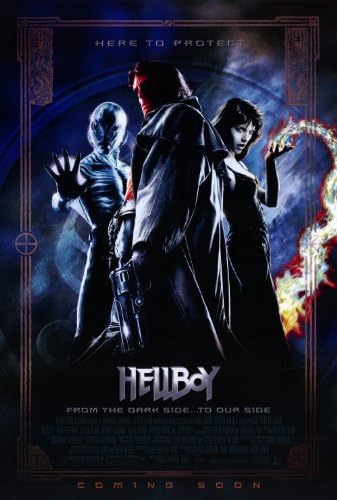

Guillermo Del Toro’s first Hellboy film might not have as large a following as Predator, but (as one of my personal favorite fantasy genre films) it may be used to further illustrate the Infecting Being plot pattern through a story with a differing tone and premise. For those who have not seen it, Hellboy is set at the Bureau for Paranormal Research and Defense: a secret government agency tasked with protecting the world from supernatural threats. Our team of heroes consists of the elderly Professor Broom and three meta-humans: the demon Hellboy, the fish-man Abe Sapien, and the pyrokinetic Liz. The drama begins with the release of Broom’s old enemy Rasputin from his cosmic prison. Rasputin and his followers then enact an elaborate plan to distract and manipulate the heroes in order to bring about a Lovecraftian apocalypse which will awaken the old gods and destroy the world.

Hellboy can be clearly recognized as an Infecting Being by the fact that the heroes are left unaware of Rasputin and the magnitude of this threat until the story’s Midpoint. In Act 1, the malicious agent (Rasputin) enters the heroes’ environment, releasing a hellbeast from a stone statue. When the heroes respond and Hellboy slays this first beast, the event is assumed to be an isolated incident and the heroes leave their guards down. Yet little do they realize that, through this event, Rasputin has successfully established the first foothold of his master plan (the malicious agent permanently attaches itself to the environment). Since the heroes remain unaware of any major details concerning Rasputin’s threat, they become distracted by other concerns and fall prey to further tricks and manipulations in Act 2A. This ignorance results in disaster: several agents are killed, Abe Sapien is injured; and, at the Midpoint event, Rasputin murders Professor Broom to retrieve an item essential to his apocalypse.

It is not until this Midpoint that the heroes finally come to understand the threat which has been brewing under their noses. In Act 2B, the remaining heroes respond by taking actions aimed at stopping Rasputin’s master plan. However, like Keysor Soze in The Usual Suspects, Rasputin is too smart for the heroes. Ignorance continues to be a factor, and the heroes are unwittingly led to do exactly what Rasputin wishes. As it turns out, Hellboy has always been an essential element of Rasputin’s plans. Everything has been contrived to lead Hellboy to a specific place at a specific time so Rasputin may use Hellboy to initiate the apocalypse. With the door to the dark cosmos opened at the end of Act 2B, the heroes find themselves in a most desperate situation. And, like in most Infecting Being stories, the characters really have no one to blame but themselves for their own past ignorance. Once again, the characters are put into a position where only the most extreme of actions have any possibility of eliminating the agent before it can achieve absolute destruction.

Se7en (1995)
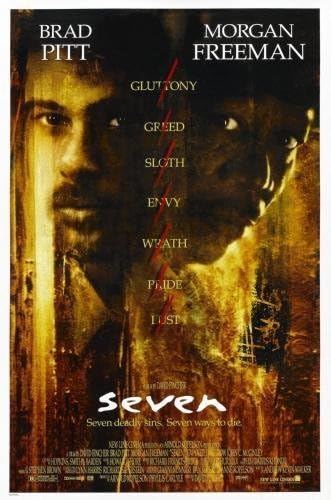

It is fairly easy to trace the development of conflict in an Infecting Being, as the source of the dramatic threat is always located in a flesh-and-blood individual (human or otherwise). Yet the corrupting influence found in its counterpart, Type 7b: The Infecting Idea, can be slipperier and harder to identify. As the pattern’s name suggests, the malicious agent found in an Infecting Idea tends to be far more abstract. Rather than a physical entity infecting a character’s environment, a disturbing idea, fear, or suspicion infects characters’ minds. This idea may then spread from one character to another like a virus, creating panic, paranoia, and increasingly irrational behavior. Prototypical examples include Reservoir Dogs (1992), a story where a group of criminals suspect a traitor among their ranks. Fear and accusations cause the characters to turn on each other, with bloody consequences. Another example is Clint Eastwood’s Mystic River (2003), where the murder of a teenage daughter tears a neighborhood apart with suspicion. The film ends with the father erroneously killing a childhood friend in revenge.

Due to its abstract nature, the Infecting Idea plot pattern follows a looser structure to accommodate all of its possible manifestations. For this reason, I will start off with David Fincher’s Se7en, a film where the infection has the most tangible source and clear, physical consequences.

Act 1 begins with an event which first plants the infecting idea into the minds of one or more characters. (While investigating a grotesque crime scene, Detective Somerset (Morgan Freeman) notices that the murder has all the hallmarks of a serial killer: the most terrifying, nihilistic, socially-destructive force imaginable in a modern urban environment.) At first, however, characters resist or try to deny this idea. (Both Detective Mills [Brad Pitt] and their supervisor [R. Lee Ermey] dismiss the idea. The first murder is merely a strange, yet isolated incident.) However, further developments force the characters to accept the reality of the idea at the end of Act 1. (Somerset finds evidence linking the first killing to a second bizarre murder. As Somerset predicts, they can expect five more murders. The detectives accept the idea: They are indeed dealing with a serial killer.)

Following the acceptance of this idea, Act 2A begins with the characters taking rational, level-headed actions to resolve the problem through familiar methods. (Somerset and Mills chase clues using good old-fashioned police work.) However, these efforts lead to nowhere but failure and frustration. (A hot clue leads the detective straight to the next crime scene, just as the killer had planned. It is clear that the killer is toying with them.) As new developments cause tensions to mount, characters start to give in to more desperate impulses, sometimes switching to extreme or unorthodox methods. (Mills’ behavior becomes increasingly reckless and angry. The by-the-book Somerset starts to bend the law with some ethically-questionable methods.)

The Act 2B of an Infecting Idea may then develop in one of two ways. In the most common course, the Midpoint finds one or more characters becoming fully “infected” by the story’s mental virus. The infected characters then start to act irrationally, causing infected and non-infected characters to turn on each other. (In Mystic River, childhood friend Dave [Tim Robbins] starts to act strangely, causing Jimmy [Sean Penn] and Dave’s wife [Marcia Gay Harden] to suspect that Dave is the killer.) Alternatively, the Midpoint event may finally reveal the source of the infection. This is the path taken by Reservoir Dogs, where Mr. Orange (Tim Roth) is revealed to be an undercover cop. Se7en also follows this route. (Somerset and Mills find the apartment of the killer John Doe [Kevin Spacey] and have their first direct encounter with Doe.) Act 2B then traces the roots of the infection. This however, does little to curb its continuing influence. In fact, the infection spreads quicker and deeper, pushing characters to increasing levels of desperation. (Knowing the police are hot on his trail, John Doe picks up the pace of his actions so he may complete his murderous masterpiece before time runs out.)

Act 3 also allows two options. The End of Act 2B Turning Point may implement one or the other, or a combination of both. In the first option, Act 3 begins with a “hint of truth.” This revelation suggests a possible answer to all the madness. Yet the conflict intensifies as characters continue to fight over or deny this truth. (In Reservoir Dogs, the boss Joe declares Mr. Orange to be the traitor, an accusation Mr. White [Harvey Keitel] furiously denies.) As a second possibility, Act 3 begins with an infected character committing an irrational action or initiating a plan that, unless quickly reversed, will lead to an ultimate destruction. The Act 3 of Se7en begins with John Doe suddenly surrendering himself to the police. Yet this makes no sense. Why would this psychotic genius give himself up before completing his masterpiece? This inexplicable action follows the Infecting Idea’s second option. As the story’s most infected character, the “Patient Zero” of the infection if you will, Doe’s surrender is a key part of his warped master plan that will bring the story to its grim and brutal end.

Yet no matter which option the story uses in early Act 3, the infection is now at the height of its power and events spiral dangerously out of characters’ control. Whether the climax results in total destruction or a last-second redemption, the full truth or consequences of all previous events are finally revealed. As the smoke clears, characters find the fear, panic, or suspicion has left their world in shambles. (In Se7en, the detectives believe they have Doe’s evil safely contained. However, they discover themselves to be pawns in the killer’s game yet again. Taken to a remote location, the situation spirals into annihilation with the discovery of the severed head of Mills’ wife and Mills repeatedly shooting Doe in his rage. In the end, the infection destroys Mills as well.)


Close Encounters of the Third Kind (1977)
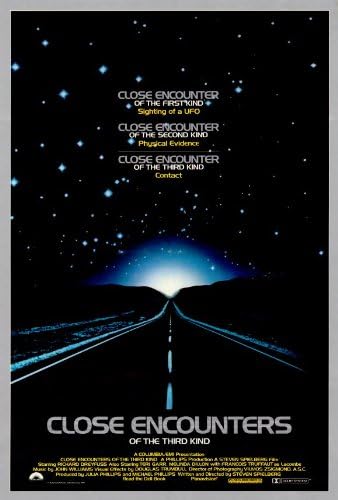

To provide a contrast with Se7en, Close Encounters of the Third Kind presents a very different take on the Infecting Idea plot pattern. Here we find a rare case of a Celebratory Infecting Idea where the “infection” is ultimately revealed to have a benign source and characters are rewarded for following its impulses.

Encounters is also a rarity among Hollywood films in that the story is intentionally designed to create narrative gaps which are never filled and prompt questions which go unanswered. Encounters seeks to instill a feeling of wonder through its spectacle rather than give the usual “mystery-solving” experience by way of a causal chain of questions and answers. Nevertheless, the course of the “infection” which consumes the protagonists is quite clear. In fact, with the story’s focus on character reactions instead of narrative facts, the Infecting Idea pattern becomes painfully obvious.

Encounters contains two characters who may be labeled protagonists: Roy Neary (Richard Dreyfuss) and Jillian Guiler (Melinda Dillon). At the inciting incident, both protagonists have a strange encounter which first plants the infecting idea in their minds. (On an isolated road, Roy’s truck goes haywire as some overhead object blasts him with a blinding light. Jillian wakes when every electronic item in her home becomes animated, an event which causes her young boy to run off into the woods.) The protagonists, of course, do not immediately leap to the conclusion of alien visitors. As rational persons, they respond in the same way anyone might. (Unsure what just happened, Roy tries to follow the light. Jillian chases after her son, too preoccupied to give anything else much thought.) Act 1 then ends with an event which confirms the reality of the idea. (Roy and Jillian together witness three spacecraft up close. Suspicions have been confirmed. They have definitely been visited by advanced extraterrestrial beings.)

There are other witnesses of the spacecraft as well. This splits the townsfolk into two sides in Act 2A: those who did witness and believe the strange events (the infected) against those who did not and refuse to believe (the uninfected). Both sides, at first, take rational attempts at quelling the discord, but neither are able to convince the other to their point of view. Recourse to civic institutions also proves pointless. Halfway through Act 2A, signs of “infection” begin to show in the witnesses. (Roy begins to act oddly, preoccupied by the mental image of a mound-like structure. Jillian’s son also seems to be mentally absorbed by the image.) Ensuing events then cause the fear and panic to escalate. (Mostly limited in Encounters to a single, albeit terrifying, event: The alien visitors return to Jillian’s home and abduct her son.)

As stated in the previous section, the Midpoint event provides two options for the Infecting Idea. While Se7en follows the second option, Encounters makes use of the first: the protagonists both become completely “infected” by the Idea, triggering highly irrational behavior. (Roy appears to have gone certifiably insane, tearing up his lawn in some sort of mania. Meanwhile, Jillian is a basketcase, drawing picture after picture of the mound-like structure.) As usual, this mental break causes infected and non-infected characters to turn on each other (Roy’s wife packs up the kids and leaves him. No one will believe Jillian’s story about her son.) The infected characters then pursue an increasingly irrational plan of action (Roy and Jillian both identify the Devil’s Tower National Monument as the structure they have envisioned and go there in spite of a full military evacuation due to a “nerve gas.”) These escalated actions create more conflict with the uninfected. (Roy and Jillian are arrested by the military).

Yet Roy and Jillian remain obsessed with the Idea, and launch Act 3 with an extreme act of irrational defiance. (They escape military custody and attempt to run to Devil’s Tower on foot.) In most films, this turning point would initiate a downward spiral toward ultimate self-destruction, but as I have mentioned, Encounters presents a unique deviation where the protagonists’ “infected” impulses are eventually proven correct. The aliens are benevolent, and their “infection” was actually a subliminal invitation to join them. The non-believers are proven wrong, and Roy is rewarded at the climax by being allowed to board the alien ship to learn the wonders of the universe.

(For an even more abstract take on the Infecting Idea, I encourage you to consider Sofia Coppola’s first feature, The Virgin Suicides (1999). This story traces the tragic dissolution of a family and its five teenage daughters, starting with a suicide attempt by its youngest. I have also discovered Tim Burton’s Sleepy Hollow (1999) to be a more literal example of an Infecting Idea. But since I don’t think many people actually like this movie, I won’t spend any time discussing it.)

Teenage Mutant Ninja Turtles: The Movie (1990)
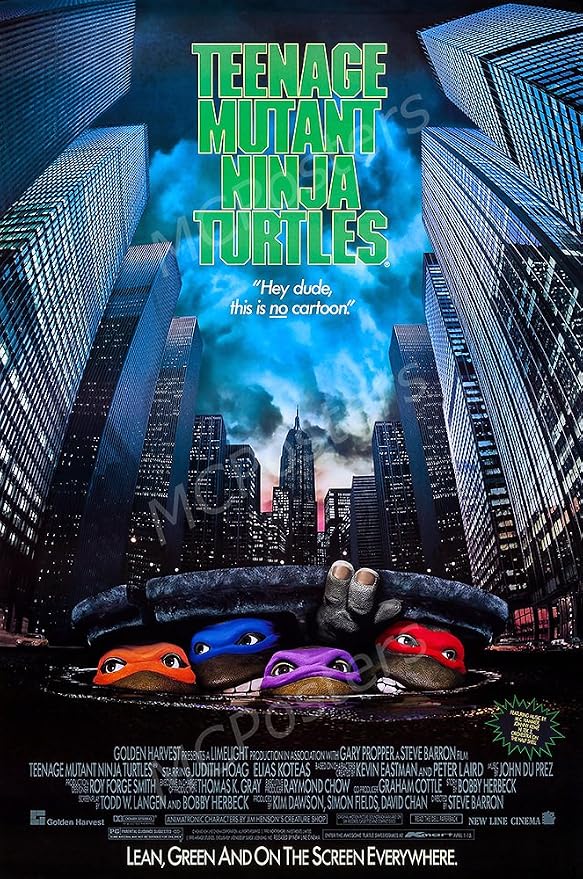

Call it childhood nostalgia, but I think the original Teenage Mutant Ninja Turtles movie is an underrated family classic. It was way ahead of recent genre trends by having the guts to take its source material seriously. Its style was “darkgrit” way before Chris Nolan’s Batman Begins. And, most impressively, it puts real effort into developing its characters and theme. It is not all sight gags and set pieces, but a story about the bonds of brotherhood and the love between fathers and sons. Now, I’m not suggestion it is some kind of hidden masterpiece. I’m simply saying it deserves more respect than it has received.

TMNT is, of course, aimed at a younger audience with a fantasy premise to boot. As such, it follows the same wisdom used in films like the original Star Wars, The Matrix, or The Lord of the Rings: The Fellowship of the Ring: the more fantastic the story premise, the simpler the storyteller should keep the plot. Here then is the plot of TMNT: The Foot Clan, an underground army of runaway youths-turned-ninjas led by their master Shredder, has targeted reporter April O’Neil for investigating their activities. The Turtles also become targets of the Foot after Raphael rescues April from an attack. The Foot invade the Turtles’ home while the heroes are away (a battle which takes place off-screen), ending Act 1 with the kidnapping of the Turtles’ “father” Splinter. In response, the heroes find refuge in the home of April, where tensions escalate between the brothers. Midway through Act 2A, the Foot again surprise the heroes with an escalated attack, leaving Raphael unconscious and April’s home in ashes. The heroes escape and are forced to make a tactical retreat to an old country house at the story’s Midpoint. At this sanctuary, the heroes heal and regroup. Strengthened both physically and mentally, the heroes return midway through Act 2B—to be soon found again by Shredder’s Foot Clan. Yet the heroes are now prepared to fight rather than flee, creating an intense Act 3 battle which culminates in the heroes facing, disempowering, and defeating the Shredder; reuniting with their father Splinter in the process.

This plot breakdown reveals that TMNT closely follows the pattern of Type 6a: The Destructive Beast, a story variety discussed in full detail in this previous article. Not only do the sequences of escalating attack and escape occur at the same points as prototypical Destructive Beasts like The Terminator or The Bourne Identity (2002), but so do the sequences dedicated to developing the character relationships between the hero(es) and the “Sole Companion” character April O’Neil. Furthermore, the heroes’ tactical retreat to the country farmhouse is a dead giveaway of the pattern, as this type of event occurs at the Midpoint of all prototypical Destructive Beasts.

Yet of course, TMNT also seems quite different from Terminator or Bourne due to its use of a few alternatives and deviations. First of all, TMNT features not a singular protagonist, but a group protagonist made up of all four brothers. Second, the protagonists are not the original target of the “Beast.” The Shredder initially targets April O’Neil for destruction. The Turtles only become targeted by association when they come to April’s aid in late Act 1. Thus, the roles of the targeted “protagonist” and the Sole Companion character(s) are initially flip-flopped. However, this deviation is corrected after Act 1, when the Turtles become the Beast’s primary target. Finally, the Beast found in TMNT does not present the figure of constant menace found in Terminator or Bourne (or, for that matter, other Destructive Beasts like Punch-Drunk Love [2002], The Incredible Hulk [2008], or The Contender [2000]). TMNT instead prefers to keep the Beast in the story’s background to dedicate more time to the development of the character relationships between the brothers, April O’Neil and comrade Casey Jones. While the Destructive Beast is one of the Antagonism-Centered plot patterns, TMNT presents the alternative of formulating a protagonism-centered Destructive Beast.

Collateral (2004)
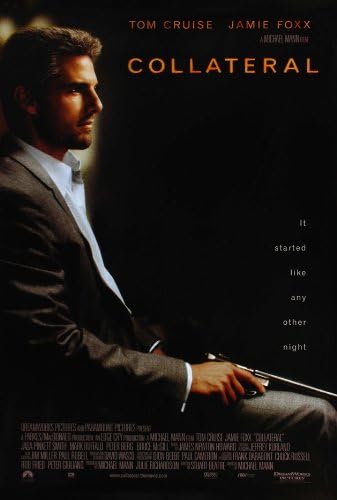

This film may be little more than a blip in our memories now, but at the time of its release, this Michael Mann thriller made quite a splash with its combination of a tight, fast-paced plot, an A-list cast, and an uncharacteristically lo-fi, indie-style aesthetic. Most of the criticism against this film, however, came from the many perceived similarities to 2001’s Training Day – causing some to label it a pale imitation. Since Training Day operates as a prototypical Type 16b: The False Friendship, I initially followed the critical consensus and assumed Collateral to be a False Friendship as well. However, upon a recent viewing, I was proven completely wrong. I have included Collateral on this list of better-known films because it presents a great example of one of the most rarely-produced (and one of my favorite) plot patterns: Type 6b: The Covetous Beast.

For a detailed discussion on the Covetous Beast, I recommend you read this previous article. The Covetous Beast, of course, belongs to the same family of plot patterns as the Destructive Beast. However, in this case, the “Beast” does not wish to destroy the Protagonist, but to possess, control, and/or enslave the Protagonist, as best exemplified by the prototypes Sunset Boulevard (1950) and Fatal Attraction (1987). As described in the article linked above, the narrative of a Covetous Beast can be best described in terms of a contract forged between Protagonist and Beast. The Protagonist first enters into this arrangement willingly, believing it to be simple and short-lived. Yet at the end of Act 1, the Protagonist learns this contract has highly-unwelcome strings attached. In Collateral, the drama begins when cab driver Max (Jamie Foxx) is hired for the night by client Vincent (Tom Cruise). Vincent offers Max $600 for six trips, a pretty attractive deal for a cabbie in need of funds to start his own business. Yet this simple contract takes a dark turn at the close of Act 1 when the first stop ends with a dead body falling onto Max’s cab. Max learns that Vincent is an assassin, hired to kill five people that night. Max wants out of the deal. But Vincent makes it frighteningly clear that Max will fulfill his agreed-upon duties or else the next bullet will be for Max.

With this, the Protagonist regrets the contract and begins Act 2A trying to complete its terms as quickly as possible and/or searching for a reasonable way to get out of the arrangement. However, in the following sequences, the Beast tightens its grip on the Protagonist, demanding that the Protagonist cede more and more personal control. Through two incidents in Collateral’s Act 2A (a narrowly-escaped potential bloodbath when the cab is pulled over by police, and a robbery by thugs after Max calls out to strangers for help) Vincent constricts the bond between he and Max. Vincent makes clear that they are no longer client and driver, but partners. Any more attempts to squirm out of the arrangement may result in the deaths of more innocent people. Though Max continues to offer resistance, these efforts become futile. By the end of Act 2A, it has become abundantly clear that the Protagonist has become the contract’s PRISONER.

Things reach a breaking point at the Midpoint of a Covetous Beast. The Protagonist declares the contract null and void and attempts an escape. (Max takes advantage of a momentary distraction to grab the case filled with the information on Vincent’s remaining targets and makes a run for it.) Yet this does not last long. The Beast has too strong a hold on the Protagonist and forces a reunion. (In Collateral, this period of escape is briefer than in most Covetous Beasts. Unable to outrun Vincent, the best Max can do is chuck Vincent’s case off the side of a freeway overpass.) With this, the Protagonist must admit his/her helplessness and surrender to the contract, dragging him/her even deeper into its imprisonment in Act 2B. (Vincent is not happy. He gives Max a choice: either help him retrieve another copy of the lost information or die. Max surrenders and is pulled even deeper into Vincent’s world when Vincent forces Max to impersonate him in a meeting with Vincent’s employer, the crime lord Felix [Javier Bardem]. This has an added complication: the federal agents monitoring Felix now believe that Max is the assassin responsible for the people Vincent has killed.)

However, along with the Protagonist and the Beast, the Covetous Beast contains a third crucial party: the Wedge character. The Wedge is an individual with the goal of separating the Protagonist from the Beast. (In Collateral, this is LAPD detective Fanning [Mark Ruffalo].) While the Wedge may have been little more than a background player up to this point, he or she attempts to directly interpose him/herself into the conflict in Act 2B. (Vincent and Max enter a nightclub in search of Vincent’s fourth target. The feds have orders to shoot Max on sight. Fanning, however, believes Max is innocent. He finds Max and extracts him from the nightclub in the ensuing chaos.)

This opens a new conflict between the Beast and the Wedge—a tug-of-war, if you will, for control of the Protagonist. The story then makes its turn into Act 3 with the Beast taking an intolerable action against the Wedge. (Like the Midpoint event, this new line of action is uncharacteristically short-lived in Collateral. Vincent shoots Fanning and recaptures Max as soon as they exit the nightclub.) Disgusted by this action against the Wedge, the Protagonist finally musters the guts to turn the tables on the Beast. The Protagonist realizes that the Beast clings so tightly to him or her because the Beast desperately needs the Protagonist. The Protagonist thus recognizes that he or she has some power in the relationship and uses this power to finally tear him/herself away from the Beast. (Max intentionally wrecks his cab to prevent Vincent from reaching his final target.) But the Beast will not go away quietly. Though the contract has been broken, the Beast refuses to give up on its original goal, causing direct conflict to continue in escalated fashion. (Vincent takes off on foot in pursuit of his final target. Max learns that this target is the woman he met earlier that night [Jada Pinkett Smith], compelling him to follow.) The film then climaxes with a direct confrontation between the Protagonist and Beast, an event which only one (or possibly neither) party will survive. (Max saves the target and kills Vincent.)

* * * * *

Stay tuned for the fourth and final installment of Scriptmonk’s Plot Pattern Extravaganza! Films to be covered: Unforgiven, Butch Cassidy & The Sundance Kid, Dead Poets Society, Beetlejuice, and more!

Saturday, May 2, 2020

Scriptmonk's Plot Pattern Extravaganza -- ALL Y'ALL FAVORITES!! (Part 2)

(Click here for PART 1)

(Click here for an overview of the 34 Common Plot Patterns of American Cinema)

The extravaganza continues this week with an analysis of eight more films operating in groups 8 and 9 of the Action-Centered Plot Patterns! Enjoy.
(SPOILERS)

North by Northwest (1959)


More than sixty years old, Alfred Hitchcock’s North by Northwest can definitely be labeled a Hollywood classic. The structural analysis of anything over forty years old can be a bit tricky, however, as the “classical” narrative structures used in Hollywood’s past differ in many ways from what we are accustomed to seeing on movie screens today. However, true “classics” (older films which remain widely-loved and critically-revered due to their superior storytelling, such as Casablanca, Citizen Kane, The Wizard of Oz or North by Northwest), seem to have been far ahead of the curve when it came to structural proficiency. Thus, despite their extensive age, Casablanca is still a prototypical Crisis of Conscience, Citizen Kane represents a prototypical Power Glutton, and North by Northwest provides a early example of Type 9a: The Involuntary Snowball of Complications.

Exemplified by films like Back to the Future (1985) or The Big Lebowski (1998), the Involuntary Snowball features a protagonist who becomes unwittingly tangled up in an increasingly complex, and eventually overwhelming, narrative situation. While the protagonist may have been initially drawn into the situation by fate or bad luck, the protagonist subsequently makes the predicament worse and worse through a series of mistakes and poor judgments. The plot thus develops like a giant snowball rolling downhill; increasing in size, as well as speed, as it picks up more and more material as it goes.

If we simplify its twists and turns, North by Northwest fits in quite well with other Involuntary Snowball prototypes. Protagonist Roger Thornhill (Cary Grant) is corralled into a life-or-death conflict by pure bad luck when the antagonist mistakes him for a government agent named George Kaplan. This creates problems enough, but at the end of Act 1, Thornhill commits a major error which greatly complicates his situation: Thornhill is photographed holding the knife used to murder a UN diplomat, inciting a manhunt for his arrest. In Act 2A, Thornhill deals with the consequences of this complication to the best of his limited abilities, but clumsy actions and foolish mistakes lead to an event which adds another, and even greater story complication: Thornhill is set up to be killed (in the famous cropduster sequence) by the beautiful blonde Thornhill believed to be an ally (Eva Marie Saint), revealing that he has been playing right into the antagonist’s hands. Thornhill must work even harder in Act 2B to outrun the snowball of complications threatening to crush him. Luckily for him, Act 2B ends (as all Involuntary Snowballs do) with an event that successfully resolves the complication created at the End of Act 1: Thornhill is taken in by the intelligence agency behind the “Kaplan” mystery. This event essentially clears Thornhill of the UN murder and ends the manhunt. With that complication out of the way, the Involuntary Snowball’s Act 3 begins with the protagonist turning all of his/her attention onto resolving the original conflict set up in Act 1: Thornhill agrees to impersonate George Kaplan to help the government stop the antagonist.

True Lies (1994)


Arnold Schwarzenegger made a lot of action-comedy junk in the 1990s. Most of it can be happily forgotten. However, James Cameron’s True Lies holds higher regard in the opinions of genre fans. Most fans would say this is because True Lies is a little bit better. It’s a little bit better because it is a little bit different. The truth is, True Lies isn’t really the story of an elite secret agent fighting criminals and terrorists. It is the story of a jealous husband trying to save his failing marriage – who just happens to be an elite member of a secret agency with all the resources of that agency at his fingertips. Once this distinction is made, the movie’s Involuntary Snowball plot pattern becomes apparent. For while Act 1 contains a lot of action and intrigue to set up the spectacular set pieces found in the second half of the film, all this material is put on hold at the end of Act 1 and left entirely absent from Act 2A. Instead, we find Schwarzenegger’s Harry Tasker putting all his time and agency resources into investigating his fear of his wife Helen’s (Jamie Lee Curtis) possible adultery. However, to Harry’s horror, these two lines of action converge at the story’s Midpoint event, inextricably involving Helen in his mission to stop a nuclear terror plot.

So, here is the Involuntary Snowball structure as found in True Lies. Act 1 sets up the story’s external conflict, not through a single inciting incident, but a series of events—a trademark of the Snowball of Complications plot patterns: (Harry Tasker lives a double life. The demands of his secret professional life have put an undue strain on his private life, leaving Helen unhappy.) The protagonist then makes a major error at the End of Act 1 (Harry surpasses the limits of Helen’s patience by failing to show up for his own birthday party), which as a result creates a major complication to the protagonist’s situation: (Harry learns that Helen has begun seeing another man, causing Harry to fear that Helen is cheating on him). Act 2A then focuses not so much on the situation established in Act 1, but the protagonist’s efforts to deal with the new complication. (Harry abuses the power of his agency to spy on Helen and scare away his rival. He then sets up a complex ruse to rekindle his marriage.) However, the protagonist’s attempts to deal with the complication end up worsening the overall situation by triggering an even greater complication at the Midpoint. (The bad guys get the drop on Harry. They mistake Helen for a fellow agent and kidnap them both.) Now dug deep into a hole of his own making, the protagonist must put all his Act 2B effort into climbing out of that hole, while dealing with the unexpected obstacles and further complications which come along the way. Act 2B then ends in a manner which successfully resolves the complication created at the End of Act 1. (Harry, injected with truth serum, confesses everything about his secret double-life to Helen. With the two now open and honest with one another, there is no more reason for marital discord or Harry’s suspicions.) With the End of Act 1 complication cleared out of the way, Act 3 focuses upon resolving the original problem established at the story’s inciting incident. (Harry stops the terrorists from detonating their nuclear weapons.)

Back to the Future follows this structural pattern. The Big Lebowski follows this pattern. North by Northwest follows this pattern. And so does True Lies.

Risky Business (1983)


Risky Business, the 1983 Coming of Age classic which launched Tom Cruise into movie stardom, presents yet another Involuntary Snowball of Complications. However Business deviates from the pattern’s standard form. While prototypical examples structure their Major Dramatic Turning Points in the following fashion: Problem – Complication #1 – Complication #2 – Resolution of Complications – Final Resolution; Business opts for a structure which goes more like this: Problem – Complication – Resolution/New Complication – Resolution/New Complication – Final Resolution.

I will not go into too much detail, seeing as I have already described the Involuntarily Snowball twice. However, a brief overview of Business’s plot should make clear how this deviant example operates. 
 
High school senior Joel Goodson, given the house to himself while his parents are on vacation, is teased by his friends because he is about to enter college (and thus, adulthood) with his virginity still intact. In response, Joel contracts the services of young prostitute Lana (Rebecca De Mornay). After a night with Lana, Joel finds he has no money to pay her. Joel goes to the bank and returns to find Lana missing, along with his mother’s prized (and extremely expensive) glass Steuben egg (End of Act 1 Complication). Joel tracks down Lana, but both are threatened by Lana’s pimp Guido (Joe Pantoliano). Lana agrees to get Joel the egg back, but she needs to stay at his house for a few days to get away from Guido. Things seem to be on the road to resolution for Joel (despite the slight added complication of having a prostitute living in his parents’ home). However, a night out with Lana and some friends ends with the wreck of his father’s Porsche (New complication #2, ending Act 2A). To pay for the repairs, Lana suggests going into business for themselves by turning Joel’s house into a one-night brothel. Despite some hiccups, the plan goes well and Joel manages to get the Porsche repaired by the close of Act 2B (Resolution). However, when Joel brings the car home, he finds that every piece of furniture in the house has been stolen (New complication #3, launching Act 3). Guido arrives in a moving truck full of the stolen furniture and offers it back in exchange for all the money leftover from Joel’s brothel. Joel gives in and manages to get everything back into place before his parents come home (Resolution). In the end, we are given to believe that Joel’s adventure has granted him the wisdom and experience he needs to cross the threshold into adulthood (Final Resolution).

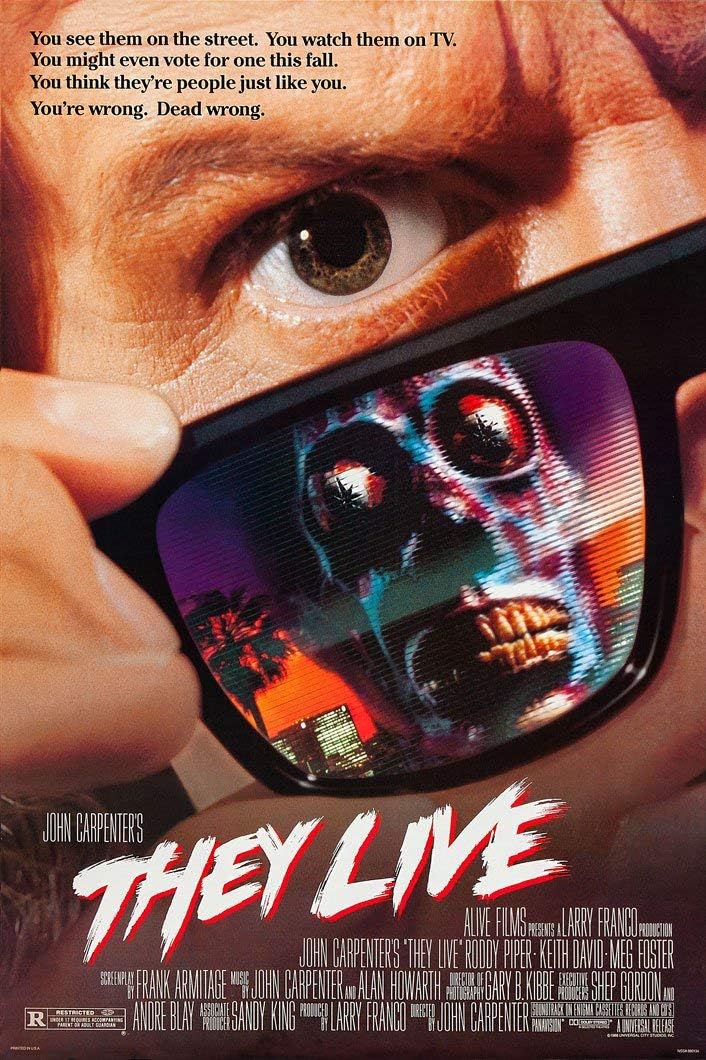
They Live (1988)


While the Involuntary Snowball features a protagonist who becomes unwillingly wrapped up in an increasingly complicated situation, Type 9b: The Voluntary Snowball follows a protagonist who dives head-first into such a situation by their own free will. The most characteristic feature of this second pattern is the presence of a “Siren” that lures the protagonist deeper and deeper into a story conflict which they would be wiser to avoid. This “Siren’s call” might issue from the protagonist’s obsession with another character (as in Blue Velvet [1986] or WALL-E [2008]), the desire to obtain a valuable object (as in Raiders of the Lost Ark [1981]), or a mystery the protagonist feels compelled to solve (as in Chinatown [1974]). They Live contains a fairly simple story, and thus uses a simplified version of the Voluntary Snowball. Yet the hero John Nada’s (Roddy Piper) compulsion is nevertheless the same as Chinatown’s Jake Gittes (Jack Nicholson). When Nada learns of a hidden conspiracy, he is driven to dig deeper and deeper into the mystery until he can uncover the truth and reveal it to the world. Like Gittes, nothing physically forces Nada to continually push his way into increasingly dangerous territory—except his own obsession with the Siren’s call.
(As a side note, I do not remember if Piper’s character is ever referred to by name in the film. I had to look up the character name on imdb.com. “Nada” literally means “nothing,” providing added commentary to the nature of the protagonist.)

The voluntary nature of this plot pattern may be seen in the way that, unlike in the Involuntary Snowball, each turning point presents Nada with an opportunity to walk away from the situation with no immediate consequences. However, Nada continually chooses to escalate his involvement by his own free will. When Nada sees strange goings-on at the church across the street, he could choose to ignore it. It’s really none of his business. Still, he sneaks in to investigate. When he watches the police raid the church and clear out the homeless camp, he could take it as a clear warning to move on. Anything he does at this point would be asking for trouble. Yet still, he returns to the empty church and collects a mysterious box. When Nada finds a special pair of sunglasses which reveal that human society has been secretly enslaved by aliens, he could protect himself by keeping this revelation a secret. After all, no one knows about his discovery. Instead, he openly challenges these disguised aliens. As the story later establishes, Nada is not the first human to learn this secret. The aliens’ usual strategy is to bribe these potential troublemakers into silence with wealth and power. An alien cop suggests such a deal to Nada just before the story’s Midpoint. But Nada does not even consider the option. He grabs a gun and starts to kill aliens left and right. (This is similar to the Midpoint in Chinatown where the antagonist Noah Cross offers Jake twice as much money to switch loyalties to his side. Gittes refuses, starting his own one-man war against Cross.)

The Siren, of course, is an obsession, and thus leads the protagonist to increasingly risky and irrational actions against his or her own self-interest. To avoid self-destruction, the protagonist must eventually pull back from the obsession and extricate him or herself from the self-created complications through prudent and reasonable actions. Nada, however, shows all the rationality of a kamikaze in the film’s final act. While there may have been a more reasonable way to reveal the story’s secrets to the world, Nada hurls himself into a suicide mission. Though Nada does ultimately achieve his objective, his only reward is a tragic death.

(By the way, in this current era of high-profile genre soap operas like Game of Thrones and Breaking Bad, I am surprised that there has not yet been a series developed from They Live. The film hints at a vast narrative universe with questions and mysteries the original story has no time to explore. There is enormous potential for its premise if opened up to include a wide cast of characters.)

Jurassic Park (1993)


I know a lot of people, particularly those who grew up in the 1980s & 90s, hold a deep nostalgic fervor for the original Jurassic Park. However, I hate to break it to you that Jurassic has pretty poor story structure. It is an extremely front-heavy film which dedicates most of its run time not to plot or character, but to pure spectacle. It is not until about forty minutes into the film that Jurassic seems to realize that it also needs to tell a story. This poses some problems for structural analysis, as all the major plot turning points have been compressed into the back half of the film. However, here is the dramatic 3-Act structure of Jurassic Park:
Act 1: A team of researchers are invited by an eccentric billionaire to a mysterious faraway location. The act ends with the characters arriving at the location to see its wonders.
Act 2A: After some exposition and a tour of the facilities, disaster strikes when the security system is disabled by a traitor, releasing the dinosaurs from their pens. The characters flee from the ensuing chaos.
Act 2B: With the situation momentarily stabilized, the characters find that the security system cannot be simply switched back on. The only way to reboot the system is through a dangerous mission into dinosaur-overrun territory. This mission is successful, but not without the loss of life.
Act 3: With that issue resolved, the characters can now make their escape from the park. However, this is no easy task, as unexpected threats pop up along the way, keeping the characters’ escape uncertain until the story climax.

The most conspicuous thing about this summary is the placement of the story’s most significant dramatic event: the release of the dinosaurs from their enclosures. This event occurs not at the end of Act 1 or Act 2A, but at the end of the first sequence of Act 2A. This is a dead giveaway of plot pattern Type 8b: There & Back Again.

Exemplified by the prototypes The Wizard of Oz (1939), Apollo 13 (1995), and Deliverance (1972), the There & Back Again contains a character (or, more often, a group of characters) who leaves home on an adventure, only to encounter a disastrous complication that threatens any safe return. The remainder of the narrative focuses on efforts to overcome the disastrous complications so the characters may ultimately return to the safety of home. In Act 1, characters prepare for an adventure. The act ends with the adventure passing its point of no return. (A cyclone lands Dorothy’s house in Oz; the Apollo rocket takes off; the four friends in Deliverance launch their canoes down the river). At this point, things are (more or less) safe and under control. However, disaster strikes at the following turning point (Dorothy’s life is threatened by the Wicked Witch, demanding a journey to the Wizard for help; a malfunction sends the Apollo capsule out of control; the friends are set upon by evil mountain men.) For the remainder of Act 2A, the characters struggle to regain control over their immediate situation. By the end of the act, some sense of stability has been restored. However, the Midpoint reveals a major complication (typically a direct result of the initial disaster) which prevents any current possibility of a safe return home. (The Wizard refuses to help Dorothy return to Kansas until she brings him the broom of the Wicked Witch; damage to the Apollo capsule will doom the astronauts unless quick solutions are found; after killing and burying one of the mountain men, the friends realize the survivor is hunting them like animals.) Act 2B then focuses on resolving this complication, reaching success at the act’s end. With that issue resolved, Act 3 launches the quest to return home, with threats and obstacles encountered along the way.

The There & Back Again has been included in the “Literal Journey” family of patterns due to the fact that the prototypical examples mentioned above present narratives where characters are always on the move, engaged in a traveling adventure in the most classical sense. The End of Act 1 Turning Point of these films is thus marked by the official launch of the journey. However, Jurassic Park (as well as the next three films discussed below) provides evidence for a commonly-used alternative structure. Rather than launch the beginning of an ongoing journey, the end of Act 1 marks the characters’ arrival at a static (though far away) location. The following moment of disaster then threatens the characters’ chances of safely leaving the location. The remaining three acts then continue to follow the standard pattern: 2A: Overcoming the immediate danger. 2B: Resolving the new complication. 3: The struggle to finally head home. We find more than enough evidence to support this alternative in the next three examples.

Aliens (1986)


Here’s something interesting. Aliens and Jurassic Park tell the exact same story. I don’t simply mean they follow the same plot pattern. I am saying the two films literally tell identical stories. The only differences are in the identity of the characters and the monstrous beasts who threaten them (plus the fact that Aliens’ plot develops with much better pace and structure).

In Act 1, we have the assembling of a team of specialists to be sent to an exotic, far-off location potentially fraught with dangers and wonders. (The Weyland-Yutani corporation recruits Ellen Ripley to accompany a team of Marines and company representative Burke on an investigation of the site where Ripley and the Nostromo crew first encountered the alien creatures in the previous film.) The team arrives at the location at the end of Act 1. Everything first appears to be quiet and under control. But, at the first turning point of Act 2A, the monsters break loose. (The Marines unexpectedly awaken a hive of warrior xenomorphs, initiating a frenzied battle to escape.) The survivors manage to get to momentary safety. However, a technical problem caused by the preceding disaster prevents their escape from the location. (Damage to equipment prevents the team from piloting a dropship to the planet’s surface. Later, a second technical complication adds further urgency: the facility’s nuclear reactor is going into meltdown, preventing the possibility of simply hunkering down and waiting for rescue.) This demands that certain crew members make a dangerous journey through the cramped, dark facilities to resolve the technical problem. (Bishop volunteers to crawl through a conduit to an uplink tower in order to pilot a dropship to the surface remotely—much like how Arnold, Muldoon and Sattler in Jurassic volunteer to reset the park’s power generator.) Meanwhile, the others must do their best to fend off further encounters with the monsters as they wait, but not without the addition of new threats (Ripley and Newt are menaced by the release of two facehugger aliens—much like how the quest to reset the generator frees the raptors in Jurassic). The technical complication is successfully resolved, launching the action of Act 3: the flight to the escape vessel through monster-infested territory. (In additional parallel, the Act 3 of both films contains a turning point where the protagonist must face the monsters directly in order to rescue child characters.) At the climax, the biggest, baddest monster of all blocks the way to the escape vessel. The survivors outwit and escape this final obstacle and finally leave the treacherous monster-filled world behind.

Now I’m not explicitly saying that Steven Spielberg’s film ripped off James Cameron’s film. (Even though, you know, Aliens was released seven years before Jurassic Park.) After all, a main tenet of my theory of plot patterns is that film narratives naturally gravitate toward the same story structures for reasons other than conscious imitation. (Even though, you know, the velociraptors in Jurassic really do look and act a lot like the xenomorphs in Aliens.) I’m just saying that the two films manage to tell remarkably similar stories—and that Aliens manages to do it with better structure and in a way that develops organically from its characters and initiating plot premise. That’s all I’m sayin’.

Back the the Future, Part III (1990)


Now on to a There & Back Again of a much different character. The original Back to the Future, as well as its first sequel (1989), both present prototypical examples of the Involuntary Snowball of Complications. In both, Marty gets unwillingly caught up in a time-travel adventure; causes a royal screw-up at the end of Act 1; recognizes the full consequences of this screw-up at the Midpoint; and takes actions to correct the screw-up in Act 2B. With the screw-up finally resolved, Marty and Doc can focus all their energies on the return to the year 1985 in Act 3. Back to the Future, Part III is a bit different. In this third and final installment, Marty must rescue Doc from an untimely demise in the year 1885. To execute this rescue narrative, Future III opts for the There & Back Again pattern.

Acts 1 & 3 of Future III match the There & Back’s prototypical norms. In Act 1, Marty encounters pressing reasons for a journey to 1885, prepares for the journey, and arrives at this destination at the end-of-act turning point (once again, using the alternative structure found in Jurassic Park and Aliens). Act 3 is all about executing Doc’s plan to escape 1885 (by way of a runaway locomotive) so the heroes may return safely home.

Acts 2A & 2B, however, contain some slight, though certainly acceptable, deviations from the pattern’s standard norms. First off, the first turning point of Act 2A does not create the kind of world-shattering disaster typical to the pattern (at least, nothing on the level of Apollo 13 or Jurassic Park). In Future III, Act 2A first turns when Marty mistakenly incites the ire of outlaw Buford “Mad Dog” Tannen. While Marty is briefly put in danger, the threat is brought to a quick end through a sudden rescue by Doc Brown. This event creates more of a future complication than a situation-altering disaster. The following turning point does create situation-altering development: the DeLorean time machine has lost all of its gasoline. Since there is no gasoline in year 1885, the heroes are trapped in the past until a solution can be found. Once again, this poses no immediate threat. However, this complication demands urgent action for the remainder of 2A, as the heroes must discover a solution before the fateful events which will end Doc's life come about.

Act 2B does, however, stick a bit closer to the norm. At the Midpoint, a second life-threatening complication arises—one directly related to the first turning point event of Act 2A: A second encounter with “Mad Dog” Tannen results in Tannen demanding, and Marty foolishly accepting, a duel in two days. Marty certainly cannot return safely home if he is shot dead in the streets, so this event creates a major complication which must be overcome in Act 2B before Marty and Doc can begin their escape from 1885. (The film also dimensionalizes its Act 2B with the addition of a character subplot: Doc has fallen in love with the schoolteacher Clara (Mary Steenburgen), making him question whether he desires to return to 1985, even though his life may be in danger if he stays.) True to form, Marty overcomes his complication at the end of the act, clearing the way for the long, climactic returning home sequence that makes up Act 3.

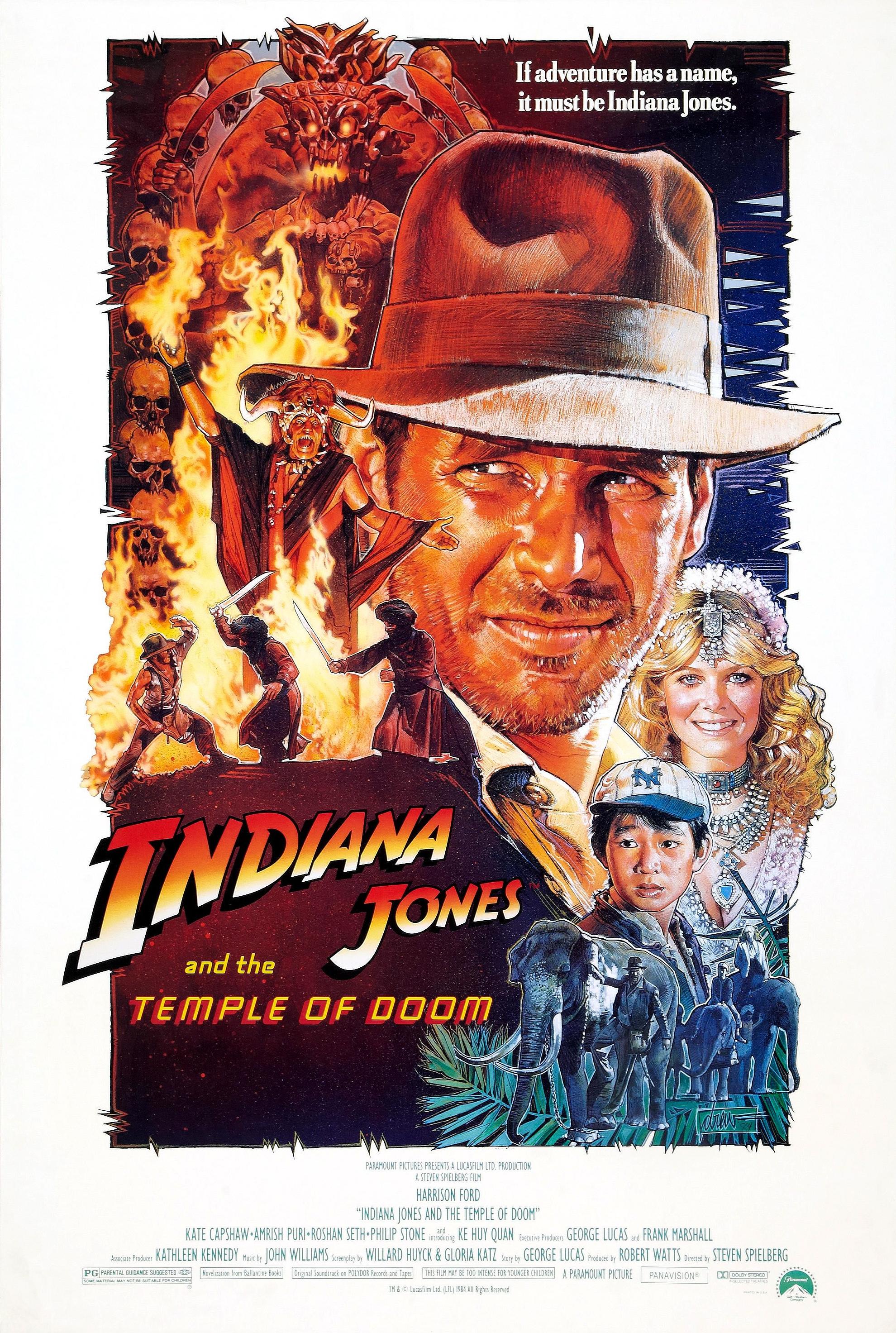
Indiana Jones & The Temple of Doom (1984)


As the soft middle of the original Indiana Jones trilogy, Temple of Doom does not generate the same level of nostalgic love or enthusiasm as the two films which bookend the series; Raiders of the Lost Ark and Indiana Jones & The Last Crusade (1989). It is not difficult to see why. Both Raiders and Crusade offer classic, family-fun versions of the Voluntary Snowball pattern. In both, the adventurous, devil-may-care archaeologist risks life and limb in a obsessive quest to claim a powerful ancient artifact before Nazis can use it for evil ends. (Although Crusade puts a twist on this. It is not Indy who is obsessed with the Holy Grail, but his father Henry, Sr. (Sean Connery). Indy joins the adventure to keep his father from being killed.) The Temple of Doom, however, chooses to follow the There & Back, to far less spectacular effect.

I am not going to discuss this film in too much detail, as I am on the verge of doing the There & Back to death. Plus, Doom is simply not a very good example of the pattern. Instead, I will provide a brief overview of the pattern’s use in Doom with some comments on why the results where so mediocre.

First off, we can dismiss the opening prologue sequence set in Shanghai. Prologue sequences, a trademark of the Indiana Jones franchise, open the film with a separate, self-contained narrative. They have their own Story Spine and 3-Act structure and thus, while they may establish certain story elements, prologue sequences are not part of the main story proper. They may hence be completely removed from the film with little effect upon the audience’s comprehension of the plot.

Doom’s inciting incident occurs only after Indy’s plane crash-lands in India. By happenstance, Indy and his comrades Willie and Short Round come upon a village which has fallen into desolation after the theft of their sacred stone. The thieves have also kidnapped the village’s children. Indy agrees to retrieve the stone and children. Why? Out of the goodness of his heart, I guess. This inciting incident conflicts with Indy’s established character, as it lacks the personal, or even the political motivations found in the other two Indiana Jones films. Indy’s appeal as a protagonist is that he is always a bit of a rogue. He insists that he is out only for his own fame and glory, and only after much coaxing and dramatic pressure recognizes his more virtuous impulses to accept the role of a hero. Yet there is none of that in Doom. Indy’s selfless volunteerism makes even less sense when we consider that Doom is technically a prequel, set one year before the character arc found in Raiders.

In any case, Indy & company set off on the adventure, reaching their destination Pankot Palace at the End of Act 1. At the next turning point, Indy is attacked by a would-be assassin, which leads to the discovery of a passageway leading to the titular temple with its death cult and child slaves. Though still the story’s most pivotal event, this turning point falls flat as the pattern’s “disaster strikes” moment. It is not a life-threatening event which demands immediate response. Rather, it is a simple development which leads to later threats. On top of this, Indy chooses to enter the temple voluntarily, an action followed by a lot of sneaking around which continues to lack any immediate direct conflict. This, plus the inciting incident, seems to suggest that the writers were indeed trying to replicate the Voluntary Snowball structure found in the original Raiders. However, the plot was misexecuted, resulting in a flawed There & Back.

My presumption that Doom indeed represents a There & Back and not a Voluntary Snowball is supported by the story’s next two end-of-act turning points. At the Midpoint, Indy is brainwashed by the cult’s evil leader to become a mindless slave. This certainly creates a major complication which must be resolved before the characters can attempt their escape. (But then again, one must question the wisdom of turning the franchise’s intrepid adventurer into a passive drone, leaving the burden of further plot development to supporting characters during such a pivotal stretch of the film.) Indy is brought back to his senses at the End of 2B Turning Point, initiating the long series of escape sequences that make up Act 3, culminating with the memorable climax at the rope bridge. All in all, we do find the There & Back’s basic structure of a journey away from “home,” an adventure with unexpected complications met at the destination, and a successful escape and return. It’s just not one to model your own stories after.

* * * * *

Click HERE for Part 3 of my Plot Pattern Extravaganza, featuring six films in the Antagonism-Centered Plot Patterns: Se7en, Predator, Hellboy, Teenage Mutant Ninja Turtles (the good one), and more.

Tuesday, April 28, 2020

Scriptmonk's Plot Pattern Extravaganza -- ALL Y'ALL FAVORITES!! (Part 1)

In the five or six years I have spent investigating the 34 common cinematic plot patterns, I have broken down and analyzed the structures of literally hundreds of popular films. I have since used the best, most prototypical examples I could find to illustrate each particular pattern on this blog and my book Screenwriting & The Unified Theory of Narrative, Part II. However, this pool of study films has always had one shortcoming: it was limited to movies I personally own or have access for close study. While my personal movie collection is quite large, it is far from an exhaustive library of every excellent film made over the last fifty years. As such, there have been many popular films conspicuously absent from my writings. In my free time over the past month, I have sought to remedy this issue. As you shall see from the list below, I have identified for the first time the plot patterns contained in over two dozen popular favorites.

Also included on this list are films I viewed very early in my investigation, back when I had only a vague conception of the shape of the various patterns and before I began mapping out each film plot point by plot point. As such, there were films whose pattern I could not yet identify or initially miscategorized. As I now realize (and as you shall read below) the patterns of these films were difficult to identify because many take advantage of the alternative options found in each pattern or contained acceptable deviations from the prototypical norm. As a result, analyzing these deviant examples reveals the flexibility of cinematic plot patterns. Plot patterns are not rigid formulae, but have the capacity to bend and stretch to accommodate individual story premises and artist intentions while still producing effective, well-received narratives.

The bottom line is that the following overlooked films continue to confirm my theory of the 34 Common Plot Patterns of American Cinema. Some have just proven more difficult to analyze due to their use of alternatives, deviations, combo patterns, hybrid patterns, or their use of dual or triple protagonists.

(Warning: Lots of SPOILERS ahead.)

The Cider House Rules (1999)


Let’s start with a simple one. The Cider House Rules is a Type 5a: The Escapist, one of the most commonly-seen Hollywood plot patterns. The pattern offers a wealth of prototypical examples in all shapes and sizes, from Lawrence of Arabia to Office Space, Coming to America to American Beauty, Dances With Wolves to The Nightmare Before Christmas, Tootsie to Trainspotting. To summarize, the Escapist begins with a protagonist who has grown dissatisfied with his or her life or environment, roles or responsibilities. At the end of Act 1, the protagonist abandons this current reality to escape into what he or she sees as a more pleasing alternative. Things first go well in this new way of life. However, it proves to be a fool’s paradise. Unwelcome doses of reality begin to invade the protagonist’s happy refuge in late Act 2A, bringing the carefree paradise to a potential end at the Midpoint. Yet rather than return to reality or face its problems, the protagonist formulates a second alternative: an Option C. Act 2B follows the pursuit and ultimate demise of Option C, resulting in an end-of-act crisis event. Here the protagonist must make a difficult choice: either return to the former reality to face its problems directly (and/or take responsibility for past mistakes), or continue to deny the reality of the situation by attempting to escape even further—a foolish path which leads to a sad or ignoble end.

We can see this pattern quite clearly in The Cider House Rules. The protagonist Homer Wells (Tobey Maguire) has lived his entire life at St. Cloud orphanage. During that time, Homer has become the skilled assistant of Dr. Wilber Larch (Michael Caine), the man who not only runs the orphanage, but performs abortions and births the babies of unwed mothers. Homer is expected to become Larch’s successor. But Homer is young and restless, never having stepped foot off the orphanage grounds. In addition, he secretly questions the moral necessity of Larch’s work. At the end of Act 1, Homer seizes an opportunity to escape. In Act 2A, Homer enjoys the rustic life of an orchard worker and begins to fall in love with Candy (Charlize Theron). Meanwhile, trouble is brewing at St. Cloud’s. Dr. Larch may lose control of the orphanage unless Homer returns as Larch’s official successor.

However, when apple-picking season ends at the film’s Midpoint, Homer ignores Larch’s letters urging his return, opting to stay on his own to begin a love affair with Candy while her boyfriend Wally (Paul Rudd) is away at war (Homer’s Option C). While this again goes well for the first half of Act 2B, the new path begins to fall apart when Wally is wounded in battle and set to return. Homer’s destiny also rears its head when he must perform an abortion on fellow worker Rose (Eryka Badu) after she is impregnated by her own father. A double tragedy then permanently ends Homer’s escape at the end of Act 2B: Rose kills her father and runs away; Dr. Larch dies of an accidental overdose. With this, Homer chooses to return to the reality from which he originally sought escape, and saves St. Cloud orphanage by accepting his destiny as its new caretaker.

Home Alone (1990)


Home Alone is also an Escapist narrative, but demonstrates an interesting alternative to the pattern’s central premise. Rather than a protagonist escaping his/her unhappy reality, everything undesirable about that reality escapes the protagonist. Eight year-old Kevin (Macaulay Culkin) hates being the youngest child in a house packed full of obnoxious family members. He hates it so much that he wishes out loud that his whole family would disappear. By a twist of fate, Kevin is accidentally left behind when his family leaves for vacation, fooling Kevin into believing he has gotten his wish. Kevin has escaped his family.

Just like the Act 2A of any Escapist narrative, Kevin first finds his new family-free world to be a child’s paradise. But Kevin soon realizes that life alone can be difficult and frightening, especially when burglars Harry and Marv (Joe Peschi & Daniel Stern) start snooping around the house. At the Midpoint we find another necessary deviation from the standard pattern. While most Escapist protagonists (like Homer Wells) consciously avoid a return to their former reality in favor of an Option C, the story circumstances of Home Alone preclude the possibility of return at the moment. Furthermore, Kevin does not even realize return is an option, as he believes he has permanently wished his family away. Therefore, in response to the Midpoint event, Kevin must transition from simply enjoying his private paradise to a quest to hide his secret solitude in order to protect himself and his home. However, this Option C falls apart when Harry and Marv discover Kevin’s secret at the end of Act 2B.

Kevin now prays aloud for his family’s return. He has had enough of his escape and wants to return to his previous reality. While Home Alone’s Act 3 is comprised mostly of the comic hijinx of Harry and Marv’s botched home invasion, it ends with Kevin welcoming his family back with open arms. Kevin has learned that, while escape was fun, a stable family life with people who care and watch over him is far more preferable.

Big (1988)


Let’s move on to the next plot pattern, Type 5b: The Ejected. I am happy to find three new examples of the Ejected since, as one of the more rarely-seen plot patterns, I have previously had only a shallow pool of cases for study. As for prototypes, the best I could find for Unified Theory of Narrative were Jerry Maguire (1996), Darren Aronofsky’s The Wrestler (2008), and the Paul Newman poolhall classic The Hustler (1961). The pattern’s name issues from its first act, where the protagonist initially pursues a flawed, ill-advised, or naive ambition. (Jerry Maguire’s manifesto to his sports agency calling for systemic change; Randy “the Ram” chases his fading glory as a professional wrestler; Fast Eddie challenges Minnesota Fats before he is ready.) The protagonist’s errors in judgment have the consequence of forcibly EJECTING the protagonist from his/her world at the end of Act 1. (Jerry is fired from his agency; Randy has a heart attack and can no longer perform; Fast Eddie loses in spectacular fashion and is left broke and destitute.) Act 2A then sees the protagonist exiled, wandering in the wilderness, seeking out allies and new paths to hopefully get his/her life back together and hopefully find a way to return to the original ambition.

This pattern is found quite clearly in the first half of Big. Thirteen year-old Josh Baskin feels the frustrations of being stuck between childhood and adolescence, wishing he could simply skip over this awkward stage of his life. In a fateful moment, Josh expresses this ambition to a magical “Zoltar” machine and awakes the next morning transformed into a 30 year-old man. The consequences of Josh’s wish completely eject him from his 13 year-old world. He cannot even remain at home, as his mother is terrified of this stranger calling himself her son. Josh and his best friend Billy decide that Josh’s only option is to enter the wilds of New York City and try to survive as an adult until they can find a way to reverse Josh’s wish. While first scared and confused, Josh manages to get a job, find some allies, even score a major promotion. Yet Josh remains an outcast; a 13 year-old trapped in a 30 year-old’s world.

The Ejected pattern is further distinguished by a “Great Compromise” at the story’s Midpoint. Here, the protagonist chooses to compromise his/her original ambitions, long-term objectives, ethics, or integrity in favor of some immediate gain. In some cases, this is a potentially positive path which is then sabotaged by the protagonist’s personal flaws (as seen in The Wrestler). More often, this is an ill-conceived path motivated by the protagonist’s Flaw which leads the character further away from his/her required personal change. (In Jerry Maguire, the emotionally-needy Jerry begins a romantic relationship with, and eventually marries, his assistant Dorothy even though he does not love her. In The Hustler, Fast Eddie makes a deal with seedy manager Burt to earn the money to play Fats again.) In Big, Josh makes this compromise by choosing to blow off his best friend Billy to start an adult relationship with his coworker Susan. Over the rest of Act 2B, Josh forgets his desire to return to his 13 year-old life (much to Billy’s disgust) in favor of the life of a mature adult. Yet by the end of the act, Josh comes to realize this is the wrong path. He recognizes all he will miss by remaining an adult.

Thus, in typical Ejected fashion, the protagonist’s moment of Crucial Decision occurs at the start of Act 3 (not at the Midpoint, as in most patterns). Josh runs out on his big business meeting, abandoning everything he has achieved as an adult, to find the Zoltar machine that will change him back into a kid. As in most Ejecteds with Celebratory “up-endings,” the film ends with the protagonist successfully returning to the original world.

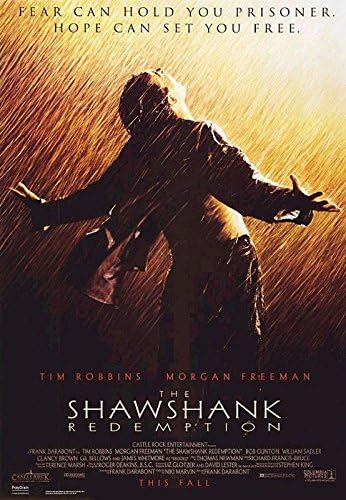
The Shawshank Redemption (1994)


I do own a copy of The Shawshank Redemption and have used it for study many times. However, until now, the film had perplexed me in terms of its plot pattern. Shawshank has never been an easy film to analyze from a structural standpoint. It lacks the clear Problem > Goal > Path of Actions spine found in most Hollywood films. Nor is there an overtly-defined protagonist-antagonist conflict. Instead, Shawshank contains a long, episodic yarn covering over thirty years of story time in which the forces opposing the protagonist often shift or fade. As such, it is difficult to put a finger on various structural elements in the way one might for a more traditional, action-oriented movie. For instance, I originally mused that Shawshank might be a highly abstract take on the Destructive Beast plot pattern (a pattern which contains, among many others The Terminator) where the “Beast” is the despair determined to consume protagonist Andy Dufresne (Tim Robbins). But that was just silly.

No, it is now clearly obvious that The Shawshank Redemption follows the Ejected pattern. The reason it took me so long to realize this comes from a significant deviation in Shawshank’s opening act. The easiest way to recognize an Ejected is by the End of Act 1 Turning Point whereby the protagonist is forcibly expelled from his/her former environment. However, in Shawshank, this event is used as the inciting incident (Andy is convicted of murder and sentenced to life in Shawshank prison). In fact, Shawshank compresses the entire Act 1 of a regular Ejected into its first six and a half minutes. The second sequence of Shawshank’s Act 1 then picks up where an Ejected’s Act 2A usually begins; with the protagonist lost in the new wilderness. For its own End of Act 1 Turning Point, Shawshank instead uses the plot point where the protagonist takes the first step toward establishing a place in his new world: the moment when he befriends Red (Morgan Freeman). (This is comparable to the moment in Big when Josh gets a job in New York.)

The rest of Shawshank, however, follows the Ejected pattern quite closely. This is made most obvious by the clear Great Compromise found at the story’s Midpoint. Warden Norton takes advantage of Andy’s intellectual pride (Andy’s Fatal Flaw) by making him the prison’s unofficial accountant, a role which tangles Andy in Norton’s crooked schemes, essentially making Andy a criminal accomplice. This turns out to be a foolish path which leads to Andy’s ruin at the end of Act 2B. Andy, given a chance to prove his innocence, is crushed under Warden Norton’s power out of the fear that Andy will reveal the prison’s secrets upon his release.

Shawshank again deviates somewhat from the norm in Act 3 by the simple fact that the protagonist disappears into thin air at the first turning point. Yet as the remaining act fills in the narrative gaps behind Andy’s disappearance, we see that Andy’s Act 3 course of actions follows the same path as Josh's in Big: Through self-reflection and personal evaluation, Andy makes his Crucial Decision at the start of Act 3. Finally purged of his flaws, Andy chooses to take the actions necessary to return to world from which he was originally ejected.

Rushmore (1998)


Well, this is embarrassing. In the past, I have used Wes Anderson’s Rushmore as a prototypical example of Type 3a: Crisis of Character, both in this past article and in my book Screenwriting & The Unified Theory of Narrative. However, one thing about Rushmore never completely meshed with the Crisis of Character pattern – its Act 2B. I have now come to realize that Rushmore is NOT a Crisis of Character, but yet another Ejected.

It is an easy mistake to make. The Crisis of Character and the Ejected are very similar in terms of their first two acts. As already covered, the Ejected begins with a flawed protagonist who, through an ill-conceived ambition, ends up ejected from his/her former world at the end of Act 1. Act 2A then finds the banished protagonist seeking a new path, hopefully to make an eventual return. In comparison, the Crisis of Character begins with a deeply-flawed protagonist who lives a self-satisfying life in a private, socially-isolated niche. (Think of Shrek [2001] or As Good as it Gets [1997].) Unexpected events cause Act 1 to end with the loss of this precious niche. Act 2A then starts with the protagonist taking actions intended to regain the niche. The line between “ejection” and the “loss of a niche” is fairly thin. The main difference is that the former suggests a more forcible expulsion which is in some way the protagonist’s own fault. In the latter, the loss more often comes through a twist of fate or stroke of bad luck. (In Shrek, the titular character’s private swamp is suddenly turned into a ghetto for banished fairy tale creatures. In As Good as it Gets, OCD-ridden Melvin Udall’s (Jack Nicholson) tightly-regulated life is disrupted when Carol the waitress is no longer able to serve him at his daily eating place.)

The action in Rushmore blurs the line between these two patterns. Narcissistic teen Max Fisher (Jason Schwartzman) has created a private wonderland out of his life at Rushmore Academy (Max’s niche). An infatuation with teacher Miss Cross (Olivia Williams) motivates Max to launch a crazy scheme to impress her—a plan which gets Max expelled from Rushmore Academy at the end of Act 1. Rushmore’s Act 2A blurs the lines to an even greater degree. The act is comprised mostly of Max’s efforts to make the best of his new life in public school (with the hope of being invited back to Rushmore) with the help of Miss Cross and Mr. Blum (Bill Murray). But is this an attempt to chart a new path in the wilderness, or a quest to regain the lost niche?

Rushmore’s Act 2B then cracks the case wide open. In a Crisis of Character, the Midpoint presents a moment when the protagonist, through his or her increasing interactions with other people, comes to realize that there is something better in life than his or her isolated niche. The protagonist comes to desire a closer connection with another character. In Act 2B, the protagonist largely forgets about the niche in favor of pursuing this healthy, more positive relationship. This does not happen in Rushmore. Here, the Midpoint involves Max’s discovery of the secret love affair that has developed between Mr. Blum and his crush Miss Cross. In response, Max launches a savage campaign of revenge, believing this will free Miss Cross for his own affections. This, of course, is a very poorly thought-out Great Compromise of Max’s original ambitions. And, like in Shawshank, this path leads Max to the bottom of a deep, dark pit by the end of Act 2B.

To be honest, I should have identified Rushmore as an Ejected right away by the placement of the Character Arc's Moment of Crucial Decision. In a Crisis of Character, the Crucial Decision typically occurs at the story’s Midpoint. In the Ejected (as already mentioned) it happens at the beginning of Act 3. Indeed, it is not until the start of Act 3 that Max finally realizes what a selfish jerk he has been and takes the necessary actions to make amends. A Celebratory Ejected need not always end with the protagonist’s return to the original world. Alternatively, the story can end with the protagonist finding a new life which is just as satisfying, or even more so than the original. This is how Jerry Maguire ends, and this is also what occurs at the conclusion of Rushmore.

Up (2009)


While we’re on the subject of the Crisis of Character, let’s talk about Disney/Pixar’s Up. Up checks off most of the boxes of a prototypical Crisis of Character.
Flawed, antisocial protagonist? (Carl is a misanthropic curmudgeon.) Check.
A socially-isolated niche which the protagonist loses at the end of Act 1? (After the death of his wife, Carl has shut himself off from the world in his old house. By court order, Carl is evicted from his house, which is then to be bulldozed.) Check.
A quest to regain that isolated niche (or a niche of equal or greater value) in Act 2A? (Carl lifts his house off the property on a quest to live the rest of his life alone at the top of Paradise Falls.) Check.
A “Character of Disapproval” whose function is to continually criticize the protagonist’s flaws in order to nudge the protagonist toward personal change? (Young explorer scout Russell winds up stuck tagging along on the adventure.) Check.
A Moment of Crucial Decision where the protagonist decides the niche is no longer so important, and gives it up in favor of a greater personal connection with other characters? Check.

Yet, there are also some clear discrepancies in Up. For starters, there is an uncommon amount of action and adventure in Up’s second half. There are also additional characters and story elements which do not fit the Crisis of Character’s norms. When Carl and Russell reach the island of Paradise Falls, they encounter a giant prehistoric bird (who Russell names “Kevin”) chased by superintelligent dogs. Carl learns the dogs belong to his childhood idol Charles Muntz. Muntz is on an obsessive quest to capture Kevin at all costs. While first in awe of Muntz, Carl soon realizes Muntz has gone dangerously mad. Russell begs Carl to defend Kevin from capture. Yet Carl is apathetic to the bird’s plight – until Muntz’s mad actions put Russell in danger. With this, Carl puts all personal concerns aside and rises to the occasion, heroically opposing his former idol to save Russell and Kevin.

This summary also sounds familiar. It is a simplified version of the Crisis of Character’s sister pattern, the Crisis of Conscience. As exemplified by films like Casablanca, On the Waterfront, and Schindler’s List (and discussed in detail in this previous article), the Crisis of Conscience begins with a protagonist allied on the side of a Force of Darkness (Carl has been a lifelong devotee of Charles Muntz). A Victim/Advocate character then begs the protagonist for help against the Force and its evil deeds (Russell asks Carl to save Kevin from capture). Though this creates a moral dilemma, the protagonist resists these pleas until the Force commits an action so unconscionable that the protagonist can no longer look the other way (Russell’s life is put under threat by Muntz). The protagonist then turns on the Force of Darkness and transforms into a selfless hero.

Up is therefore a hybrid Taking on the Mantle, incorporating plot and character elements from both of its subtypes. (Hybrid patterns are briefly explained in this article.) As an added note, Iron Man (2008) is also a hybrid Taking on the Mantle (as discussed in detail in this article), although Iron Man combines the elements of the Crisis of Conscience and the Crisis of Character in a much different way. In any case, you can sound smart if anyone ever asks you what Up and Iron Man have in common.