Saturday, October 26, 2013

"Atoms" Excerpt: How a Story is TOLD

Call it a change of pace, call it a preview, call it me taking it easy this time. This month, instead of an original article, I am posting a short excerpt from Chapter 3 of my book Screenwriting Down to the Atoms, "The Basic of the Most Basic." I know, I know, it's a cheat. But I am in the middle of a number of craft-related subjects that will eventually work their way into articles, but none are currently ready for the light of day. So please enjoy the excerpt, and in case you have not yet had a chance to read it, Screenwriting Down to the Atoms is available in paperback from online retailers everywhere, and in e-book exclusively on Amazon.com.


“Storytelling” is a two-part term. First, there is the “story.” Then, there is the “telling.” It is not enough to simply have a good story. Equally important is how that story is told. Even the best of stories can be sunk by poor telling. So, with that said, we must ask-

HOW DOES ONE “TELL” A STORY?


To be more specific to our purposes, how does one tell a cinematic story? Storytelling has many forms: novels, stage plays, operas, anecdotes, comic strips, dirty jokes, even song lyrics. Each tell a story in a different way, each with its own inherent advantages and limitations. But how does cinema tell its story?

Cinema is possibly the most complex form of storytelling. It is definitely the most complex art form. Most methods of storytelling use only words to communicate. Some only images. Others only sound. Cinema, on the other hand, uses words, images, sounds, light, movement, color, time, space, editing, and camerawork. Where does one begin to break down something so densely layered?

To find out, we must put the entire field under the microscope. We start once again by seeking the most basic, of the most basic, of the most basic.

THE ATOMS OF CINEMA

Consider the word “atom.” Though used most often in chemistry, the word itself refers to any element so basic that it cannot be broken down into smaller units. Its origin dates back to the fifth century BC, when the Greek philosopher Democritus proposed (quite rightly) that everything in the universe was made of tiny particles. He believed that if one had a knife sharp enough, an apple could be sliced thinner and thinner, until it came to a point where it could be sliced no further, down to the very particles that held it together. Democritus called these particles atoms – Greek for “uncuttable.”

Not only was Democritus’ idea revolutionary, but so was his approach. He knew the key to study was to first break the subject down to its MOST BASIC ELEMENT. The whole is best understood by first identifying the tiniest building blocks by which everything is constructed.

Nearly every legitimate field of science is built upon a most basic element. Chemistry procured the word atom for itself to label the swirling particles that make up matter. The chemistry atom is uncuttable. If an atom were split, the result would not be two half-atoms, but a useless scatter of subparticles. Biology is the study of life. Its most basic element is a single living cell. A single cell can carry out all requirements of life, but if cut into smaller parts, it ceases to function. Sociology studies behavior in human societies. Societies are made up of individuals, making a single person sociology’s most basic element.

Any field of study will suffer until it discovers its most basic element. Chemistry was a rather hit or miss pursuit before the theory of atomic structure. Biology developed slowly until cells were discovered inside a piece of tree cork. Identifying the most basic element makes an entire field far easier to comprehend.

But, can this method be applied to cinema? Does cinematic storytelling have a most basic element? Many would refuse to even consider the question, simply because chemistry and biology are sciences, while cinema is an art. People tend to segregate art and science into isolated categories. Nevertheless, can an understanding of an art be found in the same manner as a science?

To answer the question, it is first necessary to figure out what it means to call cinema an art.

WHAT IS “ART”?

Art. It is a word of such high and mighty connotation that many dare not define it. In this case, let us first ask, why do people create art? Works of art have no practical purpose. Officially, art must be non-utilitarian in nature, meaning it has no use other than the aesthetic. A beautifully crafted sculpture is art, but a beautifully crafted lamp is not. A novel can be art, but the book you read now is not. If art has no practical use, then what is its purpose?

The answer is found in the artistic process itself. The artistic process is made of three parts: the artist who creates the work, the medium the artist works through (paint, dance, music, etc.), and finally the audience who ultimately receives the work. One must not overlook the importance of the audience. It is the audience who brings the process to its completion. Art without an audience is like the proverbial tree falling in the woods. What is the point of a novel that is never read? Music that is never played? A film that no one sees? “Artistic expression” implies a second party to whom the artist’s efforts are addressed. Only the most vain of artists would create something to put in a closet. Real artists create because they have something to express to the world: an idea, an opinion, an emotion... Artists create in order to communicate.  Art is about communication.

Art is the communication of meaning, from artist to audience, through a creative medium.

Since the purpose of art is to communicate meaning, how then is meaning communicated in something such as literature? Through words, of course. The most basic element of literature – its atom – is a single word. An author can communicate meaning with one word, but not with a single letter or detached syllable. It is by the accumulation of words into larger structures that the novelist makes his or her art. The art of dance communicates through movement. Its most basic element is a single movement of the body. Music is made of a collection of singular notes. Painting is an accumulation of individual brush strokes. Photography is the manipulation of individual photons of light. Thus, we see that like science, the arts have their own atoms. Each has a basic building block with which the artist constructs a greater meaning.

However, things become far more complicated when it comes to cinema. Cinema combines elements from nearly every art form; from photography, to theatre, to music, to the graphic and plastic arts. In addition, cinema has its own unique attributes, such as the ability to elongate or compress time, or to change perspective through editing. If cinema contains the most basic elements of all other art forms, plus elements of its own, what could possibly be the single, most basic building block of cinema itself? Can cinema be boiled down to a single element? Or is it just a hodgepodge?

The search proves difficult. Cinema’s most basic element cannot be a single image, since that would ignore cinema’s use of sound. It is not a spoken word, since dialogue makes up only a small part of any film. It also cannot be a single scene, or a shot within that scene, because both of these elements can be broken down further.

It turns out the answer is right under our noses. Cinema is an art. Art communicates. And what is transmitted by the act of communication?

Information.

The cinematic experience is created by a constant transmission of story information from storyteller to audience. Whether it be seen or heard, everything presented to the viewer is part of an intentional act of communication. Every detail; a line of dialogue, the look of a room, an expression on an actor’s face, an off-screen sound effect, exists to advance the story with NEW INFORMATION. If a character is murdered, that is information. If someone reveals a secret, that is information. If a character walks across the room, that is information. It is through this steady flow of information, communicated one piece at a time, that the cinematic storyteller makes his or her art. Each piece builds upon that which preceded it, advancing the narrative and developing the audience’s comprehension of the story as a whole.

This is cinema’s atom: the communication of a single piece of information from storyteller to audience; whether it be communicated by audio, visual, or any other means. Cinematic storytellers make their art through the creative control of this information – knowing what information to give, and when to give it. By gradually accumulating this information, the audience is able to understand, and enjoy, the cinematic narrative.

So, to return to our original question: How is a cinematic story told?

A cinematic story is told through the creative communication of information, given one piece at a time, from storyteller to audience.

How the storyteller chooses to communicate makes all the difference. Have you ever heard two people tell the exact same joke, and watch it generate a huge laugh for one, yet nothing but silence for the other? The difference was not the joke, but how that joke was told. This is what is meant by story-telling: the proper and effective execution of a story’s information. Good storytellers know how to communicate information in a way audiences will best understand and appreciate. The true skill of storytelling comes not simply from the story, but from how that story is told.


Saturday, September 28, 2013

Story Structure: The ABSOLUTE Essentials (and the ONLY Absolutes) -- Part 2


(If you're reading this part first, you're doing it backwards! Click HERE for Part 1.

Otherwise, on to Part 2!)

2. The story must have a SPINE.

The Story Spine is one big secret I reveal in Screenwriting Down to the Atoms. The Story Spine is not a recent invention. It is not some trick or tool like a “beat sheet” formulated as a cheap and lazy shortcut. The Story Spine is something that has been present in all good storytelling since the beginning of time. Whether it be by instinct or trial and error, great storytellers have always realized that certain fundamental components must be contained in a story if the audience is to care about it and stick with it to the end.

The Story Spine is the basic structure of all storytelling, whether that story be in the form of a film, a novel, a folktale, an anecdote, or even a dirty joke. It fulfills the four qualifications of a story in a manner that gives the narrative focus, direction, and drive. It is the lifeblood of drama. Without a Spine, a story will fail to come together in anything but the weakest, most ineffectual way. But sadly, no “gurus” teach this concept. Few developing writers understand the Story Spine or even know of its existence. This is unfortunate, since an overwhelming majority of the flawed screenplays I have ever read can trace their most glaring problems back to a simple ignorance of the Story Spine.

The Story Spine is a five-component structure that can be visualized as so:


The Spine's five components are:
A. The protagonist’s STORY PROBLEM. This problem is what incites the protagonist to act and originates the story premise. This starts the story journey.
B. The protagonist’s STORY GOAL. The protagonist chooses this goal out the the belief that reaching the goal will solve the Story Problem and resolve the situation. Reaching it will end the story journey.
C. The protagonist’s PATH OF ACTION. This path is composed of all actions the protagonist takes in his or her efforts to get to the Story Goal. This makes up the bulk of the story action.
D. The MAIN STORY CONFLICT. This is a force that resists the protagonist's efforts to reach the Story Goal.
E. The MAIN STORY STAKES. This is a counter-force that compels the protagonist onward, despite the Main Conflict’s resistance.

All five components must be present for the Story Spine to exist. If any component is missing, the Spine will not function, just as an engine will not function if one of its vital components were removed. This matter deserves further explanation, but rather than take up space here, I invite you to read the original article I wrote on the subject back in 2009. It behooves you to take time to learn this. If a writer should know only one thing about storytelling, it should be this.

3. Longer stories require some form of ADDITIONAL STRUCTURE

Very short forms of story, such as anecdotes and folktales, need only a simple Story Spine to function. The main character encounters a problem, takes a single set of actions towards a goal, and then either reaches that goal or meets failure. The telling of these stories take no longer than a few minutes. However, as storytellers move on to longer story forms; such as novels, stageplays, or feature films; they must deal with the issue of the audience’s attention span. Even when strongly engaged, attentions will wane with time. Often, this time frame is as short as five to ten minutes. Unless the storyteller finds a way to continually renew attention, he or she will not be able to retain the audience’s interest until the story's end.

Take another look at the Story Spine diagram and notice that the Path of Action takes up the majority of any narrative. While an anecdote or folktale's Path of Action can be kept simple since it lasts only a few minutes, a novel or feature film's Path may need to stretch on for hours without end. How then does the storyteller keep an easily-distracted audience engaged and attentive over such a long period of time? The answer to create structure within the existing story structure.

Long narratives must be broken up into STORY SEQUENCES. Story sequences can be thought of as sub-narratives that directly relate to and develop the main Story Spine. In them, the character deals with some smaller issue directly related to the Main Story Problem. If the character successfully manages this smaller yet related issue, he or she moves one step closer to reaching the Main Story Goal. In other words, the protagonist handles the story's narrative issues in pieces; like a long journey taken one “leg” at a time. Rather than asking the audience to swallow the entire long-form narrative as a whole, story sequences deliver it to them in one short yet interesting sub-story at a time, managing the limits of human memory and attention while keeping them engaged in the over-arching narrative. The story is not a marathon, but a series of sprints.

Novels and stageplays have obvious methods to break up their narratives for easier ingestion. Novels have chapters that suggest points where readers can start and stop. Plays close the curtain at the end of each act or scene. However, since the action of a feature film is continuous and expected to be enjoyed in one sitting, its demarcations between sequences can seem invisible without a trained eye. But whether you are currently able to notice them or not, trust me, this structure exists in every competent film ever made. The average feature film consists of nine to fourteen story sequences, each running a consistent pace of eight to twelve minutes apiece (though I have seen films with a pace as short as six minutes or as long as sixteen). Each sequence focuses character action upon a single, smaller objective that manages to advance the story situation and move the protagonist closer to his or her Main Story Goal. Story sequences are brought to an end with events known as TURNING POINTS. As the name suggests, turning points literally turn the course of the story in a new direction by providing some occurrence that brings the action of the current sequence to an end and launches the action of the next. Turning points are also essential for things such as development, momentum, and escalation. Once again, this is a topic that requires more explanation than can be provided here. For more, you may check out this previous article or this one, or even better, Chapter 5 of Screenwriting Down to the Atoms.

Why is sequence structure an absolute of cinematic storytelling? Read some amateur screenplays that do not contain this structure and you will see why. So many aspiring screenwriters struggle, falter, and fail between inciting incident and climax because they do not know how to sustain narrative momentum or provide the proper development and escalation that comes naturally with sequence structure. These long, structureless scripts then become lost, confused, lethargic, chaotic, or simply boring as hell. Like the Story Spine, sequence structure is a fundamental of good cinematic storytelling which most "gurus" never teach and many wannabes fail to learn. Why? Because most “gurus” have the nasty habit of skipping over structural Level #1 and #2, and blindly leaping straight to Level #3. Gurus love Level #3. But it is not exactly the magic pill some make it out to be. Of course, by "Level 3," I am talking about the beloved 3-Act Structure.

What about 3-Act Structure?

Contrary to what some teach, the 3-Act Structure is not a method of story creation. Nor is it the primary level of cinematic story structure. If anything, it is the tertiary level – that is, the third level (“tertiary” is just more fun word to say). There is a certain folly to the fact that 3-Act Structure is what most beginning writers are first taught. Equally foolish is how many begin a new screenplay by focusing upon it. As the tertiary level of narrative structure, this is like constructing a building by starting with the third floor.

The 3-Act model is nothing more than a specialization of the sequence structure, specifically adapted to the feature-length narrative film. Its discovery came about through simple observation and analysis. Narrative arts like literature and theater have used sequence structure for centuries, producing tens of thousands of works. Narrative cinema, on the other hand, is a young enough art that its evolution could be observed from its beginnings to the present day. In addition, there are few enough feature films produced each year that one can come close to something resembling a comprehensive analysis. Through historical observation of successes and failures, especially cinema’s rocky trial-and-error period from 1910-1950, dramatists noticed that a large number of films found more success when certain sequences and turning points performed certain special duties at particular points within the narrative. Modern films that emulated this pattern seemed to corroborate this. All this evidence led those working in the industry to believe they had discovered a roadmap to success, and to a certain degree they were right.

However, what was originally perceived as simply smart business has grown over the course of the last few decades into something considered screenplay law, and then into unquestionable dogma. Because if there is a natural formula to write a money-maker every time, why not use it, right? Right? But audiences have caught on. 3-Act Structure has gone from being a natural execution of the story’s Spine to something forced upon any and every narrative whether it fits its story's requirements or not. Remember from Part 1 of this article how each story has its own needs to which the structure must adapt, not the other way around. The 3-Act model is not a narrative absolute, yet many treat it as if it is. This is the cause of much frustration and confusion among developing writers. They are given valuable information, but the context in which it is given is often false.

Is 3-Act Structure an absolute? Certainly not. One can create a perfectly effective cinematic story with nothing but the Story Spine and sequence structure. Is the use of 3-Act Structure a good idea? In most cases, yes. Don’t reject something useful just for the sake of rebellion. That is a false absolute of its own. The 3-Act model may be exactly what your particular story needs. But don't force it upon your story just because you think it is mandatory. No matter your intentions or how you see yourself as a writer, Semper Gumby.


So in conclusion, the only absolutes in cinematic storytelling are the same as those in any narrative. A story must exist. The story must have a Spine. The long-form narrative must contain additional structure. The rest is simply good advice that is often relevant to your particular story, but may not always be so. Instructors on the craft may give you the tools, but it is up to you. as an intelligent and flexible-minded storyteller, to figure out when and how to use them.

Sunday, September 22, 2013

Story Structure: The ABSOLUTE Essentials (and the ONLY Absolutes) -- part 1

Here is the problem many people have with “script gurus.” They tend to speak in absolutes. Suggestions or statements are repeatedly implied by the writing or inferred by the reader to be the one and only way to do things or else the writer’s work will fail. This then causes confusion, arguments, even anger in the screenwriting community, especially after the discovery of examples that fail to conform to such rigid preconceptions.

One thing that must be understood is that the gurus’ absolutes are rarely universalities. They do not apply to cinematic storytelling in its totality. If there is any truth in the guru’s absolutes, it is only in reference to an exclusive group of narratives, a group that may comprise up the majority of what the author considers traditional, commercially-oriented narrative filmmaking (roughly 75-90% of the films available to the paying public), but certainly does not represent all cinematic narratives in existence. Whether it be for convenience, clarity, or simple short-sightedness, many “gurus” choose to treat the minorities that fall outside of this group as if they simply did not exist. If challenged to explain one of these films, the offending work is frequently brushed off as a fluke, a freak accident, a film that should not or in fact does not work, or my personal favorite, the guru hides behind that old William Goldman motto “nobody knows anything” – even when there is a perfectly viable explanation as to why these outliers work despite failing to conform. This causes a surprising amount of indignation from beginning or developing writers seen on practically any internet message board. They see a piece that does not fit in with the so-called “absolutes” and are offered no reasonable explanation. This even seems to compel some to throw out the baby with the bathwater in disgust, rejecting all instruction on narrative structure even though a great portion may still hold truth and value.

There are true absolutes within cinematic storytelling. However, they number very few. The rest is simply good advice. However, advice is only good when it applies to the specifics of the situation at hand. For instance, the best advice on how to survive a shark attack does me little good if I am being attacked by a bear. Each story is different, and therefore has its own particular needs. Even within the exclusive group which gurus tend to focus, the “absolutes” are rarely universals. Every story has unique content and form to which the craft must adjust and adapt. If the battle cry of the Marine Corp is Semper Fidelis (“Always Faithful”), then the cry of the cinematic storyteller must be SEMPER GUMBY (“Always Flexible.”)

But like I said, there are certain absolutes to cinematic storytelling, as few as they may be – absolutes that for a large part hold true for all storytelling in general. Without these fundamental basics, a “story” will not adequately form, and the narrative will be unable to gain and hold an audience’s attention. The rest of this article is dedicated to these absolutes.

(But first, lest I leave my underbelly exposed to ravenous critics, I must make a caveat of my own. The content of this article (as well as all articles on this blog) refers to only traditional narrative cinematic storytelling – and primarily Western-style cinema at that. It is not meant to apply to anything than could be labeled as “art cinema.” The very nature of art cinema is to experiment and explore. Rules do not apply to it since its very purpose is to break or redefine rules. In fact, much of art cinema, in sharp contrast to commercial cinema, does not even consider narrative as its primary concern. It rather concerns itself with the creative use of the entire audio-visual medium of which narrative is often only a small or nonexistent part.)

1. The story must be a STORY.

The first absolute is that a cinematic narrative must contain a story. Well, no sh*t Sherlock, I hear you say. However, anyone who has spent a lot of time reading amateur screenplays will tell you it is never a given that a script will contain anything remotely resembling a real “story.” Just because stuff happens, that doesn’t mean a story exists. In my book Screenwriting Down to the Atoms, I point out the great difference between a simple “narrative” and anything we can actually consider a “story.” A narrative is mere a series of events arranged in some sort of temporal order: “I woke up. I washed my face. The mail came. A plane landed in Portugal. I went to bed.” A disconnected series of events is not interesting to hear or read, yet I have encountered dozens of amateur screenplays that contain nothing more than this from beginning to end. To make things clear, these writers were not trying to be the next Michelangelo Antonioni. They simply had no clue as to what makes a story a STORY.

To be a story, and thus become capable of attracting an audience’s interest, a narrative must at bare minimum meet four qualifications (each qualification is expanded upon in greater detail in my book). A STORY must be a series of events –
  1. about CHARACTERS
  2. dealing with a PROBLEM,
  3. unified by a PREMISE,
  4. told in some sort of STRUCTURED ORDER.

Now the first qualification is obvious. You can’t make a story with an empty room. There must be some animate object capable of taking actions and causing events to occur. The second qualification is also obvious, though most people do not realize it. Every story ever told, from The Three Little Pigs to Gone With the Wind to “How I Found my Car Keys” is about a problem and the efforts made to deal with that problem. Something must give characters a reason to act. I am not going to grant myself permission to go into a tangent to explain, but the central importance of problem-solving relates to the social and psychological reasons stories exist. People create stories to make sense of the world. Stories tell us that things happen for a reason. Each story is a lesson on how problems can be dealt with and overcome.

The premise is the unifying focus of a story. Story events cannot be chosen randomly. They must all somehow relate. The premise decides what the story “is about.” It is the umbrella that decides what is relevant and what is not. “How I Found my Car Keys” should only contain events that have something to do with the search for the keys. The Three Little Pigs only contains material on the Pigs and the Wolf who wishes to devour them.

Though events may be unified under a premise, the audience must still be able to make sense of them. This is why a story’s events must be arranged in a structured order. This happens because of that, which is then followed by that. A structured order gives a narrative a logic that connects each dot in a way the audience can easily comprehend. Sometimes chronological order is enough: “A happens, and then B happens,” but in most cases events will lack logical interconnection unless they have a causal (cause-and-effect) order: “A happens, which causes B to happen, which results in C.”

These four qualifications are the most basic of absolutes. Without all four, a narrative will not be a story and will be incapable of gaining or holding an audience’s interest for an extended period of time.

2. The story must have a SPINE.

(PLEASE RETURN IN A FEW DAYS FOR PART 2)

Tuesday, August 20, 2013

Mentor Antagonists


Judging by the traffic that comes to this blog, and to one article in particular, there seems to be a good deal of interest in the concept of mentor-antagonists. Many stories contain a relationship between the hero and a mentor. In almost all, the hero has a relationship with an antagonist. But in a small handful, the mentor and antagonist are one and the same person. This creates a dynamic relationship with the protagonist, one where the mentor-antagonist slowly evolves from one role into the other as the story progresses. As the role changes, so does the protagonist’s feelings towards this character and what he or she represents, providing the impetus for growth along the protagonist’s character arc. The shift from trusted parental figure to hated adversary is an extreme one, so stories with mentor-antagonists typically follow a clear structure to facilitate this transition. This article demonstrates this structure as it is found in multiple recent films.

But first, we must define our terms. In the cinematic narrative, a mentor character is a major supporting character who at some point takes the (usually young and inexperienced) protagonist under his/her wing to be the protagonist’s teacher, guide, and guardian. The protagonist sees the mentor as a role model, often evolving into a replacement for an absent parent. However, the protagonist must eventually mature past the need for a mentor and learn how to stand on his/her own two feet. In films with classic mentor figures such as Obi-Wan Kenobi in Star Wars or Morpheus in The Matrix, this requires the mentor to either die or step aside so the protagonist can succeed through his or her own abilities.

However, in stories with a mentor-antagonist, the severance of this relationship is far more violent. Rather than a “passing of the baton” from mentor to protege, an ideological break splits the pair in two. Unlike a classic mentor, the mentor-antagonist creates a relationship with the protagonist with hidden intentions in mind. The protagonist becomes aware of these intentions at a certain point and decides he or she no longer wishes to be aligned with the mentor. In response, one side is compelled to take action directly against the other, turning the characters into mortal adversaries. I must note that mentor-antagonists do not include antagonists who were the protagonist’s mentor at a previous time but have ended the relationship before the narrative begins (such as Bill in Kill Bill) or mentors who conflict with the protagonist over method, but never directly oppose the protagonist’s goal (such as the Clint Eastwood character in Million Dollar Baby).

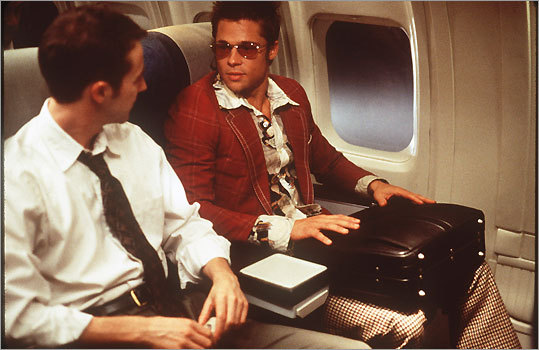
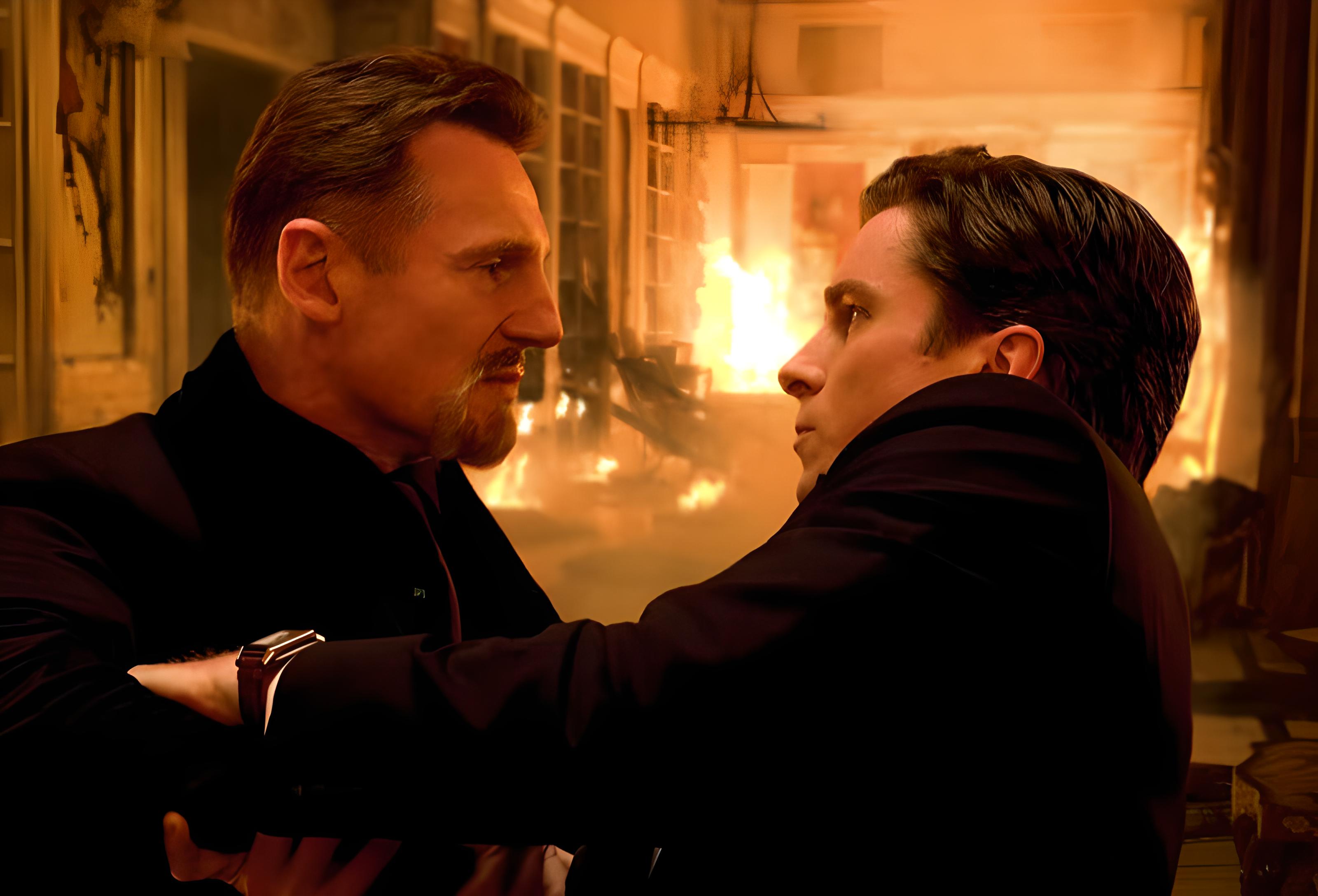
We will use the character dynamics from three popular films as our guide: the relationship between Bruce Wayne and Henri Ducard (aka Ra’s al Ghul) in Batman Begins, between Jake and Alonzo in Training Day, and between “Jack” and Tyler Durden in Fight Club. (For the sake of clarity, we will ignore the twist that occurs in Fight Club’s third act (it is largely irrelevant anyway) – I must also note that I refer to the film’s protagonist as “Jack” out of convenience since the protagonist is actually nameless.)


The structure of the protagonist/mentor-antagonist relationship follows four distinct stages:
  1. Seduction.
  2. Adoration.
  3. Doubt.
  4. Antagonism.

1. Seduction

The protagonists begin their stories feeling lost, uprooted, or ideologically adrift. They either have no role model in life or have lost the person who formerly served that role. Deep inside themselves, the protagonist feels a subconscious urge to find someone to show him the way. When the protagonist meets the mentor, he feels drawn to this wise, knowledgeable figure. The mentor seems exactly what the protagonist wishes to become. But unbeknownst to protagonist and audience alike, the mentor sees the protagonist as someone to be molded into his own image, ultimately to achieve hidden objectives. Though the mentor seems very much to act with the same benevolence as a classic mentor, he manages to seduce the protagonist into his world by exploiting the protagonist’s greatest weakness: Ducard appeals to Bruce Wayne’s lust for vengeance. Alonzo takes advantage of Jake’s naïve ambition. Tyler Durden gives the socially-disillusioned Jack a sermon on society which Jack has been dying to hear. The mentor-antagonist lures the protagonist into a relationship by promising to turn the protagonist into what the protagonist thinks he wishes to be.

2. Adoration


In this stage, the mentor/protege relationship blossoms. The protagonist dotes on the mentor, eating up every word he says. The protagonist grows stronger and wiser, climbing an upward trajectory so quickly that neither the protagonist nor audience could possibly believe that this relationship is anything but beneficial. However, the mentor’s methods are often harsh. To accelerate the protagonist’s growth, the mentor is cruel and bullying. His underlying goal is to indoctrinate the protagonist to think and act exactly as the mentor wishes by mocking or torturing away all the protagonist’s previous ethics or beliefs: Ducard mocks Wayne’s memory of his dead father as a lesson on the folly of compassion. Alonzo berates, humiliates, even pulls his gun on Jake to force him to smoke PCP. Tyler Durden tortures Jack with a chemical burn until Jack gives Tyler his full ideological surrender. Disguised as a series of tests, the mentor does everything possible to prove that the protagonist’s previous beliefs were stupid or wrong, leaving the protagonist no other option than to adopt the mentor’s ideological system. By yielding to these tests, the protagonist becomes superficially stronger, but betrays his ethics and commits himself deeper onto the path the mentor has set up for him.

3. Doubt


The honeymoon doesn’t last forever. Eventually, the mentor starts to reveal his true intentions. With his protege fully trained, the mentor moves on to the next stage of his plan – one that is not in line with the high ideals the protagonist joined the mentor to serve: Ducard reveals that his secret order was not created to defend the innocent, but to wipe out whole societies, eliminating the innocent along with the corrupt. Jake is shocked when Alonzo’s raid turns out to be cold-blooded murder and robbery. Jack thought Fight Club was all about personal liberation, but learns Tyler aims to create a fanatical army of anarchists. Yet while the protagonist has become fully indoctrinated into the mentor’s ideology, he is not yet brainwashed. The mentor’s true intentions affront the protagonist’s remaining ethics, and causes the protagonist to doubt whether his relationship with the mentor should continue. In response, the mentor offers an ultimatum: Join, or else. This is no easy decision for the protagonist. Turning away from the mentor will bring harsh consequences: Wayne will be hunted down and killed. Alonzo will end Jake’s career. Jack will be cast out of paradise as a pariah. On top of this is the emotional turmoil that comes from rejecting the person the protagonist has grown to love closer than family. But if the protagonist stays with the mentor, it will come at the price of his soul.

4. Antagonism

The protagonist chooses to follow his heart and breaks ties with the mentor. The mentor sees this as betrayal.
The two characters who were once as close as family now turn into blood enemies. Depending on the situation, one side makes a move to stop the other. Ducard's army invades Wayne’s home and tries to kill him. Alonzo recruits gangbangers to murder Jake. Jack runs the country ragged to unravel Tyler’s conspiracy. This action fails, causing the other side launch a counterattack. This continues, back-and-forth, until the story climax where the protagonist must destroy his former mentor in order to resolve the situation and walk out alive. Yet even as the two sides attempt to destroy each other, this does not occur without a sense of regret. The mentor still wishes the protagonist would stop this foolishness and rejoin his side. The protagonist too wishes the mentor would give up on his plans so they could be family once again. But the die has been cast and both sides are set in their paths. Though the mentor is no longer the protagonist’s teacher, this final battle provides the protagonist with the last step of his training. By destroying the mentor, the protagonist not only replaces his teacher, but surpasses him. The protagonist has become greater than the man he once emulated, and is now everything he originally set out to become.

Social Context

Not to get too Freudian (or too Jungian, as the case might be), but I would like to forward a theory on the prevalence of the mentor archetype in feature films and storytelling in general. It is likely that these story patterns feel so natural and satisfying because they mirror the psychological relationships we all have had with our own parental figures. In ideal families, the parent relates to the child in the same manner as the classic story mentor. The parent gives the child all the guidance he or she needs, and when the time comes, steps away to allow the child to stand on his or her own two feet. Classic mentors like Obi-Wan Kenobi, Morpheus, and Gandalf the Grey are idealized stand-ins for our own mothers and fathers.

Unfortunately, not everyone is lucky enough to have such supportive parental figures. Some of us had troubled relationships with our mothers or fathers. In these cases, the child’s development into adulthood is mirrored by the mentor-antagonist archetype. When we were very young, we saw our parents as gods: infallible, omniscient, and omnipotent. Whatever the parent asks, the child does. Whatever the parents tells the child, the child believes. But as the child matures and gains the ability to think for him or herself, a painful moment eventually comes when the child realizes the parents are flawed. Sometimes deeply flawed in ways that hurt or anger the child. Whenever a child engages in “teenage rebellion,” what occurs is the same as when a story protagonist breaks away from his or her mentor. The child no longer supports the parental figure’s actions and wishes to sever the relationship. Open antagonism between child and parent is the result. Sometimes this rebellion is just a brief experiment in self-autonomy. In other cases, the rift is far more severe. Parent and child become permanent enemies. This often leads to the child severing all former connections to the parent, thus “destroying” the parent and replacing that parent as the central power in his or her own life (hopefully to become a better person than the parent). Mentor-antagonists stories are universal tales on finding one’s own way in the world should a parent fail.


Friday, June 21, 2013

Plotting by Expectation vs. Result: On Robert McKee and Albert Camus


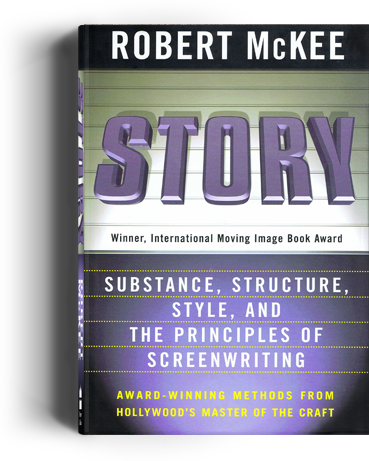
This is Robert McKee’s STORY, first published in 1997. Many of you have read it. Though I do not agree with every idea McKee offers in this book, I have generally considered McKee superior to his competition in one particular area. This would be his approach to plotting. While most other “gurus” seem to treat plotting as a simple linear activity, putting scenes down one at a time, brick by brick, piece by piece, inevitably moving the story towards certain pre-set structural guideposts, McKee envisions plot as the interplay between character psychology and the reality of the character’s world. To McKee, plot is all about expectation versus result.
 
In an explanation similar to the one I use in Screenwriting Down to the Atoms, McKee’s protagonist begins his or her story intent to reach a far-off story goal. To reach this goal, the protagonist must start with a series of small, conservative steps that he or she believes will influence the outside world in such a way that will allow him/her to get closer to what he/she needs. In the character’s mind, these steps have every reason to succeed. However, things do not go as the protagonist plans. Rather than bend to the protagonist’s will, the outside world resists in an unexpected way. To hear it in McKee’s own words:

The moment he takes this action, the objective realm of his inner life, personal relationships, or extra-personal world, or a combination of these, react in a way that’s more powerful or different than he expected. This reaction from his world blocks his desire, thwarting him and bending him further from his desire than he was before he took this action. Rather than evoking cooperation from his world, his action provokes forces of antagonism that open up the gap between his subjective expectation and the objective result...”

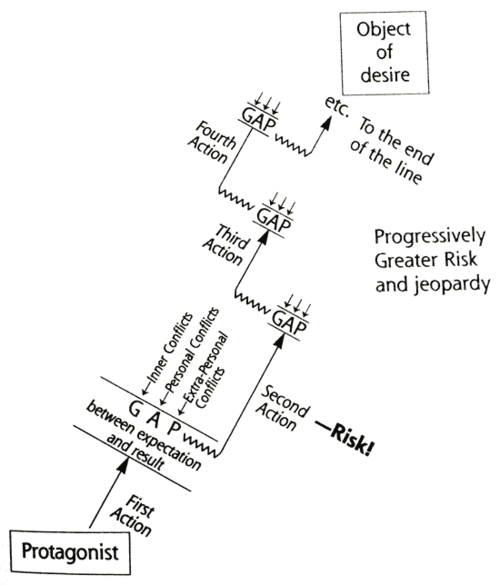
The outside world refuses to fall in line with the character’s personal expectations. According to McKee, whenever this happens there opens up what he calls the GAP. A metaphorical chasm splits open between the character and the result he or she wished to achieve. “On one side is the world as we expect it to be, on the other is reality as it actually is.” So to McKee, story conflict is all about thwarted desires and the characters’ inevitable reactions.

When the protagonist encounters this gap--this metaphorical canyon that separates him or her from a necessary desire--the protagonist faces a choice. He or she can quit out of disappointment or frustration, or the protagonist can choose to alter his/her approach with a new set of actions the protagonist believes will overcome the gap and allow him/her to continue. So the protagonist, armed with the wisdom acquired from the defeat of the previous set of expectations, chooses a new course of action. With these new actions come a new set of expectations. The protagonist is certain that this time the world will conform to his or her desire and success will follow. However, the world once again does not react as the protagonist wishes. Expectations again clash with result, creating another gap. The protagonist must rise above again, and find way to get around this new gap so he or she may continue the character’s quest. But the world continues to reacts in a negative, hostile way, opening up gaps again and again. Using this pattern, McKee offers this diagram to illustrate the course of a plot:


In this way, McKee’s approach to plot seems to emulate the “Fool’s Journey” structure commonly found in folktales where a naïve young man leaves home for the first time to encounter a series of unexpected troubles and opportunities. These force the fool to become stronger and wiser, eventually allowing him to find success by understanding the world for what it is, not what he originally thought it to be.

If, as I propose, this approach to plotting is indeed better-suited to great dramatic stories than those taught by McKee’s predecessors, one must consider why. It is my assertion that plotting from an expectation/result frame of mind creates more engaging, more authentic stories because it is far closer to the way which we experience conflict our own lives. I realized this by noting right away the parallels between McKee’s approach to story and the ideas of a very different author writing on a very different and far more significant subject.

This is Albert Camus (1913-1960). Camus was the author of such esteemed works of 20th century fiction as The Stranger, The Plague, and The Fall. (The Fall is a mind-blowing piece of literature if read correctly. I highly recommend it.)

Camus was also a philosopher. Once considered a strong proponent of Existentialism, Camus grew dissatisfied with that school of thought and pursued a philosophy of his own, eventually known as Absurdism. (Do not let the name fool you. Here, “absurd” does not mean “silly.” In fact, the absurd is a very serious matter.) Published in his book The Myth of Sisyphus, Camus’s views on the nature of the universe and the condition of the human beings who must live within it, simplified for the purposes of this article, are as follows:

  1. Human beings possess an undeniable instinct to seek out systems of order and meaning in the universe. They want to believe that things happen for a reason and that the world makes sense. Because of this desire, people construct systems of belief that place humanity at the center of the universe. We then create expectations based off of those beliefs and assume that reality will conform to our systems of order.
  2. Unfortunately, these expectations usually turn out to be little more than wishful thinking. The universe does not obey our rules. It is cold and indifferent, at times random and chaotic. It cares as little for individual human beings as an elephant would fleas on its back. Like the elephant, the world can shake us off at any time it pleases without even recognizing our existence. Humans are therefore at the mercy of the chaos of the universe, despite all their efforts to believe they are not.
  3. The most soul-shattering moments of a person’s life arise when events force the individual to face this contradiction head-on. The unexpected medical diagnosis, the sudden disaster, the abrupt death of a loved one causes one to wonder whether the systems of order and meaning they have put their faith in might be a lie. The dissonance between one’s ordered and meaningful expectations of the universe and its actual cold and indifferent results causes a disturbing abyss to open up in the individual’s psyche which Camus calls the ABSURD.
  4. With expectations shattered, human beings can react to the absurd in one of three ways. 1. Despair (which often ends in suicide). 2. A Leap of Faith (in which one continues to trust in a system of meaning despite the lack of objective evidence to support it). 3. Acceptance (by accepting a more accurate view of reality, the person abandons harmful illusions and comes to recognize what possibilities actually exist which might allow happiness and success within reality’s bounds.)

Here we see that McKee’s views on plot development mirror Camus’s views on human existence. Human beings, both real and story-based, take actions after goals they believe will bring happiness or success. However, much like an ant crawling its way across the kitchen floor, they have no way of truly understanding the true scale and magnitude of the world around them. They can only proceed based on personal expectations conceived by way of their very limited views. However, more often than not, these expectations are short-sighted or false. The world does not react in the way they wish, and instead of yielding the way, it throws roadblocks in their path. When expectations are denied, people have three options: a. quit, b. keep their faith, lower their heads, and try to plow through the resistance, or c. learn from the experience, adopt a new perspective, and then find a new course of actions more likely to succeed.

I do have one major issue with McKee’s approach, however. His discussion on the subject leans far more to the metaphysical than the practical. He does little to create a systematic method by which writers can apply these concepts directly to their own scripts in a way that will provide effective narrative drive and structure. This is why I teach the concept of story sequences. As frequent readers of this blog know, I consider the Story Spine to be the unifying element of all successful storytelling. In long-form stories such as feature-length films, the Story Spine must be structured by means of story sequences. You can read a brief overview of story sequences in this article or a far more detailed explanation in Chapter 5 of Screenwriting Down to the Atoms. By replacing “expectation/result” and “the gap” with the concepts of sequence spines, obstacles, and turning points, the story sequence method maintains the spirit of McKee’s argument while executing it through a dramatic, easy to execute structure that has found success in great films for decades.

Tuesday, June 4, 2013

"Atoms" FREE on Amazon for this weekend only (Super secret! Tell no one!)

Just kidding. Tell everyone you want. I have chosen to dub this coming Saturday and Sunday "Atomic Weekend." This Saturday June 8, Screenwriting Down to the Atoms will be available for download in eBook form its 270-page entirety for FREE on Amazon.com. The following Sunday June 9, it will be available for only 99 cents. If you have not yet given yourself the chance to get a copy of Atoms, with its fresh ideas and unique approaches to the craft of cinematic storytelling, there will never be a better time than this weekend.

Follow this Amazon link to get Screenwriting Down to the Atoms right now.

Don't own a Kindle? No problem. There are a number of free e-reader programs that allow you to read Kindle books on any laptop. Mobipocket is one of the most popular.

If you like what you read, but not the eyestrain while reading it, paperback copies are currently available at an Amazon price of only $12.59 (that's discounted from $17.99!)

Saturday, June 1, 2013

Reality and the Cinematic Narrative


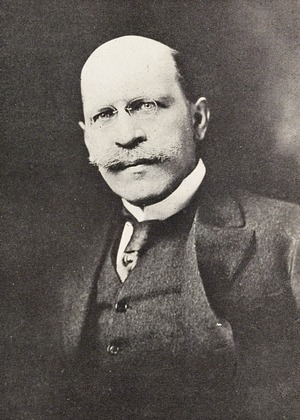
Hugo Münsterberg: Maverick psychologist
and lord of the umlaut.
Ninety-seven years ago, German-American psychologist Hugo Münsterberg published what would be one of the first analytical studies of the emerging art of cinema, “The Film: A Psychological Study.” Though movies in Münsterberg’s time (1916) were still quite primitive, Münsterberg arrives at a very bold conclusion while comparing drama written for the stage to that intended for the screen: The further away an art form’s methods of expression are from the realities of the physical world (time, space, and concrete physicality), the more potential it has to impact the viewer’s mental world, (the realms of thought, memory, and emotion). Movies construct completely artificial worlds that present drama through a discourse inconsistent with the rules of physical existence. Cinema tells its stories through peculiar qualities not found in the theatre – or any of the other arts for that matter. Though these qualities run counter to the experiences of life as we know it, they work to give the audience the illusion of a heightened un-reality which requires and elicits much greater mental and emotional involvement. A wise screenwriter will not only be aware of these peculiar qualities, but makes use of them to absorb the audience into their fictional worlds and create the most emotionally stimulating experience.

Belief & Plausibility
For a large part, films create their heightened state of un-reality automatically by way of the physical properties of cinema. In theater, a paradox exists where the physical presence of dramatic actions and performers makes the drama feel less real to an audience. In theater, the backdrop and performers stand in the same plane of existence as the audience. The audience could reach out and touch them if they wish. However, this causes the audience to remain fully aware of the story’s artificiality. They know the stage is not really 19th century London, only a depiction of it. They know the persons on the stage are not really Sherlock Holmes or Jack the Ripper, but only performers making pretend. To become mentally involved in the drama, and audience must “suspend their disbelief” in the drama’s artificiality. The physical presence of the stage prevents the theatrical audience from ever accomplishing this in full. They can only choose to play along with the story, but never fully surrender to its reality.

This is not so with cinema. Though a film presents its drama through far more artificial means than the theatre (an incongruent series of highly-manipulated two-dimensional images rather than the presence of flesh-and-blood human beings) cinema has the ability to immerse its audience in a world that not only looks like 19th century London, but leads the audience to temporarily accept the illusion that it is indeed 19th century London, even though the audience knows it is impossible to travel to such a time. Such immersion encourages the audience to no longer see the actors as mere imitators of Holmes or the Ripper, but as the real McCoy themselves. Thus, when well-handled, the physical properties of cinematic discourse cause the audience to fully suspend their disbelief and accept the illusion.

Once this illusion has been formed, the storyteller’s job is to simply avoid screwing things up by breaking the illusion. Anything that should sabotage the fantasy by pointing out its artificiality will pull the audience out of the un-reality and cause them to cease their mental participation. I do not mean that a cinematic story cannot contain things the audience knows cannot exist in reality, such as the fantastic, the supernatural, or the unreal. In fact, such things are what the cinema is more successful than any other art at portraying. What I mean is that a cinematic story’s characters and events must maintain the illusion of reality by following an internal logic that parallels the logic found in the real world. A film’s artificial world continues to feel real when its events follow the same logic by which events occur in real life. The cinematic story is not enslaved to the possible, but to what is plausibile.

Aristotle wrote “Plausible impossibilities are preferable to implausible possibilities.” This means anything can happen in a story as long as events make reasonable sense based upon what has occurred before them. Any way the story world is different from the real world must be established at the story’s beginning. Anything not established as different will be expected to behave by the normal rules of reality. The established concepts then become the story’s “rules.” If a story should break its own established rules, if an event should occur without reasonable explanation, if a person should suddenly behave out of character or act without understandable motivation, the viewer becomes suddenly aware that he or she is watching a poorly-constructed lie. Like a dreamer becoming conscious of the fact that he or she is asleep, viewers will snap out of the illusion, re-engage their disbelief, and refuse continued participation.

Point of View
In the theatre, the audience's point of view never changes. No matter what occurs on stage, the viewer can only observe the action from the angle of his or her particular seat in the audience. The space separating seat from stage distances the viewer emotionally from the story’s action. Events can only be perceived through the eyes of an uninvolved observer, like a voyeur spying into the story’s world through a keyhole.

Cinema, on the other hand, has the ability to put the audience right in the middle of the action. The viewer is allowed to experience story action as a controlled stream of consciousness, created by the constant refocusing of the viewer’s perspective (through camera and editing) to deliberately-chosen points of view. Point of view does not only have the effect of immersing the audience into the story’s reality, but also shapes and informs the perception of that reality. Its skilled use not only allows the audience to become mentally involved in the story’s events, but feel an emotional bond to the story’s characters, since point of view also allows the audience to see events in ways which are as close as possible to the characters’ own perspective. The audience sees this world as the character sees it, forging a connection between the two in a manner impossible to achieve in the theatre.

Though a scene’s visual points of view are ultimately chosen by the director and editor, screenwriters should not write scenes as if they were sitting in a theatre audience casually transcribing the events on stage. Point of view is the writer’s responsibility as well. Have some conception as to the scene’s point of view before writing begins. A writer should communicate the action of a scene in a way that leads the reader’s imagination the same way camera and editing lead the eye. Good writing does not explicitly express how a scene should be shot, but will to imply shots through well-chosen language to indicate where the dramatic focus should lie. All of a scene’s contents are not equal. What in the scene demands the audience's attention? What is important to communicate? The character’s reactions and emotions? The physical action being performed? A dirty spot on the wall? Construct the scene to connote when and how actions will be perceived.

Time & Space
In theatre, the action of a scene is beholden to the natural rules of time and space. The location cannot abruptly change, and time must move forward at its standard pace. Cinema, on the other hand, has no such limitations. It can go from place to place as it pleases. Time can leap forward or backward at will. Time can also freeze, slow down, or move in reverse. A savvy screenwriter knows how to use the freedom of time and space to deliver drama in its most effective and mentally stimulating form.

Hitchcock famously said, “Drama is life with the dull bits cut out.” So cut them out! Give the audience only the most essential, most dramatic, most emotionally-evocative slices of time with none of the dead space in between. In this regard, the work of the screenwriter is much like that of the film editor. In real life, time unspools in one long seamless thread, capturing every moment, meaningful or insignificant, like frames preserved onto an endless reel of celluloid. In life as in art, few things have meaning in isolation. The meaning of events can often only be acquired in relation to other events. Unfortunately, it is difficult to identify the true significance of an individual real-life event as it occurs since its causal relationships to other events is diluted or completely washed away by the tedious slow-drip of time and the clutter of minutia separating them. The realities of linear time thus cause events in life to often seem isolated rather than connected to a whole.

The cinematic storyteller has been given the power to overcome this. The storyteller takes the hypothetical spool of time which exists in a fictional story world and surgically removes all portions except those which serve authorial intentions. All excess is removed until only moments of significance remain. The storyteller then transposes the order of events so that they occur in an explicitly chosen succession (this remains true whether the storyteller chooses to obey temporal linearity or not). Due to this manipulation, the audience is able to see clear connections between the story’s events, and thus a sense of constantly-developing meaning between them.

This time-editing refers not only to the storyteller’s removal of unimportant events between scenes, but the whittling away of all unnecessary moments within the scenes themselves. The old saw is that scenes should “start late, end early.” Taking this advice ensures that each scene contains only meaningful moments that move the story forward without unnecessary filler slowing things down. Cinematic worlds are time-accelerated worlds that contain only moments which have dramatic significance. This time-acceleration keeps the viewer mentally involved. He or she must pay attention or be left behind. At the same time, the viewer becomes creatively involved as he or she is expected to use cognitive imagination to fill in the gaps and form mental connections between events. Accelerated time creates heightened awareness, which leads to greater mental and emotional involvement on the part of the viewer.

Structure
As the cinematic form flouts reality’s physical rules, it must invent its own rules to keep its internal microcosm from collapsing. The theatre remains somewhat stable in its discourse by being grounded in the here and now. The cinema, on the other hand, with the unreality of its discourse, has no choice but to replace the rules of reality with the rules of narrative. With narrative structure, the viewer receives a stable, yet still plausible, illusion of reality that will actually function at a higher level than the world in which we live.

As stated in my book Screenwriting Down to the Atoms, stories are not reflections of reality. They are analogues of reality. Stories are pleasurable because they present worlds which function in ways we wish our world would operate. One reason life can be so frustrating is that real life lacks structure. Events in life seem to occur randomly. Problems invade without provocation. Actions taken often fail to produce results. Things seem to move in multiple directions at once – or not move at all – leaving us anxious and confused over whether life has any purpose or goal. Stories, in contrast, present worlds where everything happens for a reason. Every event is connected and designed to lead to a logical end. Stories comfort audiences with worlds where everything has order and meaning.

This cannot be accomplished without narrative structure. On this subject, Münsterberg likens the work of a screenwriter to that of a composer. No matter how bold or innovative a composer may be, each melody must still obey some sort of internal structure to unify the piece, or else the music becomes chaotic and aesthetically displeasing. Like the structure of music, narrative structure provides a rhythm and flow that gives a sensation of order and control to its events.

As Münsterberg also points out, cinematic structure begins with a simple of unity of action. Like a musical work, a cinematic narrative is isolated and self-contained. It has a beginning and an end. Everything in between must follow a single linear thread that grows and develops as time progresses, orientated around the singular premise established at the story’s beginning. Unlike how events occur in real life, the course of a narrative should be free of any distracting elements which do not relate to the premise. Unrelated material will damage a story’s unity the way the inclusion of random errant notes would weaken a musical piece. By focusing the narrative upon one tightly-structured line of action, the storyteller leads the audience to find meaning and emotional fulfillment in events that would be impossible in the distracting chaos of real life.

Conclusion
If anything should be taken away from all of this, it is that a good cinematic story does not provide the audience with reality. Rather, it uses its abilities to defy reality to create a heightened illusion of existence with the capacity to trigger viewer thoughts, emotions, and imaginations, absorbing the viewer in a world where they are mental participants rather than uninvolved observers. This is the magic of cinema. This is what allows its stories more emotional impact than any other dramatic form. This is what the cinematic storyteller must use his or her skills to do.