Wednesday, February 22, 2012

I'VE CREATED A MONSTER! (The Workings of Acts 2A & 2B)

This one falls under the "sh*t so plain to see its amazing no one else has mentioned it" category.

The second act has always seemed quite a mystery to developing writers. The purpose of the first act seems clear. It is the “Setup.” It orientates the audience to the elements of the story world and creates the events that launch the story into motion. The third act seems equally simple. It is the “Resolution.” It contains the events that resolve the main conflict and bring the story to an end. (These are the broad terms as coined by the old guard “script gurus.” There's quite a bit more to the structure of the first and third acts than this implies, but for the purposes of this article, we will keep things simple.)

The second act is not so clear. It has been labeled the “Rising Action.” What the heck does this actually mean? Whatever it is the plot is supposed to physically do in this hour-long stretch of time in order to connect the beginning and the end is unclear. Okay, the action rises. That doesn't provide much help to the writers who need to physically put events on the page. This lack of instruction is yet another reason why the second act is the weakest in most spec scripts, the place where the story starts to wander, tension sags, and the reader loses interest.

In my previous article, I demonstrated that the second act is not really one long act, but rather two acts of equal length: Act 2A & Act 2B, separated by the Mid-2nd Act Turning Point. It did not take me long after that article to discover that Acts 2A & 2B both work to carry out very simple and fundamental dramatic functions, seen the same over in every successful film. Functions as simple and straightforward as the Setup and Resolution,

In Act 2A, the protagonist unwittingly creates a monster.
In Act 2B, the protagonist must fight the monster he or she has created.

Now bear with me as this may sound strange at first. To start, let's look at a simple version of the legend of Dr. Frankenstein. In the first half of Frankenstein's story, the Doctor wishes to create life from the dead. Frankenstein does this without any malevolent intent. In his mind, he is doing good by advancing the capabilities of science and the realm of human achievement. He succeeds, only to later find that his creature is an abomination. He has unintentionally released a monster upon the world. In the second half of the story, Frankenstein must try to reverse his mistakes by destroying that monster.

The pattern seen in the Frankenstein legend repeats itself in the second acts of every successful feature film. In Act 2A, the protagonist takes a series of actions that he or she honestly believes will ameliorate the story's situation and help overcome the conflict. However, the protagonist does not know that these actions always inadvertently end up MAKING THE SITUATION MUCH WORSE. The protagonist's well-meaning actions have only wound up digging him or her into a deep hole and/or inciting the force of antagonism's wrath to a dangerous level. The protagonist has unwittingly (though not always unwillingly) created a monstrous situation for him or herself. However, it is not until the Mid-2nd Act Turning Point that the protagonist becomes fully aware of this.

Of the many examples:

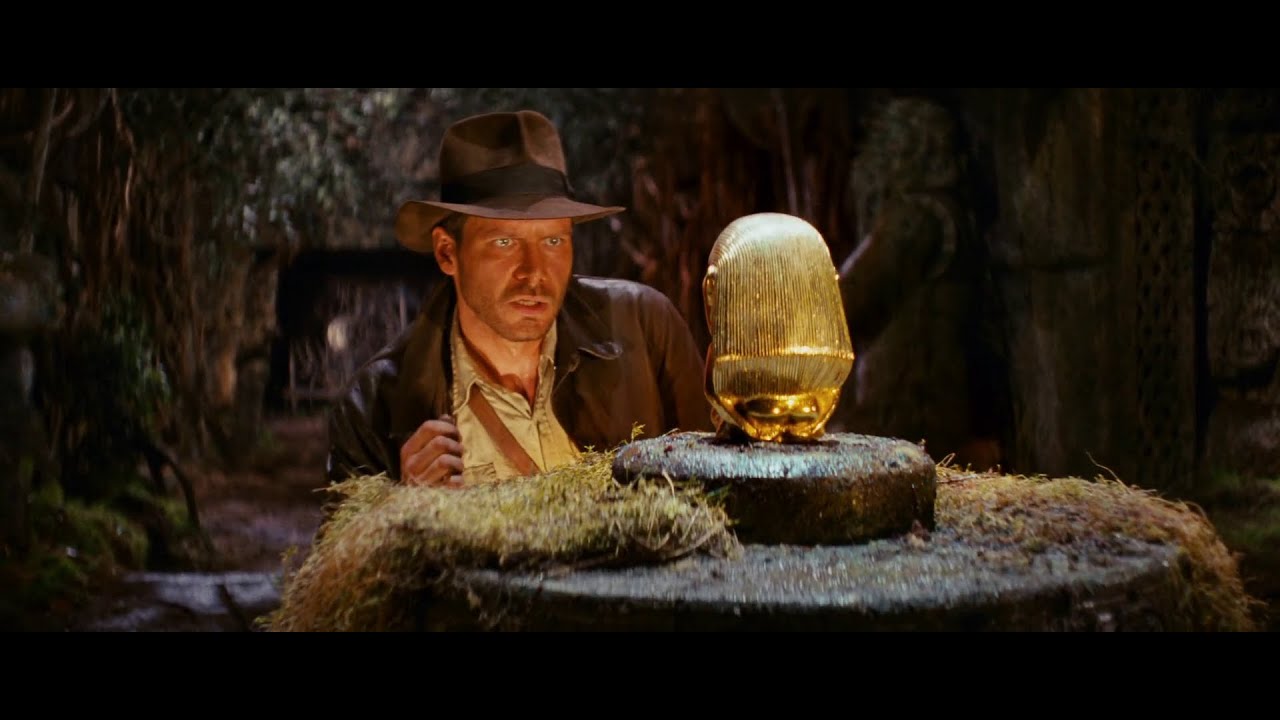
Raiders of the Lost Ark
Act 2A: Indiana Jones eludes Nazis to uncover the location of the Ark of the Covenant.
Turning Point: Indy finds the Ark, but the Nazis appear and take it from him.
Monstrous Outcome: Indy has inadvertently put the Ark right into the Nazi's hands.

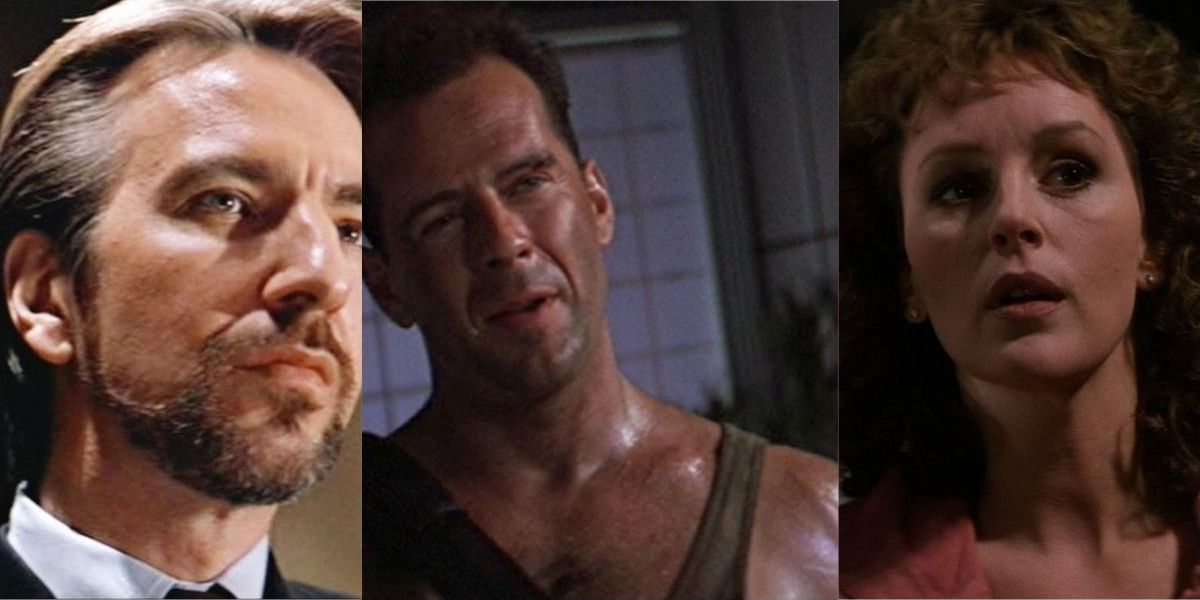
Die Hard
Act 2A: John McClane does all he can to get the attention of the police.
Turning Point: McClane succeeds by throwing a body onto a policeman's car.
Monstrous Outcome: McClane soon learns the police are incompetent and only make the situation worse.

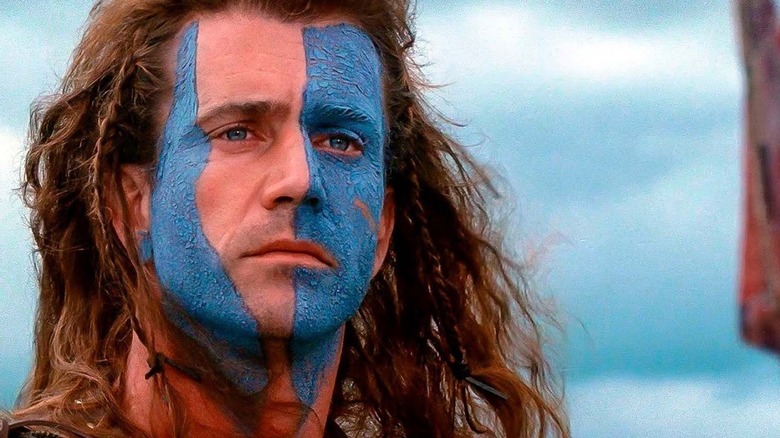
Braveheart
Act 2A: William Wallace leads a small-scale rebellion against the English in Scotland.
Turning Point: Face to face with English forces on the battlefield, rather than negotiate as the Scottish Lords wish, Wallace leads the Scots to rout the enemy.
Monstrous Outcome: Wallace has provoked a full-scale war with the mighty English army.

The Godfather
Act 2A: Michael Corleone, the civilian of his crime family, agrees to assassinate Virgil Sollozzo.
Turning Point: Michael kills both Sollozzo and his policeman bodyguard.
Monstrous Outcome: Michael is now a wanted killer, fair game for either the police to arrest or rival mafias to kill.

Jerry Macquire
Act 2A: Jerry attempts to bounce back as a high-power sports agent after having a crisis of conscience.
Midpoint: Jerry's inability to perform as he used to ends up losing him his last all-star client the day before a giant deal.
Monstrous Outcome: Jerry is left with nothing, except a single B-level client.

Citizen Kane
Act 2A: Kane has an extramarital affair while while making his run for political office.
Midpoint: Kane's opponent exposes Kane's affair.
Monstrous Outcome: Both Kane's personal life and political future are ruined.

The Wizard of Oz
Act 2A: Dorothy and her friends travel to meet the Wizard in hopes he can send her home.
Midpoint: The Wizard refuses to help until she brings him the broom of the Wicked Witch.
Monstrous Outcome: Dorothy must go into dangerous territory to meet the witch face to face.

The purpose of the Mid-2nd Act Turning Point is to end Act 2A and launch Act 2B by providing the key transitional event between the actions that create the monstrous situation and the moment where the protagonist realizes this situation must be fought against. Keep in mind this “monster” does not always have to mean something dangerous or life-threatening. Sometimes it is simply a situation where the protagonist's struggle against the main conflict becomes extremely more complicated. 

 Depending on the type of story, the Mid-2nd Act Turning Point twists the plot in a new direction in one of three ways.

a. The Mid-2nd TP is a large physical action that either creates the monstrous situation, or provides the tipping point that sets it into motion.

Batman Begins
Act 2A: Bruce Wayne sets about transforming himself into a symbol that will combat crime and corruption.
Midpoint: Bruce takes his first actions as Batman, capturing a crime boss.
Monstrous Outcome: Bruce has put a target on his back. Not only do criminals now want him dead, but the police want him arrested.

Star Wars
Act 2A: Luke and Obi-Wan get off Tatooine in order to get to Alderaan so they may deliver secret information to the Revel commanders.
Midpoint: They are surprised when their actions lead them right to the Death Star. Their ship is captured.
Monstrous Outcome: Luke and Obi-Wan are now in the belly of the beast, surrounded by enemies.

Forgetting Sarah Marshall
Act 2A: Peter tries to get over his break-up, even though he is staying at the same resort as his ex.
Midpoint: Peter and a new love interest Rachel kiss for the first time.
Monstrous Outcome: Peter is now torn between opportunity for new love and his desire to reunite with his ex-girlfriend.

b. The Mid-2nd TP is a moment of revelation where the protagonist realizes his or her cumulative actions throughout Act 2A have created a monstrous situation.

Back to the Future
Act 2A: In his attempts to find a way to return to 1985, Marty accidentally alters the past.
Midpoint: Marty sees his family photo start to disappear. He realizes his actions have created a life-threatening time paradox.
Monstrous Outcome: Marty must reverse his mistakes or be wiped out of existence.

Alien (my favorite example, because it is the most literal)
Act 2A: Ripley's crew brings an alien parasite aboard the ship, choosing to study it, rather than destroy it.
Midpoint: A newborn alien monster bursts from a crew member's chest.
Monstrous Outcome: The crew's mistakes have wound up releasing a homicidal monster aboard their ship.

A Beautiful Mind
Act 2A: The brilliant John Nash engages in a dangerous and bizarre top-secret mission for the military.
Midpoint: Nash is diagnosed with schizophrenia. The mission is revealed to be all fantasy.
Monstrous Outcome: Nash is stuck in a living nightmare where he cannot tell what is real and what is not.

c. In some stories, the protagonist is already aware of the dire situation he or she is in by the end of Act 2A. In these stories, the Mid-2nd TP is an event that provides potential salvation.

Rocky
Act 2A: Rocky agrees to fight Apollo Creed, but it soon becomes obvious that Rocky is going to do nothing but humiliate himself.
Midpoint: Rocky agrees to let Mick be his trainer. Rocky now has a fighting chance.

Lord of the Rings: Fellowship of the Ring
Act 2A: Frodo continues his dangerous mission without Gandalf, pursued by more evil than a mere Hobbit could possibly handle.
Midpoint: A band of stalwart heroes gather to assist and protect Frodo.

Cast Away
Act 2A: Chuck Noland, in trying to survive on a desert island, slowly devolves into a wretched madman.
Midpoint: Chuck discovers something washed up on shore that will allow him to escape the island.

The Mid-2nd TP, or a moment that immediately follows it, often becomes the “hero moment” of the story. After finding that their previous actions have buried them deep in a hole, the Mid-2nd TP forces the protagonist to change from being relatively passive or reactive towards the story's conflict (doing all he or she can to avoid direct encounters with the source of the conflict) to becoming the active catalyst in that conflict (the protagonist becomes willing to face the source of conflict head-on.) In Act 2A, Indiana Jones tries to avoid the Nazis and find the Ark in secret. In Die Hard, John McClane prefers to run away from the terrorists and contact the police so they can handle the situation. In Star Wars, the heroes do all they can to avoid direct contact with Imperial forces. The Mid-2nd TP then puts the heroes in a situation where they are forced to give up on such passive efforts. They must become willing to rise up and do what it takes to fight the conflict directly.

Once the Mid-2nd TP has occurred, the course of action necessary in Act 2B becomes clear. The protagonist must now take action to fight this monstrous situation so he or she will be able to continue onward to the Main Story Goal. These new, more aggressive actions inevitably lead the protagonist to the battle that ends the 2nd Act, and the End of 2nd Act Turning Point.

Thursday, February 2, 2012

Reconsidering the 3-Act Label


It has become pretty much axiomatic that cinematic stories are structured in three acts. It seems extreme ignorance to think otherwise. Of course, there is plenty of evidence to support this. The dramatic rule of threes has been around since the time of Aristotle. (By the way, if you're like me and have actually read Aristotle's Poetics from beginning to end, you have to wonder why this moldy remnant still gets so much attention for anything other than a historical record. Half of it is too untranslatable to make any sense, and that which can be understood is in total “no shit” territory.)

A story in three acts seems elementary. Since childhood we are taught stories have a beginning, middle, and end. Or, as the “script gurus” unhelpfully put it, “setup, rising action, and resolution.” Even I have been a staunch proponent that a cinematic story always has three acts, no more, no less. Yet still, whenever I looked at a visual representation of the three-act model, it always seemed like something was, well – a little jacked up.
Why are things so unbalanced? What is with this oblong stretched-out middle? What sense does it make that there must be one short act, then one very long act, and then another short act? It is no mystery why 2nd Acts put developing screenwriters into a cold sweat. They have a beginning. They have an ending. But how the hell are they going to fill this vast wasteland in between? How are they going to keep the story going, keeps things developing and escalating, and at the same time keep the audience's attention for nearly an hour's length of time? There is good reason why the 2nd Act is where most screenplays stumble, sag, or run out of energy. It is like trying to drive across the desert without a gas station another 100 miles.

Second act sagginess usually comes from the act's apparent lack of a major dramatic turning point for almost an hour of screen time. According to the sequence method, a properly-structured story requires a turning point every ten to fifteen minutes to provide development, escalation, and maintain story momentum. However, the 3-Act model relies on certain MAJOR dramatic turning points occurring at specific periods within the story. These moments create such a large and permanent dramatic change to the story situation that they essentially break the story into separate blocks. 3-Act structure has such success with its model because these major dramatic turning points have the effect of reigniting the audience's interest in the story's main conflict by right at the moment where the story most needs a boost. These moments give a forceful dramatic push that re-glue keeps the audience to their seats right when their attentions start to wane.

Most books on the subject teach that proper script structure contains only three major dramatic turning points, each one located at the end of each act:
Unfortunately, there is a problem when it comes to the second act. Major dramatic turning points provide only so much “push” to a feature-length narrative. After less than thirty minutes, the momentum wears off and the audience's attentions again start to wane. This is fine and dandy for the short first and third acts, since the audience does not have to wait long before its next shot in the arm. But then we have that long unwieldy second act. And not surprisingly, it is smack dab in the middle of the second act where most beginner scripts start... to slow... down....

But then, why are the films we see in theaters so successful with their second acts? How do they manage to maintain our attention and excitement from beginning to end with no lag through their middle? What do they do right that most spec script get wrong? The reality is that most “script gurus” overlook a piece of the puzzle absolutely fundamental to the 3-Act structure they wholeheartedly preach. Analyze any handful of well-written, well-structured feature films and you will quickly find there is an overlooked FOURTH major dramatic turning point occurring smack-dab in the middle of the second act.

Alien – the monster alien explodes from Kane's chest, turning the story from a mystery to a fight for survival.
Good Will Hunting – Will finally starts to open up to his therapist, permanently changing the main character relationship and how Will approaches the story conflict.
Rocky – Rocky allows Mick to become his manager, changing the main character relationship between the hero and his mentor and given him his first real chance to succeed.
Iron Man – Tony Stark for the first time uses his invention to fight evil, forever turning him from selfish playboy to world hero.
Schindler's List – Likewise, Oskar Schindler commits his first truly unselfish act by using his watch to save an old couple, beginning his transformation from profiteer to hero.
Die Hard – John McClane finally gets the attention of the police, permanently changing the landscape of the story conflict.
Star Wars – The heroes become trapped on the Death Star, creating the first direct one-on-one conflict between the heroes and the force of antagonism.
The Shining – The characters have their first meaningful physical contact with the evil that resides in the hotel, changing the conflict from abstract to tangible.

Now, many books mention something about a “Midpoint scene.” But like much in these books, the information provided on what this midpoint does and how it should be used tends to be vague and unhelpful. The “midpoint” is actually a quite simple concept. It is nothing more than a mid-second act turning point of higher than usual dramatic significance. Its event creates a “hinge” in the narrative that essentially splits the story in two: the story situation as it existed before the mid-second act turning point, and the drastically altered situation that exists after the turning point occurs, as pointed out by the examples above. The mid-second act turning point does not only create a major moment of development and escalation, but provides a powerful boost that reignites the audience's interest and launches the narrative forcefully into the second half of the second act.

The mid-second act turning point sounds just like and end-of-act turning point, doesn't it? That's because it is one! The mid-second act turning point DOES end an act! Here is where all the confusion over 3-Act structure originates. 3-Act structure does not in fact have three acts. It has four. Cinematic stories are not told with one short act, one very long act, and then another short act, but rather FOUR ACTS OF EQUAL LENGTH.

Successful cinematic stories become elegantly simple once one considers them in four equal parts instead of three:

Alien
Act 1 – Heroes investigate a distress signal. (TP: A creature attaches itself to Kane and is brought onboard the ship.
Act 2A – Heroes try to figure out what this creature attached to Kane is. (TP: Monster bursts from Kane's and is now loose on the ship)
Act 2B – Heroes try to capture or kill the monster. (TP: Heroes realize monster is unkillable and must destroy the ship.)
Act 3 – Destroying the ship and escaping the monster for good.

Rocky
Act 1 – Hero struggles with life as a worthless bum. (TP: Rocky is offered a match with the world champion.)
Act 2A – Hero hopeless tries to prepare for the match on his own. (TP: Rocky reconciles with his mentor and agrees to let him become his manager.)
Act 2B – Hero develops from bum to contender with the help of his mentor. (TP: Rocky realizes he still has no chance, but sets a new goal for himself to “go the distance” with the champion.)
Act 3 – Rocky succeeds at his new goal, proving his self-worth.

Star Wars
Act 1 – Hero finds a message that will help defeat the evil empire, but is unwilling to take the risk. (TP: Hero's home is destroyed by members of the evil empire, giving him no choice but to leave to deliver the message.)
Act 2A – Hero journeys away from home to deliver the message. (TP: The hero becomes trapped in the Death Star, the heart of the evil empire.)
Act 2B – Escape from the Death Star. (TP: Hero succeeds, allowing him to deliver the message.)
Act 3 – Hero joins the rebels to use the message's information to defeat the evil empire.

Here now is a new visual model for 3-Act structure:
Isn't this simpler? Isn't this easier to manage? Doesn't this make more sense? With nothing but the simple recognition of an additional end-of-act turning point, the classic 3-Act model goes from wonky and difficult, to balanced, simple, and easy enough for any beginner to manage in his or her own script. Second acts need no longer strike fear in the hearts of developing writers. Or any act for that matter.
(Note that to avoid confusion, I have not relabeled the acts as Acts 1, 2, 3, & 4. To remain in line with established terminology, “3rd Act” shall always refer to a story's final act, and “4th Act” as something nonexistent muttered only by amateurs who don't know the difference between a movie script and a stage play. It is best to keep everyone using the same language.)

scribble on.

Tuesday, November 29, 2011

THE 9 CHARACTER ALIGNMENTS

I usually do not present theories by other dramatists in this blog, but I have recently incorporated the concept of Character Alignment into my dramatic method, a concept I have found helpful enough to be passed on. The 9 Character Alignments is a development and analysis tool that works to define any character (or any real life human being for that matter) by placing them in one of nine categories defined along two axises: Good vs. Evil, (how likely a character is to behave altruistically towards others, versus how likely they are to cause another harm,) and Lawful vs. Chaotic, (a support of the law and a willingness to sacrifice for society's greater good vs. a rejection of the control of law in favor of personal freedom).

These categories break down as follows:


The interesting thing is that this approach did not develop as a part of dramatic theory. It originated, of all places, from role-playing board games, most notably Dungeons & Dragons, in which players created their own in-game characters categorized by moral and ethical perspectives. However, as evidenced by the examples below, this concept can be extremely useful when applied to dramatic purposes, far greater than that of a simple board game.

This article provides only a basic overview of these alignments. For more comprehensive coverage, visit http://easydamus.com/alignment.html


THE GOOD ALIGNMENTS

Characters in the morally good alignments (Lawful Good, Neutral Good, Chaotic Good) feel driven toward actions altruistic in nature. They see the world in terms of right and wrong, and believe it their duty to do what they see as right. They will often go out of their way to help and defend others, even at personal cost. Characters in these categories can be easy defined as heroic.


LAWFUL GOOD


The Lawful Good are the white knights, the Eagle Scouts, the real hero-heroes of the story world. They not only believe in doing what they consider to be morally right, but also believe in upholding the sanctity and integrity of law & order, truth, justice, & (what some call) the “American Way.” They see the law of society to be essential to the health and happiness of all, so those who defy it must be punished. They are moral idealists. However, if the current rule of society should become corrupted and contradict those moral ideals, the Lawful Good character will feel compelled to fight against society to put things right. Yet still, the Lawful Good prefer to fight from within the system rather than outside of it and will continue to follow society's rules in order to lead by example. The Lawful Good are honest and forthright, and will never intentionally harm another unless it is unavoidable to protect themselves or others, or is considered to be for the greater good of society, such as in defense of country during wartime. All in all, the Lawful Good live by the Golden Rule.

Examples:
Superman
Luke Skywalker - Star Wars
Maximus - Gladiator
Marge Gunderson – Fargo
Mike Vargas (Charlton Heston) – Touch of Evil
Frodo Baggins – Lord of the Rings
Tom (Joseph Gordon-Levitt) – (500) Days of Summer
Captain Miller (Tom Hanks) – Saving Private Ryan


NEUTRAL GOOD


The Neutral Good are also concerned with doing what is morally right and best for society, but are much more flexible in the methods they use to accomplish this. While the Lawful Good follow an abstract, idealized view of morality, the morality of the Neutral Good is more of a personal one. They do all they can to support what they think is right. They will generally support the laws of society, but are willing to bend or even break laws if they see them as unjust, or if doing so will benefit the greater good. A Neutral Good will not harm the innocent, but will harm an evildoer if justified. They are honest and will keep their word, unless it is to an evildoer. The Neutral Good heroes are pragmatic in their heroics, doing what needs to be done within limits to achieve benevolent results.

Examples:

Indiana Jones
Spider-man
John McClane – Die Hard
Rocky Balboa – Rocky
Po – Kung-Fu Panda
Jack Bauer – “24”
Jason Bourne – The Bourne Identity
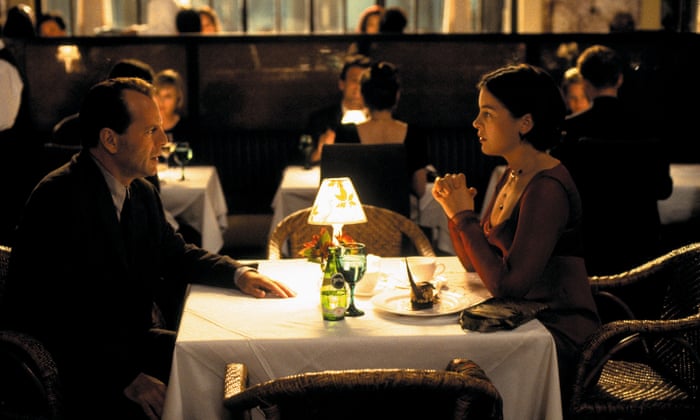
Dr. Malcolm Crowe (Bruce Willis) – The Sixth Sense


CHAOTIC GOOD


The Chaotic Good are rebellious heroes, often charismatic outsiders who see the system them live within as being corrupt, incompetent, or immoral. They reject the rules of their society and see it as their personal duty to work outside of the system to accomplish the greater good. They are often loners at odds with societal norms, and value personal freedom for themselves and others above all other ideals, as opposed to the stability that comes from the strict rule of law. For the Chaotic Good, the ends justify the means and are more than willing to break the law to protect the innocent and promote the greater benefit of all. Despite their lawlessness, the Chaotic Good act with a strict personal moral code. They will not harm the innocent and will act out of self-defense, but are much more willing to attack an evildoer when doing so is justified.

Examples:

Batman/Bruce Wayne
Robin Hood
Neo – The Matrix
Tony Stark – Iron Man
The Dude – The Big Lebowski
Agent J (Will Smith) – Men in Black
The Bride – Kill Bill


NEUTRAL ALIGNMENTS

Characters in neutral alignments, (Lawful Neutral, True Neutral, and Chaotic Neutral) tend to see themselves as good persons, but will generally not go out of their way or take any personal risk to promote the greater good. They are more concerned with themselves and their personal lives than society as a whole. Stories with neutral protagonists have main characters who may be morally ambiguous, morally conflicted, self-concerned, or “everyday” men and women struggling with the conflicting wants and needs of daily life.

LAWFUL NEUTRAL


The Lawful Neutral are not concerned so much with Good or Evil, but with Right and Wrong. They believe strongly that society requires rules, and those rules must be followed to ensure stability and well-being of all. Lawful Neutrals tend to see the world in black-and-white. If something is legal, it is okay. If it is illegal, it is bad and should be avoided. The Lawful Good believe that rules should be enforced universally and will generally not care about the ethical gray areas enforcement may create. Lawful Neutrals tend to be self-disciplined and gravitate towards areas of civic responsibility or authority. They fit in well with society and tend to be loyal and honest. However, the Lawful Neutral will rarely take any extra effort to improve society's well-being or take any risk if it means personal discomfort- especially if these actions may disrupt social stability. The Lawful Good will not harm the innocent, but is willing to take morally ambiguous actions against supposed evildoers if it is for the benefit of social stability.

Examples:
Jake Gittes – Chinatown
Dwight Shrute - “The Office”
Ripley – Alien
Captain Willard (Martin Sheen) – Apocalypse Now
Woody – Toy Story
Mr. McAllister (Matthew Broderick) – Election
Cobb (Leonardo DiCaprio) – Inception


TRUE NEUTRAL


True Neutrals are chiefly concerned with what is best for themselves at this particular moment. Their decisions are based mostly on self-preservation and bringing happiness to their own lives. Though they may be sympathetic to the less fortunate, they have no strong desire to do good for others, nor to do others harm. Neither do they have strong feelings about law and order, simply accepting it as it is as long as it does not interfere with their daily lives. Most people encountered in real life are true neutrals, going through life concerned mostly with personal problems. Most True Neutrals see themselves as good people, and will act ethically in most situations, but only because they believe ethical actions will benefit them more than unethical. True Neutrals are also highly law-abiding, but their obedience comes from fear of punishment rather than any ideological belief. Despite this, True Neutrals are prone to temptation. If they can gain greatly from breaking a law and believe they will not be punished, the True Neutral are tempted to do so. True Neutrals believe in moral reciprocity: do unto others as they have done unto you.

Examples:

Rick Blaine – Casablanca
Marlin – Finding Nemo
Ben Stone (Seth Rogan) – Knocked Up
Peter Gibbons (Ron Livingston) – Office Space
Warren Schmidt (Jack Nicholson) – About Schmidt
Jack (Edward Norton) – Fight Club
Leonard Shelby (Guy Pearce) – Memento


CHAOTIC NEUTRAL


Chaotic Neutrals care for their personal freedom above anything else. Like the Chaotic Good, Chaotic Neutrals see themselves as rebels or outsiders, but unlike the Good, they are motivated only by self-interest. Chaotic Neutrals are the centers of their own world. They have little to no respect for authority, and will defy the law if they believe the benefit will outweigh the punishment. It is difficult for a Chaotic Neutral to trust others and may not keep their word. They often have a disrupting influence on their environment. However, morality and ethical behavior is not uncommon. Chaotic Neutrals will often feel conflicted between their desire for personal freedom and the needs of those they care about. Like True Neutrals, Chaotic Neutrals follow moral reciprocity. They are good to those who are good to them. A Chaotic Neutral may harm an innocent person, but will feel remorse over the action. In contrast, they feel no remorse for harming those they consider enemies.

Examples:
Tyler Durden – Fight Club
Bonnie Parker and Clyde Barrow – Bonnie & Clyde
Will Hunting – Good Will Hunting
Homer Simpson - “The Simpsons”
Renton – Trainspotting
Randy 'the Ram' Robinson (Micky Rourke) – The Wrestler
Summer Finn (Zooey Deschanel) – (500) Days of Summer


EVIL ALIGNMENTS

Evil alignments (Lawful Evil, Neutral Evil, and Chaotic Evil) are not only solely concerned with themselves, but they are ready and willing to harm others to achieve personal gain. Unlike the Neutral alignments, there is no debate other whether an unethical act should be committed, nor is there remorse afterward. Though not all antagonists fall into evil alignments, it is impossible for a protagonist to successfully occupy these categories since their actions will not be approved by a moral audience.

LAWFUL EVIL


Most world dictators can be considered Lawful Evil. The Lawful Evil generally seek to attain and hold a position of power, wealth, and authority, and are willing to do whatever it takes to do so. The Lawful Evil operate within the rules of society, generally believing in the value of law and social stability, but are motivated mostly by personal gain and will show ruthless aggression in their execution. Ironically, Lawful Evil see themselves as good persons. They often believe they act for the betterment of society, it is only that to make their omelet, they must break some eggs. And this is how they see the innocents that are crushed by their ambitions, as mere broken eggs, acceptable losses necessary to achieve their ultimate goals. Lawful Evil have no compunction against killing others when necessary, but will generally not do the killing themselves, or will at least keep it quick and painless. Despite this, the Lawful Evil are the most ethical of villains. They follow a personal code of honor and will generally keep their word. Lawful Evil commit unethical actions, but they will always justify those actions with a logic that makes them seem necessary and acceptable.

Examples:
Darth Vader – Star Wars
Magneto – X-Men
Mr. Burns - “The Simpsons”
Hank Quinlan (Orson Welles) – Touch of Evil
Bill Lumbergh (Gary Cole) – Office Space
Agent Smith – The Matrix
Doctor Zaius – Planet of the Apes


NEUTRAL EVIL


This is the alignment of most career criminals. Neutral Evils do whatever they can get away with. They are concerned solely with self-gain and do not care if they must break laws or harm innocent people to get it. They see the world divided into two camps: the smart and the suckers. Suckers follow the law. The smart take whatever they can get. Like the Neutral Good, the Neutral Evil are very pragmatic in their actions, doing whatever seems the smartest at the time. They will not usually commit evil simply for evil's sake and do not take foolish risks that have a high chance of capture. They form and betray alliances as it suits them. They keep and break their word as convenient as well. As long as it will get them ahead, they will do it. A Neutral Evil will harm the innocent, and may do so for pleasure. Neutral Evils will also help others, but only when they will receive a reward. Unlike the Lawful Evil, the Neutral Evil are indifferent to the concepts of honor or discipline and will use them only when they have a self-serving purpose.

Examples:
Hans Gruber – Die Hard
Virgil Sollozzo – The Godfather
Biff Tannen – Back to the Future
Lord Farquar – Shrek
Rene Belloq (Paul Freeman) – Raiders of the Lost Ark
Frank Costello (Jack Nicholson) – The Departed
Lex Luthor – The Superman franchise
Jerry Lundegaard (William H. Macy) - Fargo


CHAOTIC EVIL


These are the worst of the worst. The Chaotic Evil will cut a path of death and destruction after whatever their greed, lust, or anger desires with no regard for either the rule of law or the welfare of others. Assuredly psychopathic in nature, the Chaotic Evil are incapable of feeling sympathy for others. Nor do they wish to, since they see others merely as the playthings and pawns of their twisted desires. A Chaotic Evil will kill readily and often do so for enjoyment. They think of themselves as both above and greater than both law and morality, and anyone who follows either is a sap. They see the world as being made up of sheep and wolves. Those who have the power to take what they want should do so, without the slightest twinge of conscience.

Examples:
The Joker – The Dark Knight
Amon Goeth (Ralph Fiennes) – Schindler's List
Norma Desmond – Sunset Boulevard
The T-800 Cyborg (and T1000 in the sequel) – The Terminator
Hannibal Lecter – Silence of the Lambs
Jason Vorhees – Friday the 13th
The Overlook Hotel – The Shining


CHARACTER ALIGNMENT AND CHARACTER ARC

Some characters will shift their alignment as their character arcs progress. Not all characters will shift. Only those whose arc deals with the change of a trait that relates to Good vs. Evil or Lawfulness vs. Chaos. Characters may move -

Up: Oskar Schindler in Schindler's List (Lawful Evil to Lawful Good)
Down: Charles Foster Kane in Citizen Kane (Chaotic Good to Chaotic Neutral)
Or, sideways: Nina (Natalie Portman) in Black Swan (Lawful Neutral to Chaotic Neutral)

Diagonal shifts, such as from Chaotic Neutral to Neutral Good are so rare they may be impossible to achieve. I have yet to identify a character in any movie who makes such a shift. Perhaps this is because the cinematic form demands simplicity in character arcs, meaning only only major trait becomes transformed over the course of the story. A diagonal move would mean the character changes in both his or her capacity for good/evil, as well as law/chaos. Such a move would require two separate character arcs, which would muddy and confuse the story.

Tuesday, November 8, 2011

Inciting Incident Ignorance


The inspiration for this month's first article is a thread I encountered on a somewhat popular screenwriters' message board (which shall remain nameless) a couple months back. The topic started simply enough, with one user asking for someone to identify the inciting incident of one of the most popular and widely-seen movies of all time, Star Wars. It seemed to be a question that needed only one or two responses from a knowledgeable reader and that be it. But instead, this thread stretched on for well over TEN PAGES. The mind-boggling thing was that most of the answers were absolutely wrong. Every moment over the first half of the movie, from its opening shot to actions that occur an hour into the film, was confidently brought forward by one user or another to be the inciting incident. The fact that there is so much widespread confusion over a concept so simple and fundamental to the cinematic narrative shines a light on why so many, -nearly all- spec scripts are so poorly put together that they bear no chance of ever being produced as a successful feature film.

I put the blame once again on the glut of screenwriting books on the market, and the confusing array of inaccurate bullshit they have spilled across the writing community over the last dozen years. Most aspiring writers assume that just because a book has been published, the author must be an expert and his or her information is accurate. This is often not the case. Since so many books lead their readers in contradictory and inaccurate directions on something as fundamental as the inciting incident, I must once again assert that most of the books on the market do the screenwriting community far more harm than good.

In this article I intend to clear the confusion by laying out once and for all what exactly is this “inciting incident”, what it does, and where is should occur.

WHAT IS THE INCITING INCIDENT?

Let's start by reviewing the basics:
  1. A STORY is defined as “a structured series of events about a character dealing with a PROBLEM, all unified by a premise.” - For the purposes of this article, the most important part of this definition is the problem. All stories at their simplest levels revolve around characters struggling with, and trying to overcome a single, particular story problem.

  2. Cinematic stories carry out their narratives through a structure known as the STORY SPINE. The Story Spine is composed of five elements: a. the Story Problem, b. the main character's Story Goal that once achieved, will overcome the problem, c. the Path of Actions the character takes to reach that goal, d. the Main Conflict that stands in the character's way of doing so, and e. the Stakes that force the character to continue pursuing that goal despite the resistance created by the conflict. - Everything in a story must relate to these five elements. If a story does not contain a spine with all five elements it will be incomplete and will fail in its execution.

Until a Story Spine has been established, the story has yet to properly begin. The story cannot yet truly advance because there is not yet any clear direction for it to go. The drama is still in the runner's blocks, waiting for the starter's pistol. Until the spine is established, the cinematic story is still in its setup sequence, the opening of a film where the storyteller communicates all important information needed to orientate the audience before the real action begins. The setup sequence is like setting up the pieces on a chess board before play begins. A piece is being put here or there, but the conflict of the game has not yet begun. The inciting incident is the moment play begins. It is the starter's pistol that leaps the story off its blocks and sends it on its path towards the finish line.

The inciting incident is defined as the moment where the Story Problem invades the protagonist's status quo life in such as way that it forces him or her to do something about it. From this point on, every story event centers on the protagonist's attempts to overcome that problem. The inciting incident is an events that works to officially start the story by setting up the Story Spine and all five of its elements. The Story Problem presents itself to the protagonist. Because of this, the protagonist forms an idea of what kind of Story Goal he or she must achieve to overcome this problem, and what is at Stake should he or she fail. The protagonist then decides what first steps must be taken down his or her Path of Action. This action incites the Main Conflict to resist his or her actions.

The inciting incident has not officially occurred until the story has reached the moment where at least some aspect of ALL five elements of the Story Spine have been established. This is likely the source of much of the confusion that can arise over what specific event in a particular story officially constitutes the inciting incident. In some stories, an event occurs that establishes all five elements of the spine immediately and simultaneously. In others, there can be a slight delay between the establishment of the Problem, the Goal, to the first step of the Path of Action, etc... This leads us to our second question:

HOW DO WE KNOW WHEN THE INCITING INCIDENT HAS OCCURED?

The inciting incident has not yet occurred until three qualifications have been met:
  1. The Story Problem exists.
  2. The protagonist becomes aware of the Story Problem.
  3. The protagonist decides to do something about that Story Problem.

      1. The Story Problem exists.
Given the definition of “story” presented above, it goes without saying that a storyline cannot begin to form until a problem arises. Before this happens, the narrative is just a bunch of people carrying on with their daily lives. However, there are many films where the source of the Story Problem presents itself immediately. Sometimes it arises in the first scene, sometimes it already exists before the movie has begun. But this does not mean that the inciting incident has already occurred.

The Story Problem of Star Wars is that the galaxy is ruled by an evil empire, an empire on the verge of crushing a virtuous rebel army that is the good people's only hope for freedom. But the moment the audience receives this information is not the inciting incident. Darth Vader then conquers Princess Leia's ship and take her prisoner. This is also not the inciting incident. Princess Leia has given R2D2 a secret mission and launched the two droid to Tatooine, where they promptly get lost. This is not the inciting incident either. Why? Because neither Princess Leia nor R2D2 are the story's protagonist. The Story Spine is all about the direct opposition between the protagonist and the source of the Story Problem/Main Conflict. The protagonist of Star Wars is Luke Skywalker. Luke Skywalker has not even appeared on screen yet. This means that all these events are nothing but setup.

      1. The protagonist becomes aware of the Story Problem.
Finally, Luke Skywalker enters the narrative when his Uncle Owen purchases the Princess's two lost droids. Though part of the Problem has now entered Luke's life, this is still not the inciting incident. Luke is still completely unaware that a problem exists or that his life has in any way changed.

But once the protagonist becomes aware of a problem, that still does not mean the inciting incident has occurred. I am personally currently aware of many dramatic problems. I am aware of the national debt crisis. I am aware of the drug cartel wars killing thousands in Mexico. I am aware of the civil uprising in Syria. But this by no means suggests that I am currently engaged in a dramatic struggle to fix any of these problems. Even though I am aware of these problems, I personally do nothing about them and continue with my daily life because these problems have not yet done anything to impact the status quo of my life in a way that would motivate me to take action. This is the same situation that exist for a protagonist at this stage.

To give an example, Lester Burnham begins American Beauty with his Story Problem already in place. His problem is that his life; with his family, his work, and his view of his own status and worth; is unacceptable to him. From the opening moments, we understand that Lester is very aware of his problem. But this does not mean that the inciting incident has occurred. Lester has yet to take any action against the problem. Instead, he just mopes through this status quo, suffering under the problem's weight. His story adventure does not start until the moment something occurs in which:

      1. The protagonist decides to do something about the problem.

American Beauty does not reach its inciting incident until the moment Lester first sees his daughter's teenage friend Angela. The lust he feels at this moment creates the “awakening” in him that motivates him to create change in his life and overcome his Story Problem out of a desire to obtain Angela.

It is important to note that the inciting incident occurs at the moment the protagonist decides to take action against the problem. Whether or not the protagonist takes physical action at that very moment is inconsequential. It is the change in the protagonist's consciousness that is important. In many stories, the protagonist may make this decision, but does not immediately have a chance to act. His or her first actions towards the his or her Story Goal may have to be slightly delayed due to the logic of the narrative. Yet still, the inciting incident has occurred. A change has been made within the will of the protagonist so that he or she is now ready, willing, and able to take action when the opportunity arises.

Given these three qualifications, what then is the real inciting incident of Star Wars?

After the droids are purchased by Uncle Owen, Luke is ordered to clean them. While performing this mundane task, Luke triggers a fragment of message recorded by Princess Leia before she was captured by Vader asking for help from Obi-Wan Kenobi. Since Luke has already expressed a desire to join the Rebel cause, he is highly intrigued by this mysterious message. He can see that a problem exists (this woman seems in desperate trouble) and, due to his Rebel sympathies, Luke feels a strong desire to find out more about the message. This is the official inciting incident. Luke's desire to do something about the message leads him on the first step of his Path of Action ( to find Obi-Wan Kenobi), which then leads him forward into every other event of the story.

Much of the confusion over the identity of Star Wars' inciting incident comes from the fact that, though Luke desires to take physical action to find Obi-Wan, he is not the character to actually make the first move to do so. Instead of Luke boldly hitting the road to find Obi-Wan, he is led to him indirectly when R2D2 runs away. This course of events turns out to be a necessity of character, not plot. Luke may want to take action, but as the story begins, he is not the type of person to be so bold. He is forbidden to act by his Uncle and can do nothing to argue. In stories where the protagonist starts as passive or powerless, he or she often need a push from an outside character to set him or her on the path of adventure. R2D2 running away was simply a way to get Luke on his Path of Action while maintaining the integrity of his character. Situations like this are why it is the moment the protagonist finds a desire to take action that predicates the inciting incident, not the moment when that action is actually taken.


INCITING INCIDENT IGNORANCE AT WORK

One of my biggest surprises of 2008 was the movie Taken. My surprise was not because such a small film performed respectively at the box office. I was surprised that such an amateur screenplay was produced in the first place. Taken's script is a joke, highlighted first by the writers' inability to understand their own inciting incident.
 
Taken is the story of a father's attempt to rescue his daughter after she is kidnapped while vacationing in Paris. The simplest way to pinpoint an inciting incident is to ask what the story's main conflict is about, and then identify the moment that launches that conflict. Given the premise of Taken, this would have to be the moment the kidnapping occurs and the father decides to rescue her. But instead, the writers thought the inciting incident to be to be the moment when the daughter asks to go to Paris. If Taken's story was all about a father who feels sad that his daughter has gone abroad, this might work, but it is not. The daughter leaving for Paris is nothing more than another piece of setup. It does not begin the story's main conflict and definitely does not launch the Story Spine. The real inciting incident (the kidnapping) is then placed extremely late in the narrative, at the end of the first act, resulting in a movie whose opening 30 minutes are nothing but a snorefest with few events of real significance. This mistake threatened to lose the entire audience before the story could even start.
 
Taken faltered because it failed to identify which event belonged where in its structure. On the other hand, I am shocked at how many screenwriting books are so ignorant that they confuse the inciting incident with the first act turning point entirely. I have seen many that state that the inciting incident does not occur until the end of the first act- 30 minutes into the film! Let me say that another way. These books believe it to be good screencraft to keep audiences waiting for a full half hour until something worth a damn happens. This is longer than an entire television sitcom. Any book that believes and audience will sit and wait for that amount of time before the conflict engages and the story finally begins proves it does not know what it is talking about. If you want to bore your audience and make them wonder why in hell they are sitting through this crap, go ahead and take these books' advice. Otherwise, throw the damn things out a window.

To see the effects of a long-delayed inciting incident, take a look at 2002's Minority Report. Minority Report is the futuristic story of a detective tasked with arresting pre-visioned murders before they can happen, who himself becomes framed for one of these murders. Given this premise, the inciting incident is clearly the moment when the detective finds he has been fingered for murder and decides to take action. Only this inciting event does not occur until FORTY minutes into the film! It takes forty whole minutes for the real story to begin! Everything before this moment is nothing more than a long, tedious setup filled with techno-babble, long-winded exposition, and a lot of Tom Cruise waving his fingers around. The final film could have been greatly improved if only its storytellers had recognized their inciting incident was misplaced and done some simple editing to move it to its proper position. That way, the audience did not have to wait through forty minutes of this “action-thriller” before that action finally began.

Thursday, September 15, 2011

ALL IS NOT LOST

The other day read on a message board some wannabe screenwriter refer to the end of the 2nd Act turning point as the “all is lost point.” If you knew me personally, you would know how much I had to restrain myself. I knew right away where she got this term. From that damn Save the Cat book. (Be forewarned that if I ever catch anyone using one of Blake Synder's cutsie-poo phrases in my presence as if they were actual screenwriting parlance, they should expect to receive a smack upside the head.) This incident illustrates the exact reason why I have a problem with Synder's books. They not only encourage formulaic, cook-book style writing, but mislead young writers into thinking that there is only one way to do things. Even though on average the Dark Moment (as it is more commonly called by professional screenwriters) is the most common way second acts are ended in recent Hollywood films, it is not by even the smallest margin the only way to end the 2nd Act. There are in fact multiple well-established methods that will work to bring the act to a dramatic close, all depending on the needs of the particular story.

  1. The Dark Moment

    a. Variety #1: Dark Moment/Spark of Hope

A Dark Moment alone is not enough to bring a 2nd Act to an end and launch the action of the 3rd. Acts end with a two-part structure. There is first the end-of-act climax (the outcome of the conflict that ends the act). This is then followed by an end-of-act turning point (an event that allows (or forces) a new path for the protagonist to take to reach the main Story Goal). Sometimes the turning point is created by the outcome of the climax, meaning that the events are one in the same, but more often they occur as two separate events, occurring one after the other.

If a story resolves in an up-ending, that is, a “happy” ending where the hero succeeds in the end, the Dark Moment that ends the 2nd Act must be immediately followed by a Spark of Hope. If “all if lost” and that's all there is to it, there is nothing to provide the motivation that launches the protagonist into the 3rd Act. After all, all is still lost. The conflict seems to be resolved in the hero's disfavor, and the hero has nothing to do but mope around and feel sorry for him/herself. The Spark of Hope is an event where the character and audience learns that the hero still has a chance. Something happens that gives the hero has one last shot of overcoming the conflict and reaching a happy end. 


The Matrix ends its 2nd Act with the protagonist Neo in the worst situation possible. He and his allies have been betrayed and his mentor Morpheus captured by the Agents. Neo knows that the antagonist will torture Morpheus until he gives up the information that will spell the quick end of all they have fought for. He is left with only the worst possible option- to pull the plug on his mentor and kill him before this can happen.

However, this gloom is quickly reversed with the Spark of Hope. Rather than give up, Neo decides to take on the impossible odds to rescue Morpheus. He chooses hope over failure. This is the moment that launches the story into its final act.

The Spark of Hope should create a quick reversal of emotion in the audience. The situation was extremely negative, then suddenly positive. Such quick ups and downs creates the famous “roller-coaster” experience. All sequence-ending turning points should get some power from a reversal of emotions (a change from positive to negative, or vice versa), but this reversal is especially important at the end of the 2nd Act. As the story heads into the 3rd Act, the act that is supposed to contain the exciting resolution of the Story Spine, the story needs MOMENTUM. The story needs the sharpest drop possible in the emotional roller-coaster. The bigger the emotional reversal, the more momentum that begins the third act.

This is by far the most popular way to end a 2nd Act, and can be found in countless films, from Braveheart to Slingblade to Knocked Up. In fact, it has become so common, it has taken on the label of a cliché. Go to the theater and watch 10 movies. I guarantee that at least half of them have chosen to go with the Dark Moment/Spark of Hope.

b. Variety #2: The Nail in the Coffin

(Note that these are self-invented terms. Like all those Synder-isms, you shouldn't go around using them as if they were official because people will not know what you're talking about.)

The Dark Moment/Spark of Hope is found mostly in movie with up-endings as a way to give the audience some optimism as they root for the hero to eventually come out on top. In contrast, the Nail in the Coffin is found exclusively in stories with down-endings, usually stories with self-destructive protagonists who bring their own ruin. Examples include Raging Bull, Citizen Kane, and There Will Be Blood. These stories feature anti-heroes who fail in the end due to their inability to overcome their character flaws. Their second acts end with the protagonist committing an unforgivable action that seals their eventual doom and eliminates any possibility for redemption. In all three of these examples, this occurs by the protagonist willfully severing the last connection he has to a sympathetic human being. There is no spark of hope for these characters because they do not deserve any. But no Spark of Hope means no reversal of audience emotions. Typically, this creates a 3rd Act dramatically weaker than the previous variety as the audience watches the protagonist's now dreary life circle the drain.

  1. The False Victory

A False Victory is very similar to the Dark Moment/Spark of Hope, excepts its two events have the opposite emotional charge. With a False Victory, the protagonist wins the conflict that ends the second act. The 2nd Act of Raiders of the Lost Ark ends with Indiana Jones stealing the Ark back from the Nazis. Hooray! The audience receives a brief emotional high. It seems like things will turn out okay. But not so fast. The end-of-act climax is followed by a turning point that renders the victory meaningless. The antagonist, or whatever the source of the story conflict, has taken a NEW action that throws a huge new roadblock in the hero's way. Indiana Jone's journey home is intercepted by a Nazi submarine, and the Ark is stolen back. The protagonist's once certain victory is once again in doubt. The hero must ready him/herself for a new fight, the battle that will climax at the story's end.

The False Victory is also a good choice for stories with sympathetic heroes that meet a tragic end. These 2nd Acts end with the story at its highest emotional point. But this victory is followed by a turning point that abruptly puts the situation in reverse. The 2nd Act of Brazil ends with the hero on the top of the world. He was won over his dream girl and seemingly escaped the nightmare of his existence. But, not so fast. Just as the hero finds his happiness, the authorities invade his home and take him to prison.

  1. The Key Piece of the Puzzle

This type of end-of-act turning point is often found in stories containing a high element of mystery. Up until this moment, a key piece of information has been kept hidden from the protagonist (and usually the audience as well). Once this key piece is finally revealed, it changes EVERYTHING. It changes our perception of the story we have already seen, and more importantly, it changes the hero's actions from that points onward and dramatically alters the conflict that will decide the story's end.

Alien's 2nd Act closes when the crew discovers that their employer intentionally sent them on a mission to bring the monster aboard the ship. In The Bourne Identity, Jason Bourne finally discovers who is trying to kill him and why. In Memento, the audience learns that Natalie has been setting up Leonard the whole time. In Casablanca, Ilsa reveals that she is still in love with Rick.

Chinatown provides the best example. Throughout the 2nd Act, Detective Jake Gittes has come to suspect Mrs. Mulwray of killing her own husband, and has now kidnapped husband's mistress to kill her too. However, when Gittes confronts her, the battle that ensues reveals that he couldn't be more wrong. The girl is Mrs. Mulwray's secret daughter, the product of incestuous rape from the antagonist. Her husband was murdered trying to protect the daughter. Everything changes for Gittes after this moment.

  1. The Launch of the Final Plan

Back to the Future's 2nd Act ends this manner, as does the 2nd Act of Star Wars. The heroes have overcome their end-of-act battle, for better or worse, and now devise an ultimate plan, one huge final effort to that will hopefully overcome the conflict and seize their story goal. The 3rd Act begins with this plan setting into motion. Out of the four types, this type the generally launches the 3rd Act with the least dramatic momentum due to its general lack of an emotional reversal. However, a tense, exciting third act can be achieved as long as conflict continues to escalate and the master plan never goes exactly the way the heroes wish it to. After all, nothing is less interesting than when everything goes according to the plan.

Despite its lack of reversal, the use of a Launch of Final Plan does not denote an inferior film. Some of the most critically acclaimed films of all time use this type of turning point, such as The Godfather (the death of Michael Corleone's father gives him the opportunity to finally destroy the threat to his family), Lawrence of Arabia (the march to Damascus) and Schindler's List (the creation of the list). All that matters is how well the turning point is executed and how appropriate this type of turning point is to the course of the particular story.


These are the top four most commonly used methods, but they are by far not the only ways to bring a 2nd Act to a dramatic end. Though they are hard to find, there are plenty of movies that contain very effective 2nd Act turning points that do not fit into any of these categories. No Country For Old Men ends its 2nd Act with the antagonist offering an ultimatum to the hero and the hero rejecting it. Though it may seem abnormal, this event is just as effective in launching the action of its story's 3rd Act as any of the more popular methods.

The point is that a writer must choose a way to end the 2nd Act that best serves the needs of the unique story he or she is creating. Blindly forcing an “all if lost” point onto your story can end up damaging it in the end, because your story may not be the type that would benefit from such a moment. The rules of screencraft must not be followed rigidly and applied blindly to any and every story. Instead, screencraft must remain flexible to the needs of the particular story. Every story has its own unique needs. Adapt the rules to the story and not the story to the rules. Unless you're the type of writer who wants your story to be generic, predictable, and read like something out of a cookbook, that is. If that's the case, then by all means continue saving cats.